#software copyright document
88 related articles

·2 min
FTC Reaches Settlement with John Deere: A Landmark Victory for the Right to Repair Movement
The FTC reached a landmark settlement with John Deere, granting farmers and independent repair shops the right to fix their own equipment. Here's what it means for the Right to Repair movement and the broader tech industry.
Read more →
·7 min
Open Source Community Collaboration Culture: How a Single Tweet Amplifies Technical Impact
Starting from a brief thank-you tweet, this article explores content co-creation in AI and open source communities—how video demos become a new dissemination medium and how creators and developers build trust networks together.
Read more →

·3 min
GPT-5.6 Three-Tier Model Lineup Leaked, OpenAI May Delay IPO to Next Year
OpenAI previews GPT-5.6 models Sol, Terra, Luna; Codex launches on mobile; SenseTime develops U1 Pro rivaling GPT Image; Gemini enters Android Auto; OpenAI IPO may slip to next year.
Read more →

·3 min
Kagi's AI Toggle: A Product Philosophy That Puts Users Back in Control
Kagi's new AI Toggle lets users control whether AI summaries appear in search. A deep dive into its subscription model, product philosophy, and lessons for AI search.
Read more →

·2 min
Open-Source Repairable Printers: Breaking Closed Ecosystems and Ending E-Waste
An open-source repairable printer is challenging the closed ecosystems of traditional manufacturers. Explore its repairability design, open firmware advantages, and relevance to the Right to Repair movement and e-waste reduction.
Read more →
·7 min
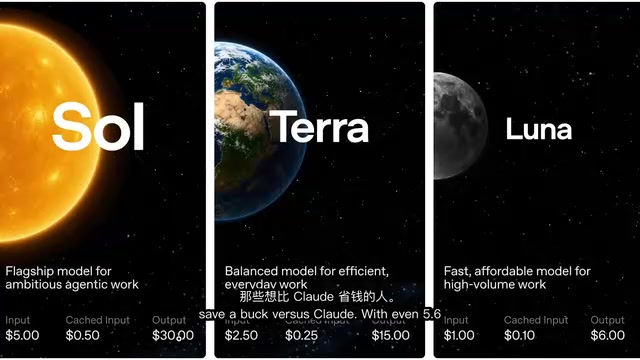
GPT-5.6 Sol vs. Fable 5: Can Half the Price Match the Flagship?
OpenAI launches GPT-5.6 Sol at half the price of Anthropic's Fable 5. We compare both models on HealthBench, cybersecurity and more using hard system-card data, analyzing Sol's cost-effectiveness and shifts in AI power.
Read more →

·7 min
GPT-5.6 Hands-On: A Complete Breakdown of the Three New Models — Soul, Terra, and Luna
OpenAI unveils the GPT-5.6 family — Soul, Terra, and Luna. Flagship Soul offers a 500K-token context and built a Pokémon RPG in 31 minutes. Plus Fable 5, GLM 5.5, and Grok 4.5 updates.
Read more →

·7 min
A Complete Guide to LangGraph's Core Concepts: The Framework of Choice for Enterprise Agent Development
An in-depth analysis of LangGraph's core concepts: short-term and long-term storage mechanisms, its differences from LangChain, the MIT open-source license, and private deployment solutions for enterprise Agent development.
Read more →

·3 min
GLM 5.2 Deep Dive: The Open-Source Coding Model Breaking Into the Global Top Three
GLM 5.2 by Zhipu AI: fully open-source under MIT license, #3 globally on Code V3 with a 96-point S-tier rating, and a genuinely usable 1M-token context window.
Read more →

·6 min
Taiganet and the WS4000 Simulator: The Reverse-Engineered Rebirth of Industrial Control Systems
Taiganet.com is simulating the WS4000 industrial control system. This niche project preserves the engineering wisdom from before the PLC and SCADA era. A deep look at the challenges of ICS simulators, knowledge preservation, and reverse engineering in OT security research.
Read more →

·5 min
Defending the Right to Run Local AI: A Battle for Privacy, Freedom, and Digital Sovereignty
Local AI faces a triple threat from tightening regulation, hardware lock-downs, and commercial pressure. A deep analysis of why running open-source LLMs on your own device is a digital right worth defending.
Read more →

·3 min
RomM: The Open-Source Self-Hosted ROM Manager for Retro Game Collections
RomM is an open-source self-hosted ROM manager with automatic metadata fetching, in-browser gameplay, and Docker deployment. Build your own retro game media library.
Read more →
sqlite-utils 4.0rc2 Released: Major Ve…
·2 min
sqlite-utils 4.0rc2 Released: Major Version Built with $150 in AI Costs
Simon Willison releases sqlite-utils 4.0rc2, with most code written by Claude at just $149.25 in API costs. A deep dive into AI-assisted development costs and human-AI collaboration.
Read more →

·6 min
A 284B Model Running on a MacBook: The Real Breakthrough and Barriers of Local DeepSeek Inference
Redis creator runs 284B-parameter DeepSeek model on a MacBook Pro at 26 tokens/sec using a pure C engine, asymmetric quantization, and MoE architecture.
Read more →
How GitHub Manages Open Source Depende…
·4 min
How GitHub Manages Open Source Dependency Compliance at Scale: An OSPO Practitioner's Guide
GitHub's OSPO uses automated dependency scanning, policy enforcement, and transitive risk detection to embed open source license compliance into CI/CD pipelines at scale.
Read more →

·3 min
Dify Comprehensive Guide: The Open-Source Platform for Building AI Apps Without Code
Deep dive into Dify, the open-source LLM app development platform featuring visual workflow engine, RAG knowledge base, Agent capabilities, hundreds of model integrations, Docker deployment, and comparisons with LangChain, Coze, and FastGPT.
Read more →

·4 min
The Complete Guide to Running GLM-5.2 Locally with 4 RTX 3090s for $4,000
How to build a local AI inference server with 4 used RTX 3090 SXM4 GPUs to run GLM-5.2 via Llama.cpp and Unsloth IQ quantization, with real benchmarks on speed and quality.
Read more →

·3 min
LangGraph Beginner's Guide: Core Advantages, Deployment Options, and Complete Learning Path
A comprehensive guide to LangGraph's core advantages, storage mechanisms, differences from LangChain, and private deployment options for building production-ready AI agents.
Read more →

·3 min
Agent PR Governance: Five New Rules for AI Code Review
Explore the five core dimensions of GitHub Copilot's Agent PR governance framework: validation, review depth, repo instructions, attribution, and release-note accountability for AI code review.
Read more →

·4 min
Codewell Hands-On Review: Is This Terminal AI Coding Assistant with Nearly 40K GitHub Stars Actually Worth It?
Hands-on review of Codewell (formerly DeepSeek2E), the open-source terminal AI coding assistant with nearly 40K GitHub stars. Supports 25 LLM providers, local models at zero cost, and MIT license.
Read more →