#sub-agents workflow
284 related articles

·3 min
Claude Code Workflow in Action: 68 Sub-Agents Working Concurrently
Hands-on test of Claude Code's Workflow mode with 68 concurrent sub-agents. Covers setup, write-review separation, real concurrency results, and token costs.
Read more →
·3 min
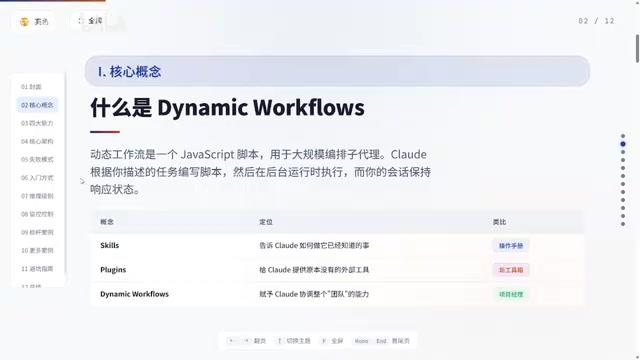
Claude Code Dynamic Workflows: Orchestrating Hundreds of Sub-Agents Working in Parallel
Deep dive into Claude Code Dynamic Workflows: enable parallel sub-agent orchestration via three methods for multi-agent collaboration and automated pipelines.
Read more →

·2 min
Firstmate: Orchestrating AI Agent Team Collaboration Through a Single Entry Point
Deep dive into Firstmate's multi-agent collaborative development model: orchestrating a specialized AI team through a single conversational entry point, covering the full pipeline from requirements to delivery.
Read more →

·2 min
Dynamic Workflows: A New Paradigm for AI-Driven Quantitative Strategies
Explore how dynamic workflows are transforming quantitative strategy development. From agent orchestration to adaptive strategy iteration, discover the potential and challenges of AI-driven workflows.
Read more →

·2 min
Deep Dive into the LangChain Ecosystem: A Guide to LangGraph, deepagents, and LangSmith Collaboration
A deep analysis of three core LangChain ecosystem components: LangGraph stateful agent orchestration, deepagents deep agent paradigm, and LangSmith observability platform for production AI apps.
Read more →

·3 min
DeerFlow: Deep Dive into ByteDance's Open-Source Long-Horizon SuperAgent Framework
Deep analysis of ByteDance's open-source DeerFlow long-horizon SuperAgent framework, covering six core components, architecture design, use cases, and industry significance.
Read more →

·2 min
Webhound: An Agent Engine That Controls AI Research Depth with Dollar Budgets
Webhound is a research engine for AI agents that controls research depth via dollar budgets, outputting cited traceable reports with MCP protocol and API integration.
Read more →

·2 min
Webhound: An Agent Engine That Controls AI Research Depth with Dollar Budgets
Webhound is a research engine for AI agents that controls research depth via dollar budgets, delivering cited traceable reports with MCP protocol and API integration.
Read more →

·3 min
Athena: One-Click AI Orchestrator Agent for Building Ready-to-Operate E-commerce Businesses
Shoplazza launches Athena, an AI orchestrator agent that topped Product Hunt. It covers the full e-commerce chain—store setup, product sourcing, logistics, and ad campaigns—enabling solo entrepreneurs to build truly operational cross-border businesses.
Read more →

·4 min
Full Anatomy of AI Agent Intrusion Attack Chains: From Prompt Injection to Data Exfiltration
Deep analysis of Hugging Face's frontier lab AI agent intrusion report, covering indirect prompt injection, lateral movement, data exfiltration, and defense-in-depth strategies for AI agent security.
Read more →
·3 min
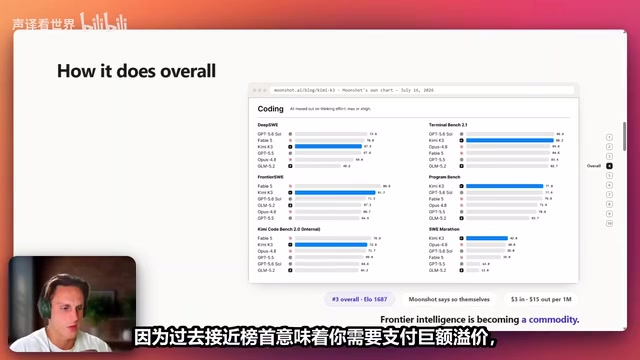
Kimi K3 Hands-On Tutorial: Claude Code Sub-Agent Configuration & GPT-5.6 Comparison Test
Complete guide to configuring Kimi K3 as a Claude Code sub-agent, including API setup, YFlow workflow building, and head-to-head comparison with GPT-5.6 and Claude Fable 5.
Read more →
·4 min
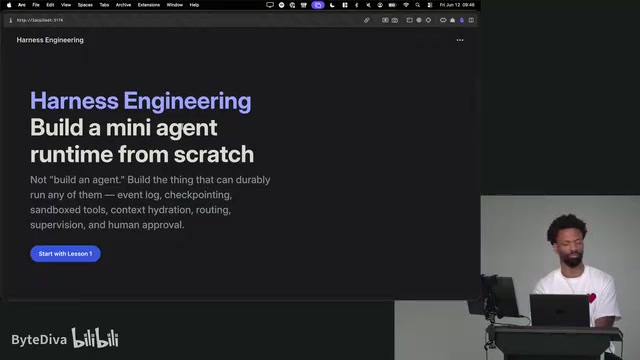
Harness Engineering: The Core Infrastructure for Taking AI Agents from Demo to Production
Deep dive into Harness Engineering: why AI Agents need memory management, durable execution, guardrails & approvals to go from demo to production.
Read more →

·4 min
Harness Engineering: The Core Infrastructure for Taking AI Agents from Demo to Production
Deep dive into Harness Engineering: why AI Agents need memory management, durable execution, guardrails & approvals to reach production. Based on Scott Moss's workshop.
Read more →

·5 min
Opus 5 Builds a No Man's Sky-Style Exploration Game in One Day: MCP and Sub-Agent Architecture Explained
A developer used Anthropic's Opus 5 model to build a No Man's Sky-style space exploration game in one day using Blender MCP and sub-agents. Deep dive into the technical architecture and industry implications.
Read more →

·4 min
Kimi K3 Deep Dive: 2.8 Trillion Parameter Open-Source Model Closes the Gap with Closed-Source Frontier for the First Time
Moonshot AI releases Kimi K3 open-weight model with 2.8T parameters and 1M token context. Our deep dive covers coding, 3D dev, agent capabilities, and safety concerns.
Read more →

·5 min
Complete Breakdown of Core Competencies for AI Agent Engineers: From Demo to Production-Grade Systems
Deep breakdown of 4 core AI Agent engineer competencies: business decomposition, multi-Agent architecture, quantitative evaluation, and engineering delivery—bridging the gap from Demo to production.
Read more →

·5 min
From Chat to Agent: Automating Your Entire Business Workflow with AI Agents
Veteran AI practitioner Remy breaks down the leap from chat models to AI agents: how agents work, the three pillars of context, tools, and skills, MCP connections, and hands-on architecture to make you a 100x employee.
Read more →

·4 min
Claude Code from Scratch: A Complete Guide from Installation to Enterprise-Grade Development
A complete guide to Claude Code from beginner to enterprise practice: covering CLI installation, connecting domestic LLMs via CC Switch, basic commands, Git workflow integration, automated bug fixing, and engineering capabilities like MCP and SubAgents.
Read more →

·4 min
Burning Through 80 Billion Tokens: Why Vibe Coding Is Doomed to Fail
A creator spent 40 days and 80 billion tokens testing the real limits of Vibe Coding. This article dissects why AI programming crashes in production: complexity, context limits, and compression loss.
Read more →

·2 min
After Getting Burned by AI Coding for Three Months, I Built WishGraph
After three months of costly AI coding mistakes, a developer built WishGraph: separating discussion and execution into dual windows with parallel multi-agent collaboration to make complex projects manageable again.
Read more →