#text-to-image models
113 related articles

·3 min
Java AI Tech Stack Explained: Framework Selection & Learning Path Guide
A complete guide to Java AI development: Spring AI, LangChain4j, Spring AI Alibaba, and AgentScope4j — framework comparisons, selection tips, and a clear learning path.
Read more →

·2 min
Abliteration Explained: Building a Custom Uncensored Text Encoder for Krea 2
How a developer ran 4,000 multi-seed abliteration trials to build a 100% HarmBench-compliant uncensored text encoder for Krea 2's Qwen3-VL-4B, with five quantization formats and ComfyUI deployment guide.
Read more →

·2 min
When Gemini Fails at Image Generation: The Real Limits of AI Instruction Understanding
A test asking Gemini to generate a Sheldon Cooper image reveals real AI limitations around ambiguous references, copyright characters, and safety filters. Learn how text-to-image models work.
Read more →
The Anti-AI Manifesto: Why More Brands…
·3 min
The Anti-AI Manifesto: Why More Brands Are Rejecting AI in Their Design Process
When "we don't use AI" becomes a brand statement, is it marketing gimmick or values-driven stand? A deep dive into why brands reject AI and how human-made becomes a differentiator.
Read more →
·3 min
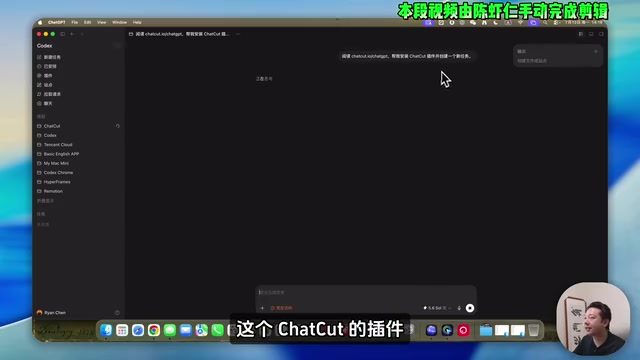
ChatCut × Codex Hands-On: Can AI Agent Edit Your Video With a Single Prompt?
Hands-on test of ChatCut AI video editor: Codex plugin support, auto filler removal, MG animation & subtitle generation. Full workflow test on a 3min 20sec video.
Read more →

·2 min
Flowith AI Canvas + Codex: Zero-Barrier One-Click AI Short Drama Production Pipeline
Flowith AI canvas + Codex automates AI short drama production end-to-end — from script and characters to scenes. Asset library solves consistency; point-and-edit enables precision control.
Read more →
·2 min
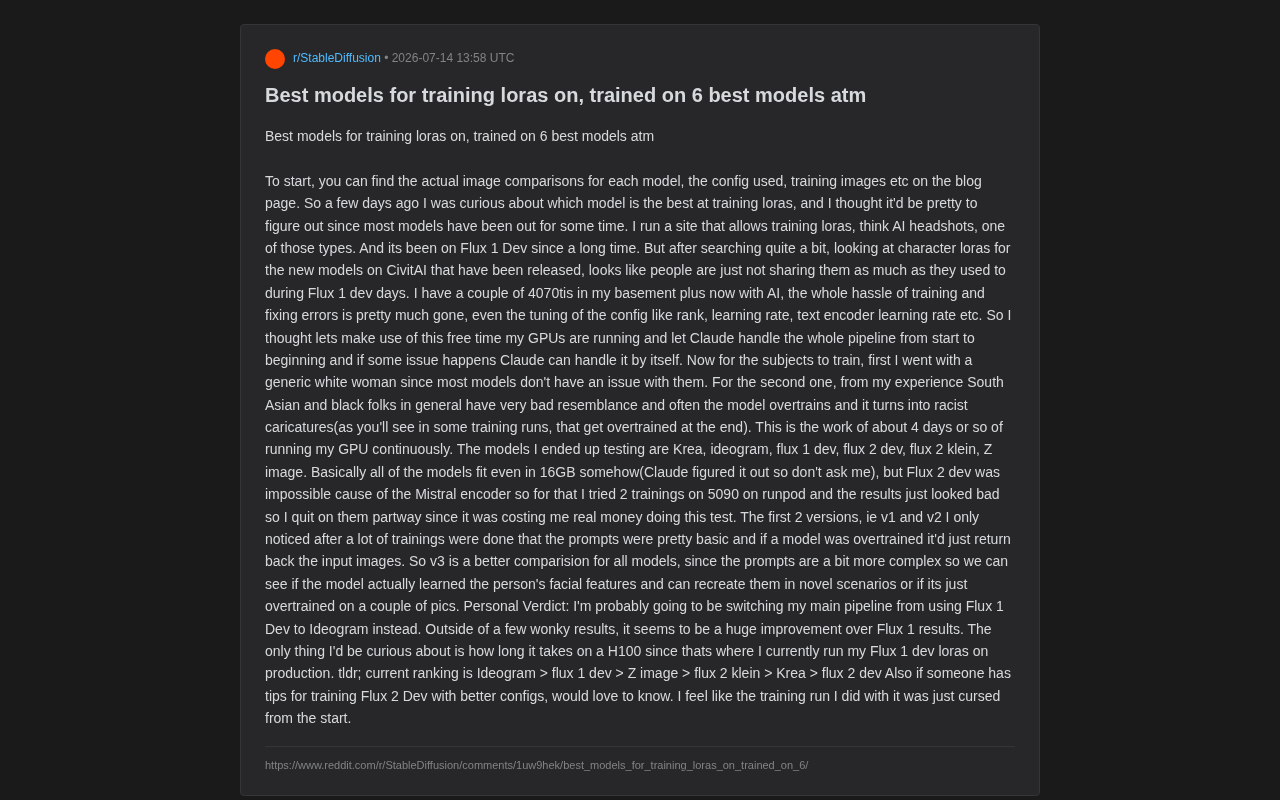
LoRA Training Showdown: Which Base Model Is Best for Character Fine-Tuning? A 6-Model Real-World Test
Real-world LoRA training comparison across Ideogram, Flux 1 Dev, Z Image, Flux 2 Klein, and Krea — revealing which base model best handles face fidelity and generalization for AI portrait developers.
Read more →

·3 min
Coze for Beginners: A Complete Guide to Building AI Agents
Coze is ByteDance's low-code AI Bot platform — no coding required. Learn the differences between domestic and international versions, core features, and why now is the best time to start building AI agents.
Read more →

·4 min
RAM: First-Principles Approach to 50x Faster RL Post-Training for Diffusion Models
RAM (Reinforce Adjoint Matching) achieves 50x faster RL post-training for diffusion models by discarding path costs, combining ODE sampling with decorrelated training objectives. A deep dive into RAM's core principles and experiments vs. Flow-GRPO.
Read more →

·3 min
Render Code as Images and Send to Claude — Cut API Costs by 70%
PXPipe renders system prompts and tool docs as images sent to Claude, exploiting visual token pricing. Real-world results: 68% fewer input tokens, 59–70% lower bills.
Read more →

·2 min
Running Krea 2 and LTX 2.3 on an RTX 3060: AI Image & Video Generation on Consumer Hardware
Can an RTX 3060 12GB run AI image and video generation? Full guide to Krea 2 + LTX 2.3 local deployment with real performance benchmarks and free workflow.
Read more →

·3 min
Spring AI 2.0 Deep Dive: A Java Developer's Guide to LLM Application Development
A deep dive into Spring AI 2.0: provider-agnostic APIs, RAG with vector databases, and how Java developers can build LLM apps using the Spring ecosystem.
Read more →

·2 min
Getting Started with Coze AI Agent Development: A Complete Beginner's Guide
Coze is ByteDance's low-code AI agent platform with rich built-in plugins and a beginner-friendly Chinese interface. Learn features, pricing, Coze vs Dify comparison, and how to get started.
Read more →

·3 min
Is Free GPT5.6 a Trap? The Truth Behind AI Mirror Sites Exposed
The viral "free GPT5.6" videos hide real risks: the model doesn't exist, and the "treasure sites" are third-party proxy mirrors carrying data privacy leaks and account bans.
Read more →

·4 min
Gemini Omni Hands-On: A Deep Dive into Google's Omni-Modal Video Generation Capabilities
An in-depth hands-on review of Google's Gemini Omni omni-modal AI model, covering video generation workflows, prompting tips, visual quality, and comparisons with Sora and other competitors.
Read more →

·4 min
INT4 ConvRot W4A4 Quantization: Running Large Image Models on Low-VRAM GPUs in ComfyUI
An in-depth look at INT4 ConvRot W4A4 quantization, covering conversions of Krea2, Qwen-Image, and other diffusion models to help ComfyUI users run large image models on 8GB GPUs.
Read more →

·7 min
GPT-5.6 and Grok 4.5 Launch Simultaneously, Meta Unveils Agent-Based Image Model
OpenAI GPT-5.6 expands its preview, xAI Grok 4.5 opens access at the same time, Meta releases the Agent-based Muse Image model and Muse Video model, while Apple and DeepSeek launch in-house AI inference chip programs. A quick look at the week's five biggest AI stories.
Read more →
·6 min
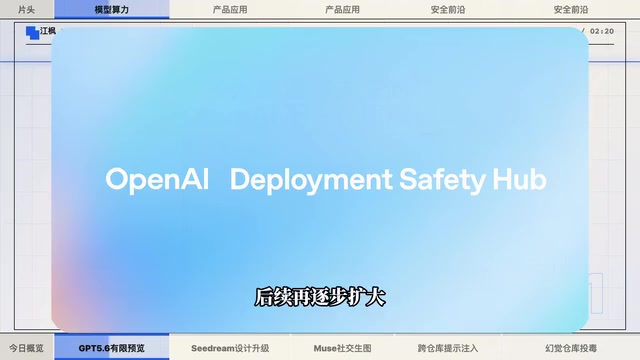
GPT-5.6 Sol Limited Preview: The Safety Boundaries Behind AI's Capability Expansion
OpenAI's flagship GPT-5.6 advances on three fronts—Sol, Kara, Luna tiered rollout; ByteDance CGN 5.0 Pro and Meta Muse push image generation toward controllable workflows; AI coding agents expose new supply chain risks.
Read more →

·2 min
OpenAI GPT-5.6 Released: Three Versions Compared — Full Breakdown of the All-in-One Super App
OpenAI releases GPT-5.6 in three tiers (SOUL/TERA/LUNA) and a unified ChatGPT desktop app with Chat, Work, and Codex modes. Learn how to choose the right version.
Read more →

·2 min
Cost Comparison of 33 AI Image Generation Models: A 100x Price Gap
Community benchmark of 33 AI image generation model APIs: cheapest is Flux Fast Schnell at $0.0025/image, most expensive is Recraft 4 Pro at $0.25 — a 100x gap. Includes Seedream, Gemini, GPT Image data.
Read more →