#throughput
703 related articles

·3 min
Liang Wenfeng and DeepSeek: How an Idealist Is Disrupting Global AI with Algorithmic Efficiency
Why did DeepSeek go open-source? How does a 300-person team beat tech giants? A deep dive into Liang Wenfeng's logic: flat org, algorithmic efficiency, and open-source disruption.
Read more →

·3 min
Running Local LLMs on AMD GPUs: Ditching Ollama for LM Studio Delivers 7x Speed Boost
AMD GPU black screens running local LLMs? This post-mortem covers Ollama's 3 fatal flaws and how switching to LM Studio boosted token speed from 5 to 36, with ROCm setup, Speculative Decoding, and GFX version tips.
Read more →
OpenAI and Broadcom Unveil Jalapeño Ch…
·2 min
OpenAI and Broadcom Unveil Jalapeño Chip: Built Exclusively for LLM Inference
OpenAI and Broadcom unveil Jalapeño, a custom ASIC designed for LLM inference. A deep dive into its technical logic, strategic intent, and impact on NVIDIA and the AI compute landscape.
Read more →
How OpenAI Used Core Dumps to Track Do…
·2 min
How OpenAI Used Core Dumps to Track Down an 18-Year-Old Bug
How OpenAI's engineering team used large-scale core dump analysis and an epidemiological approach to identify a hidden hardware fault and fix an 18-year-old software bug.
Read more →

·6 min
OpenAI CFO Deep Dive: IPO Stance, Compute Shortage, and Jony Ive's New Hardware Revealed
OpenAI CFO Sarah Fryer discusses the $122B fundraise, IPO timeline, Anthropic rivalry, compute shortage crisis, and the mysterious Jony Ive hardware collaboration on the All-In Podcast.
Read more →

·7 min
AI Agent Development: A Four-Stage Competency Model from 15K to 40K RMB Salary Growth Path
A detailed four-stage competency model for AI Agent development: from Python/RAG basics (15K) to workflow orchestration (20K), inference optimization (30K), and Agent cluster governance (40K RMB).
Read more →
Anthropic Launches Sonnet 5: An AI Orc…
·2 min
Anthropic Launches Sonnet 5: An AI Orchestration Model Built for Computer Use
Anthropic launches Sonnet 5, an orchestration model for Computer Use scenarios, available to Pro and Max subscribers. Designed for multi-step task execution, tool calling, and AI Agent workflows.
Read more →
Box3D Open-Source 3D Physics Engine Re…
·4 min
Box3D Open-Source 3D Physics Engine Released: A New Work from Box2D Creator Erin Catto
Erin Catto, creator of Box2D, releases open-source 3D physics engine Box3D, combining Box2D's architecture with Valve Rubikon's commercial-grade tech, featuring cross-platform determinism and SIMD-accelerated contact solving.
Read more →
Open-Source PDF Parsing Engine: 20ms S…
·2 min
Open-Source PDF Parsing Engine: 20ms Smart Classification, Pure Rust Implementation 3x Faster Than the Competition
An open-source PDF parsing engine that classifies documents in 20ms and runs 3x faster than top alternatives. Built in pure Rust with smart OCR routing for RAG systems.
Read more →
·8 min
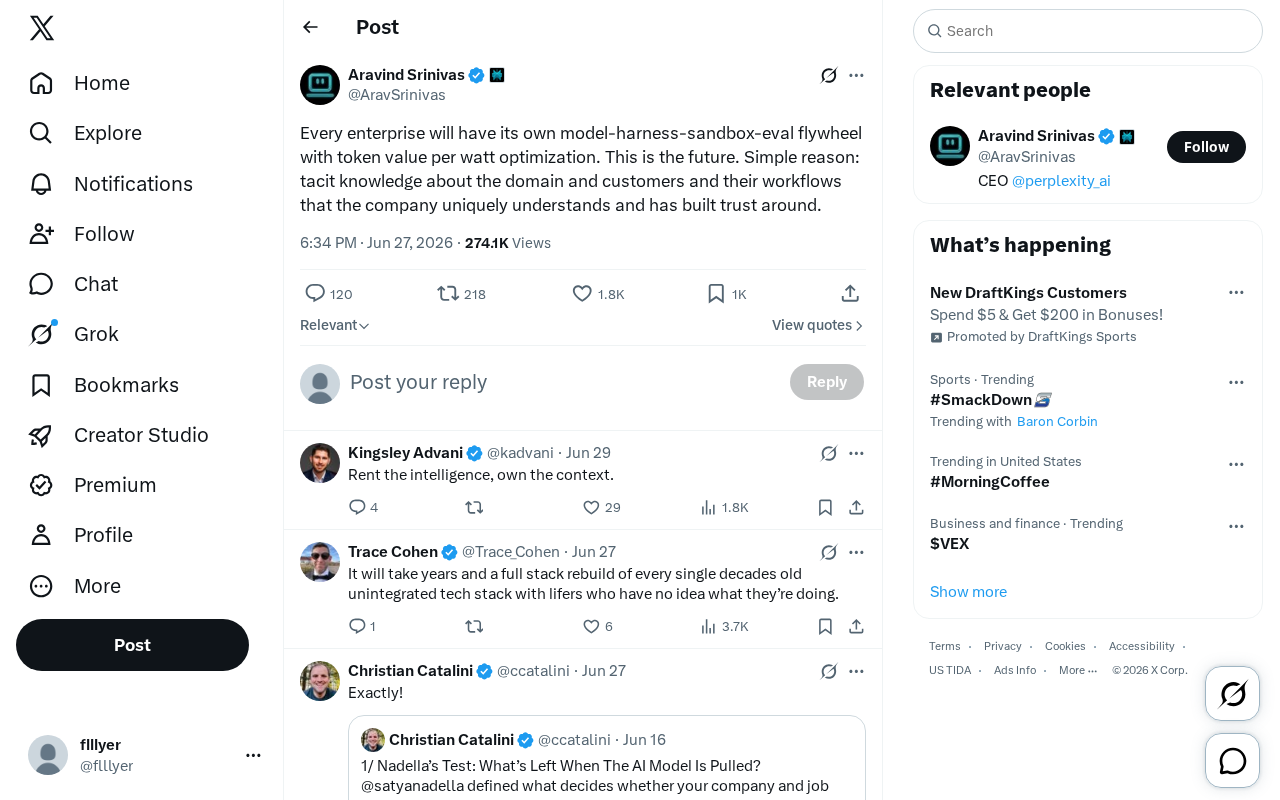
The Enterprise AI Flywheel: Building a Model-Eval Loop as a Competitive Moat
The core of enterprise AI isn't calling general models—it's building a self-reinforcing "model-harness-sandbox-eval" flywheel. This article analyzes the four components, tacit knowledge moats, and the "token value per watt" efficiency metric.
Read more →
Expert Opinions
When AI Treats Humans as Subagents: Ro…
·4 min
When AI Treats Humans as Subagents: Role Reversal and Hidden Risks in Human-AI Collaboration
Exploring the paradigm shift where humans become "subagents" in AI Agent architectures. Analyzes human node design in LangChain and AutoGen, and the risks of ceding control and cognitive atrophy.
Read more →

·3 min
Why AI Coding Tools Haven't Delivered Real Productivity Gains: Redesigning the Software Development Lifecycle
Research shows AI coding tools actually decreased developer productivity by 20%. The issue isn't AI's coding ability—it's that the entire delivery process hasn't been redesigned around AI.
Read more →
OpenAI's First Custom AI Chip Jalapeño…
·2 min
OpenAI's First Custom AI Chip Jalapeño: A Deep Dive into Its Full-Stack AI Platform Strategy
OpenAI unveils Jalapeño, its first custom AI chip built with Broadcom, optimized for LLM inference. A deep dive into its architecture, strategy, and impact on NVIDIA and the AI chip landscape.
Read more →

·3 min
6 AI Testing Skills Covering the Full Workflow, Boosting Efficiency Several Times Over
6 AI Skills for test engineers: test case generation, PRD-to-XMind, JMeter scripts, Playwright automation, performance reports, and requirement checklists—completing 2-3 days of work in half a day.
Read more →

·2 min
Practical Guide to Configuring Bioinformatics Analysis Environments with Claude Code
Three practical cases—RNA-seq setup, GATK reference data download, and SRA batch download—demonstrate using Claude Code with DeepSeek v4 Flash for bioinformatics environment configuration.
Read more →

·2 min
Groq Raises $650 Million to Rebuild Team, Challenging NVIDIA with LPU Chips
AI inference chip company Groq confirms $650M funding round, actively rebuilds executive team after NVIDIA's massive talent raid, and doubles down on Neocloud business.
Read more →
·4 min
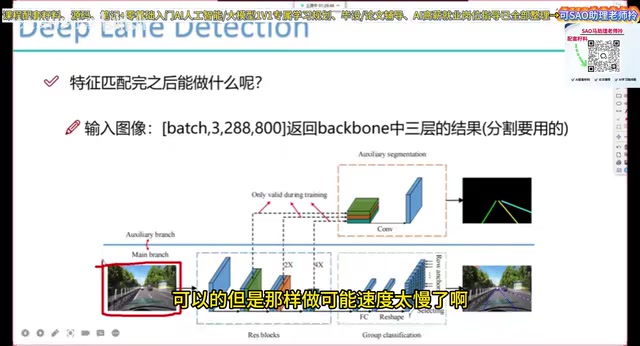
Deep Learning Lane Detection: From Segmentation to Classification for 300+ FPS Real-Time Inference
Deep learning lane detection algorithm that simplifies dense segmentation into efficient grid classification, achieving 300+ FPS real-time inference with row selection, Focal Loss, and expectation-based localization.
Read more →

·3 min
BioAgents: A Multi-Agent AI Framework for Autonomous Research in Biological Sciences
Deep dive into BioAgents multi-agent AI framework: how literature analysis and data scientist agents collaborate for autonomous deep research in biological sciences.
Read more →

·3 min
NVIDIA ACE SDK: On-Device AI Inference for Intelligent Game NPC Companions
Deep dive into NVIDIA ACE Game Agent SDK's integration with Unreal Engine 5, exploring how on-device AI inference enables low-latency, privacy-safe intelligent NPC dialogue and behavior.
Read more →

·3 min
Making LLMs Faster and Lighter: A Practical Approach to Reshaping Sparsity for GPUs
Deep dive into Sakana AI and NVIDIA's latest research using TwELL sparse packing format and custom CUDA kernels to convert LLM sparsity into real GPU speedups, achieving 20%+ faster inference/training and significantly lower memory usage.
Read more →