#tools
8190 related articles
 Research
·3 min
SVDQuant: 4-bit Quantization Enables Efficient Diffusion Model Inference on Consumer GPUs
SVDQuant, an ICLR 2025 Spotlight paper, achieves 4-bit diffusion model quantization via low-rank decomposition that absorbs outliers, reducing memory by 75%. Open-source engine Nunchaku (3800+ stars) enables FLUX inference on consumer GPUs like RTX 4060.
Read more →
 Deep Dives
·3 min
LLM 0.32 Refactor: How Message Sequences and Streaming Chunks Are Reshaping Python LLM Interactions
Simon Willison releases LLM 0.32a0 alpha with message sequences and typed streaming chunks, redefining how Python developers interact with LLMs while maintaining full backward compatibility.
Read more →
 Deep Dives
·4 min
Agent, MCP, and Function Calling: A Complete Guide to Their Differences and Relationships
A deep dive into the relationships between AI Agent, MCP protocol, Function Calling, and Prompt. From basics to full architecture, build a clear cognitive framework for AI app development.
Read more →
 Tutorials
·3 min
Building an AI Digital Human Agent from Scratch: Architecture Design & Full Technical Breakdown
Complete guide to building an AI digital human Agent, covering Agent, RAG, WebRTC, and Docker deployment with architecture design and engineering best practices.
Read more →
 Tech Frontiers
·2 min
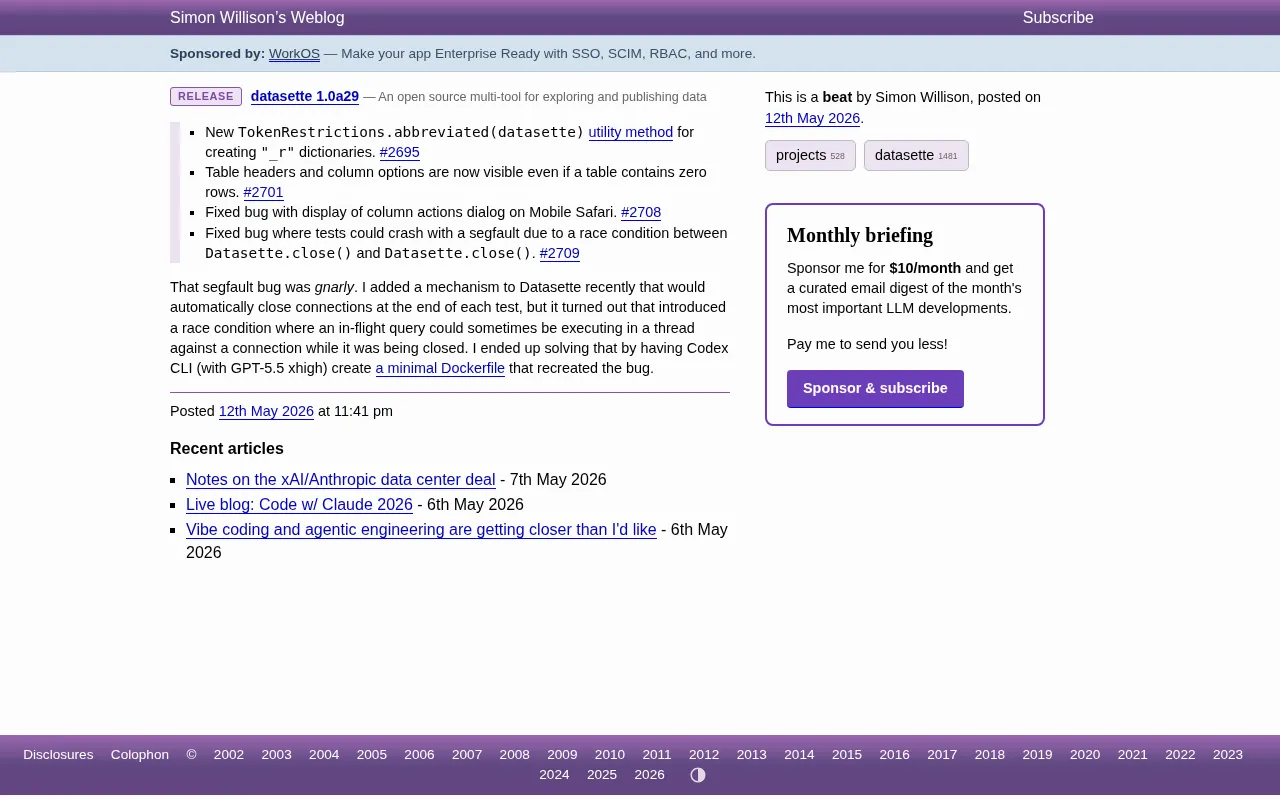
Datasette 1.0a29 Released: Fixing a Gnarly Segfault Race Condition with GPT-5.5
Datasette 1.0a29 preview released, fixing a segfault race condition introduced by test optimization. Developer Simon Willison used GPT-5.5 xhigh to help reproduce the issue, showcasing AI debugging in practice.
Read more →
 Tech Frontiers
·2 min
Codex Adds OpenAI Developers Plugin — Building AI Apps with AI Just Got Easier
OpenAI Codex adds the Developers plugin, letting developers directly access OpenAI API docs and best practices to rapidly build AI Agents and smart apps.
Read more →
 Tech Frontiers
·3 min
OpenAI Codex Adds Computer Use: AI Agents Autonomously Control Mac in the Background
OpenAI adds Computer Use to Codex, enabling AI agents to autonomously click, type, and operate across Mac apps in the background without taking user control.
Read more →
 Tech Frontiers
·2 min
OpenAI Symphony: One Codex Agent Per Task — A New Paradigm for Multi-Agent Parallel Programming
Deep dive into OpenAI's Symphony: assigning an independent Codex agent to each task for multi-agent parallel programming. Explore its architecture, developer impact, and industry trends.
Read more →
 Deep Dives
·3 min
Claude's Advisor Strategy: Small Models Execute, Large Models Supervise — A New Cost-Saving Paradigm for AI Agents
Anthropic's Advisor Strategy lets Sonnet execute tasks while Opus serves as advisor, cutting costs 12% while boosting SWE-Bench by 2.7 points. A new multi-model AI Agent paradigm explained.
Read more →
 Expert Opinions
·3 min
The Truth About Enterprise Tech Decisions: Why Decision-Makers Keep Chasing AI Buzzwords
HashiCorp founder Mitchell Hashimoto reveals the real driver behind enterprise tech decisions: 90% of TDMs are primarily motivated by not getting fired. A deep dive into the Gartner analyst economy, buzzword industrial chain, and enterprise procurement logic.
Read more →
 Expert Opinions
·3 min
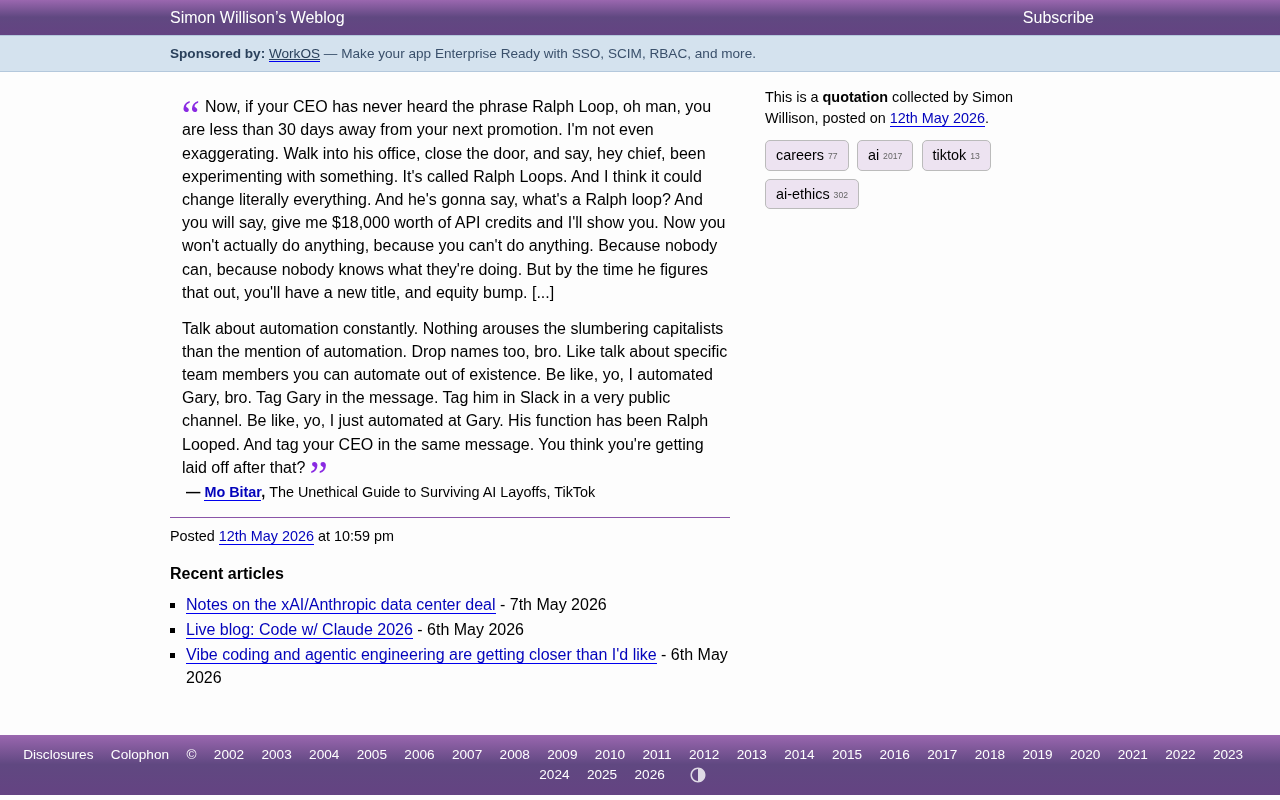
Surviving the AI Layoff Wave: The Workplace Hype Truths Exposed by a Satirical Video
Mo Bitar's satirical TikTok exposes AI workplace absurdities: fake jargon to secure budgets, automating colleagues for promotions. A deep dive into overestimated AI capabilities, fear-driven decisions, and the moral cost of tech hype.
Read more →
 Tutorials
·3 min
Claude Code Domestic Alternative: Low-Cost Deployment and Six Core Architecture Components Explained
Detailed guide on deploying Claude Code domestic alternatives via compatible API interfaces. Deep dive into six core systems: built-in tools, hierarchical memory, multi-Agent collaboration, and more.
Read more →
 Tech Frontiers
·3 min
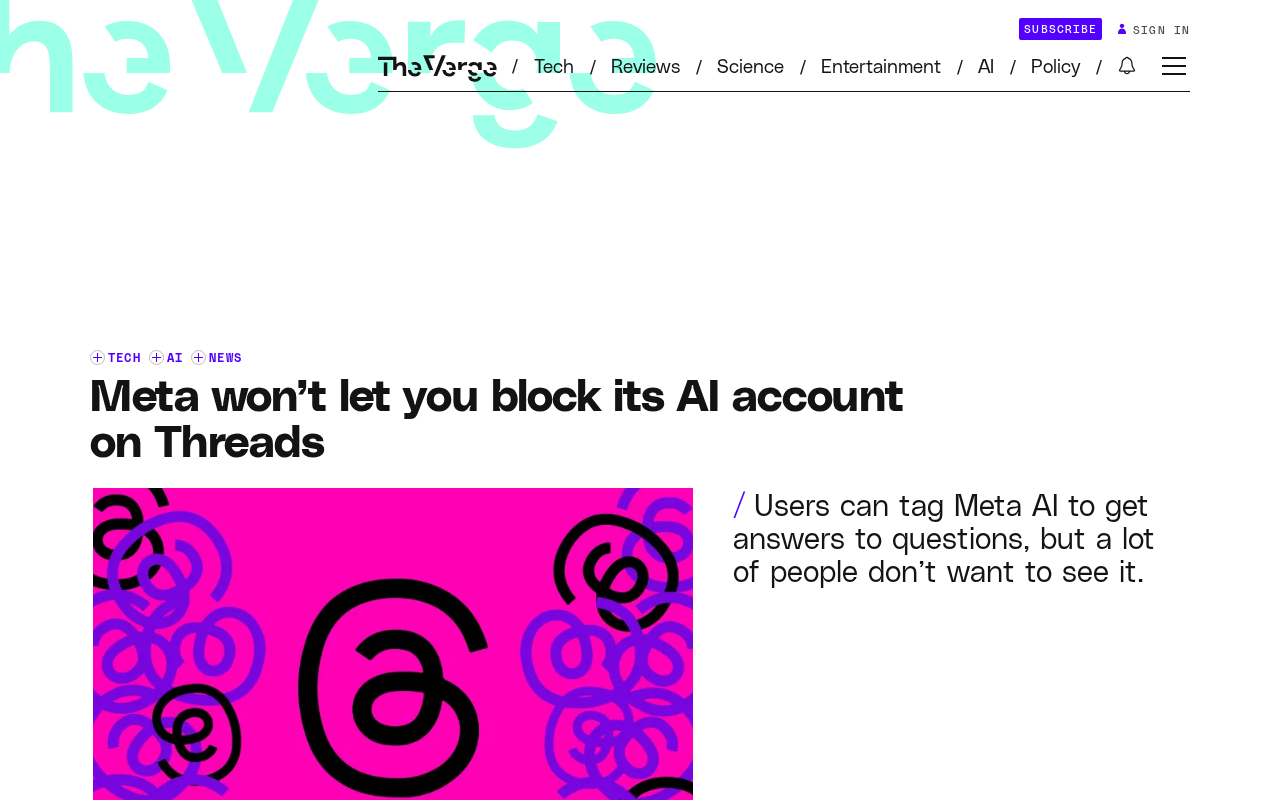
Threads Won't Let Users Block Meta AI Account: Forced AI Integration Sparks User Rights Controversy
Meta is testing an AI account on Threads that users can @mention for information but cannot block. This design sparks controversy over user autonomy, privacy, and platform governance amid Big Tech's AI push.
Read more →
 Tech Frontiers
·2 min
Meta's New Feature: Parents Can View Their Children's Instagram Interest Tags and Algorithm Preferences
Meta launches new parental monitoring for Instagram Teen Accounts, letting parents view their child's algorithm interest tags and receive real-time notifications when new interests emerge.
Read more →
 Tech Frontiers
·3 min
OpenAI Codex 2.0 Deep Dive: From Coding Assistant to All-Purpose AI Agent
OpenAI Codex major update: new Computer Use, built-in browser, long-term memory features. 3M weekly developers. How Codex evolved from coding assistant to full SDLC AI Agent.
Read more →
 Industry Insights
·3 min
AI-Native Engineering Transformation: Real Emotions and Coping Strategies from 218 Technical Leaders
Based on research with 218 engineering leaders, this deep dive explores the contradictory emotions in AI-native transformation — excitement and anxiety coexisting — and how leaders navigate successful change.
Read more →
 Tutorials
·3 min
Andrew Ng's New Course: A Practical Guide to Data Governance for Enterprise AI Agents
Andrew Ng and Databricks launch an AI Agent data governance course covering least privilege principles, Unity Catalog permissions, MLflow tracing, and a complete governance lifecycle from build to deployment. Free to learn.
Read more →
 Tech Frontiers
·3 min
Gemini Takes Full Control of Android Phones: A Deep Dive into Google's New AI Phone Control Features
Google unveils new Gemini features at Google I/O, deeply integrating AI into Chrome, smart autofill, and in-app controls — evolving from passive assistant to active AI Agent that controls your Android phone.
Read more →
 Tech Frontiers
·2 min
Android 17 Officially Released: A Deep Dive into Nine New Features and How It Balances AI with Practicality
Google officially releases Android 17 with nine new features including AI voice input, vibe-coded widgets, Emoji overhaul, and screen time management tools.
Read more →
 Deep Dives
·3 min
Augment Code Architecture Revealed: Dedicated Subagents Replace KV Cache, Cutting Costs by 90%
Deep dive into how Augment Code uses Mercury 2 dedicated subagents to replace traditional KV cache, achieving 82% faster context compaction, 90% lower summarization costs, and 30% reduced LLM spending.
Read more →