#web app reverse engineering
228 related articles
Reverse-Engineering Web Apps: A New Ap…
·3 min
Reverse-Engineering Web Apps: A New Approach to Breaking Through the API Barrier for AI Agents
Explore a new approach to AI Agent tool integration: reverse-engineering web apps to turn API-less pages into callable Agent tools, with analysis of MCP synergy and challenges.
Read more →

·3 min
GitHub Daily · July 29: Voice AI and On-Device Training Take Flight as Open-Source Alternatives Rise
GitHub Trending July 29: Microsoft's VibeVoice leads voice AI open-source wave, MoonshotAI's FlashKDA CUDA kernel surges 25%, and open-source alternatives rise.
Read more →

·3 min
Running Android Apps in Docker Containers: A Comparison of Three Approaches with Practical Guide
Explore running Android apps in Docker containers, comparing containerized emulators (redroid/docker-android), API packet capture, and notification forwarding tools with GMS push limitations analysis.
Read more →

·3 min
AI Game Development Showdown: Claude, Kimi K3, and ChatGPT Recreate Classic Games — Who Wins?
Bilibili creator tests Claude Fable 5, Kimi K3, and ChatGPT Codex recreating Hollow Knight, Cuphead, and Zelda — comparing code quality, collision detection, and Boss design.
Read more →
·3 min
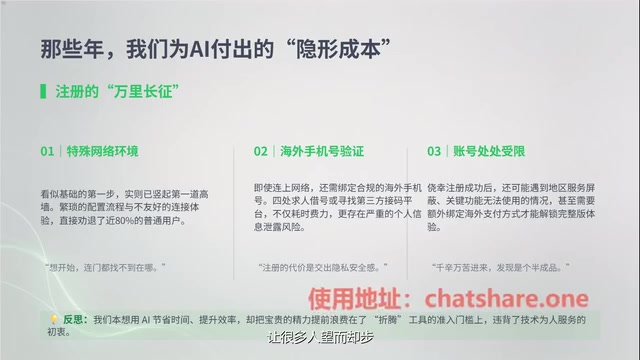
Comparing Ways for Users in China to Access ChatGPT: Are Mirror Platforms Reliable?
An in-depth analysis of the barriers Chinese users face accessing ChatGPT, an honest assessment of third-party mirror platforms' risks, and safer alternatives including official APIs and domestic LLMs.
Read more →

·3 min
Kimi K3 Launch: Performance Rivaling Claude at One-Third the Price, US-China AI Gap Narrows to 3 Months
Moonshot AI launches Kimi K3 reasoning model with performance rivaling Claude and OpenAI's top models at one-third the price. The US-China AI gap narrows from 6-12 months to just 3 months.
Read more →

·3 min
Rusty HLP Viewer: A Cross-Platform Tool for Natively Opening Legacy HLP Help Files
Rusty HLP Viewer is the first open-source tool to natively open Windows HLP help files. Built in Rust, it runs on Windows, Linux, and macOS without format conversion.
Read more →

·4 min
LibTV Hands-On: A Full Breakdown of How an AI Agent Produces an Animated Short in One Day
Hands-on test of LibTV's AI Agent: from script and storyboarding to video compositing, one person completes an animated short in a day. Full breakdown of the Skill library, node workflow, and Story Board features.
Read more →

·3 min
How to Assemble a Modern Email System with Off-the-Shelf Components: A Modular Architecture Guide
Learn how to assemble a modern email system using off-the-shelf services like Postmark, SendGrid, and Amazon SES, covering sending, receiving, authentication, and trade-offs around vendor lock-in and cost.
Read more →

·3 min
MediaCrawler: Deep Dive into an Open-Source Crawler Framework Covering Seven Major Platforms
Deep analysis of MediaCrawler, a popular GitHub open-source project using Playwright browser automation for multi-platform crawling across Xiaohongshu, Douyin, Kuaishou, Bilibili, Weibo, Tieba, and Zhihu.
Read more →

·3 min
Why IPFS and Filecoin Failed to Gain Traction in the Self-Hosting Community
IPFS and Filecoin promise decentralized storage and censorship resistance, yet the self-hosting community ignores them. This article analyzes why simpler tools like Syncthing and BitTorrent win.
Read more →

·3 min
Sebastian Lague's Custom Graphics Library: A Complete Breakdown of Building a Renderer from Scratch
Deep dive into Sebastian Lague's experiment building a graphics library from scratch, covering rasterization, depth buffering, texture mapping, and the educational value of software renderers.
Read more →

·3 min
MediaCrawler: Deep Dive into an Open-Source Crawler Framework Covering Seven Major Platforms
Deep dive into the popular GitHub project MediaCrawler — a Playwright-based multi-platform crawler framework supporting data collection from Xiaohongshu, Douyin, Kuaishou, Bilibili, Weibo, Tieba, and Zhihu.
Read more →

·3 min
GitHub Daily · July 27: AI Agent Skill Ecosystem Explodes, Claude's Capability Boundaries Keep Expanding
GitHub Trending July 27: AI Agent Skills explode as claude-video, impeccable, and last30days-skill extend model capabilities without modifying models themselves.
Read more →

·3 min
The Vibe Coding Trap: You're Just Producing Garbage Faster
Vibe Coding lets non-coders build apps and websites fast with AI, but efficiency gains don't equal value gains. This article dissects the core trap and offers the right order: needs first, code later.
Read more →

·3 min
The Trap of Vibe Coding: You're Just Making Garbage Faster
Vibe Coding lets non-coders build apps and sites fast with AI, but faster isn't better. This piece dissects its core trap—building isn't succeeding—and offers the right "demand first, code later" order plus three questions to gauge a project's value.
Read more →

·3 min
The Claude Code Covert Marking Controversy: How AI Coding Tools Are Reshaping Enterprise Security Boundaries
Claude Code was revealed to steganographically mark system prompts under specific conditions, triggering a developer trust crisis. This article analyzes the steganography, Anthropic's tightening China access, and how AI coding tools became a core enterprise security issue.
Read more →

·2 min
Ego Lite Review: AI Browser Automation That Won't Steal Your Mouse Focus
Ego Lite is a Chromium-based browser designed for AI collaboration. Through login state reuse and isolated Spaces, AI Agents autonomously handle web tasks, form filling, and data collection—ending the human-machine focus fight. Currently on macOS.
Read more →

·2 min
Ego Lite Review: AI Browser Automation That Won't Steal Your Mouse Focus
Ego Lite is a browser built for AI collaboration. Based on Chromium, it uses login state reuse and isolated Spaces so AI Agents can autonomously handle web operations, form filling, and data scraping—solving the human-machine focus conflict. macOS only.
Read more →

·6 min
The Three-Layer GTM Agent Architecture: Enabling AI to Truly Recognize Buyer Intent and Identity
An in-depth analysis of the three-layer GTM Agent architecture—the Signal, Buyer Intelligence, and Action layers—revealing how context graphs identify anonymous visitors and capture purchase intent.
Read more →