#AI Loop
3814 related articles
Agentic Loop Explained: The Three-Loop…
·2 min
Agentic Loop Explained: The Three-Loop Architecture of Reasoning, Tool Use, and Orchestration
A deep dive into the Agentic Loop — breaking down the three-layer architecture of reasoning, tool use, and orchestration to help developers build and debug reliable AI agent systems.
Read more →

·4 min
Agent Loop in Practice: A Guide to Building Self-Improving Automation with Guardrails
A deep dive into building verifiable, self-evolving Agent automation loops with Claude Code and Codex — covering Loop Contracts, four trigger types, three-phase execution architecture, and Evolve Loops.
Read more →
AI Agent Human-in-the-Loop (HITL) Desi…
·3 min
AI Agent Human-in-the-Loop (HITL) Design: Risk Classification and Best Practices
A deep dive into AI Agent Human-in-the-Loop design: balancing automation with oversight using risk tiers, async approval, and confidence thresholds.
Read more →
·4 min
Claude's New Reflect Feature: Visualizing the AI Dependency Loop Behind Your Data
Anthropic's Reflect feature visualizes Claude usage data — but it's also quietly building dependency and driving paid conversion. A deep dive into the design ethics and psychology behind it.
Read more →
AI-Generated Videos That Activate the …
·3 min
AI-Generated Videos That Activate the Brain: Breakthroughs and Concerns in Neuroscience Closed-Loop Optimization
Scientists use AI closed-loop optimization to auto-generate videos that maximally activate specific brain regions. Explore the science, medical potential, and ethical concerns around neural manipulation.
Read more →

·7 min
Getting Started with AI Agents: A Deep Dive into the Perception-Decision-Action Loop
A clear, in-depth guide to how AI Agents work: the paradigm shift from traditional programs, the perception-decision-action loop, and the four pillars—LLMs, tool calling, memory, and RAG.
Read more →

·4 min
FTPO: A Training-Level Solution to AI Repetition Loops
FTPO (Final Token Preference Optimization) tackles AI "Doom Loops" at the training level rather than patching them at inference time — exploring its principles, value for small/quantized models, and open challenges.
Read more →

·3 min
Loop Engineering: The New Paradigm for AI Self-Evolution
Loop Engineering by Anthropic is a new AI paradigm using four components—Mutator, Executor, Evaluator, Selector—to build self-iterating closed loops. Learn the architecture, use cases, and how to get started.
Read more →
·5 min
Loop Engineering: A Comprehensive Guide to AI Agent Loop Design
A deep dive into Loop Engineering for AI Agents — what loop feedback mechanisms are, how they differ from Harness Engineering, and a complete guide from principles to production implementation.
Read more →
AI Engineer World's Fair Closing Day: …
·2 min
AI Engineer World's Fair Closing Day: The Loops Debate, State of the Industry, and What to Build Next
AIEWF closing day recap: the agent loops debate, the State of AI Engineering report, and a keynote on what to build next — covering AI engineering's key divides and trends.
Read more →

·2 min
AI-Powered Logic Analyzer and Socket Debugging: A Breakthrough in Closed-Loop Embedded Programming
点线面 v4.3.0 enables AI to directly invoke logic analyzers and Socket debugging, closing the hardware-to-network feedback loop for embedded and IoT development.
Read more →

·7 min
Agent Loop Explained: The Core Runtime Mechanism and Think-Act Cycle of AI Agents
Deep dive into Agent Loop mechanics: the think-act cycle, how agents differ from LLMs, termination conditions, and design principles for building autonomous AI Agent systems.
Read more →
·8 min
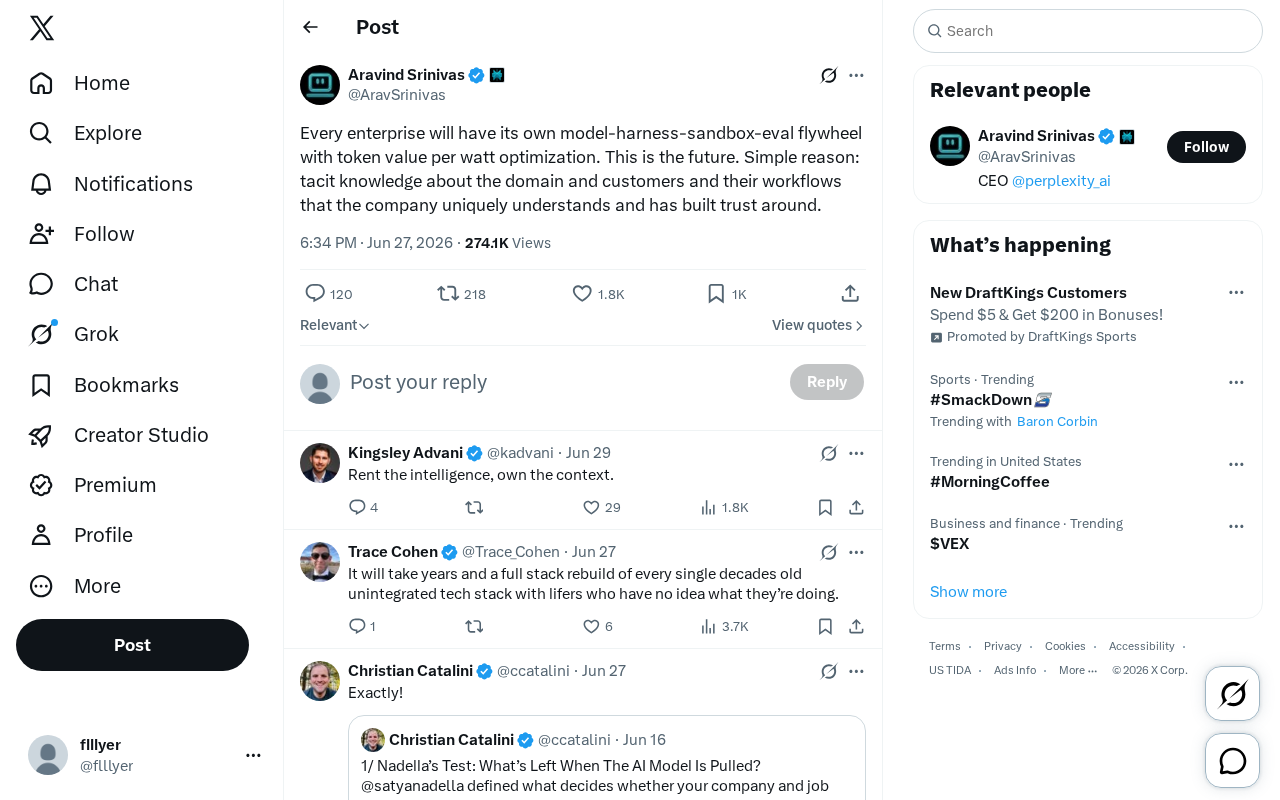
The Enterprise AI Flywheel: Building a Model-Eval Loop as a Competitive Moat
The core of enterprise AI isn't calling general models—it's building a self-reinforcing "model-harness-sandbox-eval" flywheel. This article analyzes the four components, tacit knowledge moats, and the "token value per watt" efficiency metric.
Read more →
 Industry Insights
·2 min
Nadella Introduces the Loopcraft Framework: Building AI Ecosystems Through Feedback Loops
Microsoft CEO Satya Nadella's Loopcraft framework explains how to build frontier AI ecosystems through nested feedback loops across technology, business, and ecosystem dimensions.
Read more →

·3 min
AI Agent Core Principles Fully Explained: Decision Loops and the Three Key Components in Practice
A deep dive into AI Agent core principles: the Perceive-Plan-Act-Observe decision loop, plus Planning, Memory, and Tools — the three key components explained with practical examples.
Read more →

·4 min
The Four Stages of AI Engineering Evolution: From Prompt to Loop Engineering Explained
A systematic breakdown of the four stages of AI engineering: Prompt Engineering, Context Engineering, Runtime Environment Engineering, and Loop Engineering — with core logic, bottlenecks, and real-world use cases.
Read more →

·3 min
AI Programming Power User Workflow: A Practical Guide to Automated Loops and Multi-Model Collaboration
A deep dive into expert AI programming workflows covering Cursor rules, skills systems, automated loops, cloud agent parallel development, and multi-model collaboration strategies.
Read more →

·3 min
Loop Engineering Explained: An Engineering Approach to Making AI Coding Agents Run Autonomously in Loops
A deep dive into Loop Engineering and the Rhythmic framework: how closed-loop systems replace repetitive prompting to enable autonomous AI coding agents with state management and budget control.
Read more →

·3 min
What Is AI Loop Programming? A Deep Dive into the Real Value and Hype Behind Loop Engineering
AI Loop Engineering is called a new programming paradigm, but is it truly revolutionary? This article analyzes its core principles, mathematical limitations, real-world details, and the hype behind it.
Read more →

·2 min
Getting Started with Loop Engineering: Making AI Agents Run Workflows Autonomously
A deep dive into Loop Engineering: core concepts and hands-on setup including Codebase Harness, shared file systems, triggers, and Loop Contracts to make AI agents run autonomously.
Read more →