#AI autonomous evolution
1142 related articles

·3 min
Six Core Concepts of AI Large Language Models: The Complete Evolution from Chatbot to Autonomous Worker
Explore six core AI concepts — Agent, RAG, Function Calling, MCP, Skill, and Harness — and how they form a clear evolution from basic chatbots to autonomous AI workers.
Read more →

·3 min
SeaTicket: An AI Agent That Automatically Resolves GitHub and Discord Issues
SeaTicket is an AI Agent that automatically resolves GitHub Issues and Discord questions. This article analyzes its architecture, use cases, challenges, and value for open-source maintenance.
Read more →

·3 min
SeaTicket: An AI Agent That Automatically Resolves GitHub and Discord Issues
SeaTicket is an AI Agent that automatically resolves GitHub Issues and Discord questions. This article analyzes its architecture, use cases, challenges, and value for open-source maintenance.
Read more →

·4 min
WebMCP in Practice: How MakeMyTrip Is Reshaping the Travel Booking Experience
India's largest OTA platform MakeMyTrip uses WebMCP to standardize AI Agent interactions with web apps, replacing fragile DOM scraping with natural language-driven test automation and simplified complex booking scenarios.
Read more →

·4 min
WebMCP in Practice: How MakeMyTrip Is Reshaping the Travel Booking Experience
India's largest OTA platform MakeMyTrip uses WebMCP to standardize AI Agent interaction with web apps, solving DOM scraping fragility, enabling natural language test automation, and simplifying complex international flight bookings.
Read more →

·2 min
Zero-Code Guide to Coze: A Complete Beginner's Guide to AI Agent Development
A detailed guide to ByteDance's Coze platform covering agent building, workflow orchestration, and knowledge base management to help beginners start AI app development with zero coding.
Read more →
·3 min
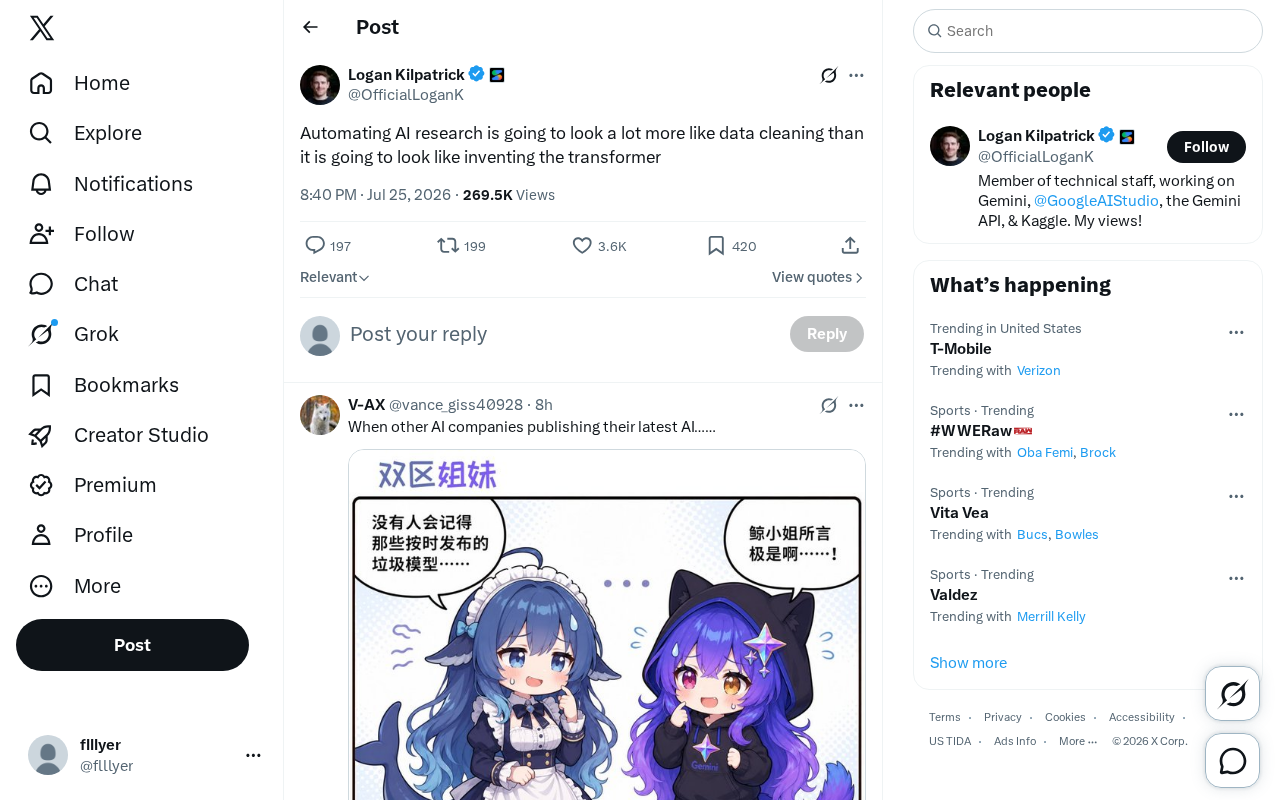
AI Research Automation: More Like Data Cleaning Than Inventing the Transformer
AI research automation will look more like data cleaning than inventing the Transformer. Explore how automating 60%-80% of repetitive research work reshapes the AI research paradigm.
Read more →
·3 min
AI Research Automation: More Like Data Cleaning Than Inventing the Transformer
Why AI research automation looks more like data cleaning than inventing the Transformer. Exploring the value of automating 60%-80% of repetitive research work and how human-AI collaboration reshapes the research paradigm.
Read more →

·3 min
From RAG to Agent Tuning: A Complete Guide to Deploying LLM Agents
A deep dive into LLM Agent frameworks covering RAG, Agent core components (tools, memory, planning), and Agent Tuning workflows with cost considerations for production deployment.
Read more →

·3 min
From Frontend to Agent Development: A Complete 6-Week Systematic Learning Path
A 6-week systematic learning path for frontend engineers transitioning to AI Agent development, covering core architecture, ReAct, multi-agent collaboration, RAG integration, and deployment.
Read more →

·3 min
Deconstructing Agents: Task Decomposition, Context Compression, and the Case Against Heavy Frameworks
A deep engineering analysis of Agent internals: how LLMs decompose tasks via tool calling, why context compression and memory are essential, and why solo developers should avoid heavy frameworks.
Read more →

·3 min
Open Source vs. Closed Source: Who Will Win the US-China AI Battle?
Chinese open-source models DeepSeek and Kimi K3 are challenging OpenAI's closed-source dominance. Analyzing the business logic, chip ecosystems, and US-China strategic dynamics behind the open vs. closed AI debate.
Read more →
·3 min
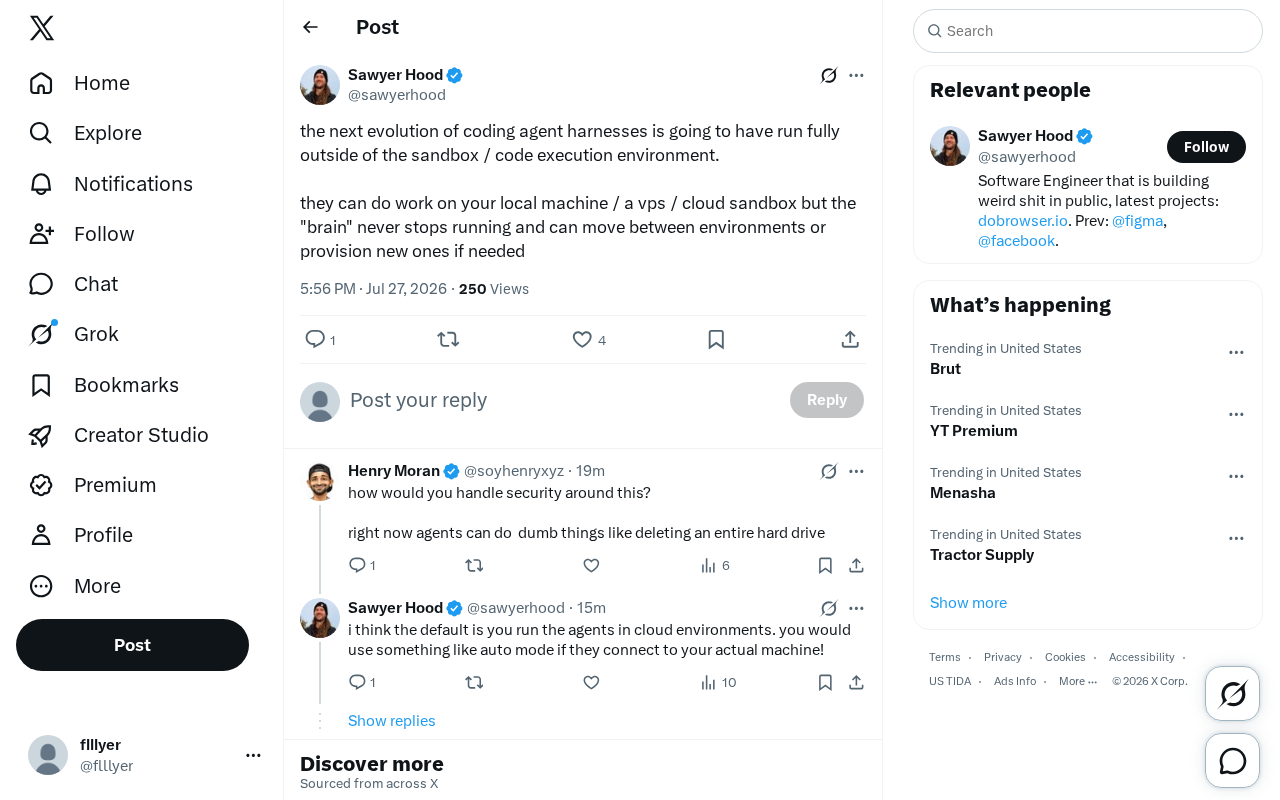
The Next Evolution of Coding Agents: Letting the Brain Break Free from the Sandbox
Exploring the key evolution in coding agent architecture: separating the reasoning core from code execution environments to decouple control and execution planes.
Read more →

·3 min
After 6 Billion Tokens, Here's What I've Learned About AI Agents
A power user who consumed over 6 billion Tokens shares real insights on AI Agents, exploring spending money, investing time, and managing life changes with AI.
Read more →

·2 min
Perplexity Stuck in Computer Mode and Can't Switch? Root Cause Analysis and Solutions
Perplexity stuck in Computer Mode and can't switch back to normal search? This article analyzes the technical causes including server-side preference stickiness and platform differences, with practical solutions.
Read more →

·2 min
LLM Agent Long-Term Memory Security: A Six-Stage Attack Surface and Defense Framework
Deep analysis of LLM agent long-term memory security threats, covering persistence, statefulness, and propagation of memory poisoning, with a six-stage lifecycle defense framework.
Read more →

·2 min
LightlyStudio: Open-Source Image Embedding Exploration Tool with Million-Scale Data Visualization
LightlyStudio is an Apache-2.0 open-source tool for image embedding visualization, hover preview, and distribution analysis, tested at million-scale to help developers explore, debug, and curate visual datasets.
Read more →

·3 min
Getting Started with Codex: A Complete Guide to AI Agent Programming Tools
Compare Codex and Claude Code AI agent programming tools. Learn AI Agent concepts, tool selection, cost analysis, and GPT account setup in this complete beginner's guide.
Read more →

·3 min
Cursor Alternatives Compared: A Guide to 5 AI Coding Tools
Compare 5 Cursor alternatives — from GitHub Copilot and Windsurf to open-source Cline and Continue — covering model freedom, workflow integration, cost, and privacy.
Read more →

·5 min
The Five Stages of AI Agent Architecture Evolution: The Real Path from Model Calls to Production Runtime
Deep dive into the five evolution stages of AI Agent architecture: model calls, tool calls, workflows, Agent loops, and production runtime. Learn the responsibility boundaries and design principles.
Read more →