#AI autonomous programming
1487 related articles

·2 min
GPT-5.6 Autonomously Writes 1,000 Lines of Code: AI Programming Enters the Task Delegation Era
A Snorkel AI research scientist tested GPT-5.6, which independently completed a nearly 1,000-line coding task without repeated prompting. This article explores the context management breakthrough and AI programming's shift toward autonomy.
Read more →

·6 min
The New Normal of AI Programming: How Autonomous Agent Development Is Reshaping Software Engineering
AI Agent autonomous programming is evolving from niche experiments to the industry default. This article analyzes the three stages of AI-assisted programming, its impact on developer skills, process restructuring, and key challenges.
Read more →

·3 min
OpenAI Codex Fully Explained: The Paradigm Shift from ChatGPT Conversations to Autonomous AI Programming
Deep dive into OpenAI Codex vs ChatGPT: ChatGPT explains, Codex executes. Learn how AI programming agents autonomously generate code, fix bugs, and run tests.
Read more →

·2 min
Claude Code Practical Course Breakdown: From AI Programming Methodology to Autonomous Agent Building
Deep dive into a Claude Code AI programming course covering AFK autonomous Agent building, codebase optimization, and multi-stage Kanban management to enable efficient human-AI collaboration.
Read more →

·3 min
OpenAI Codex Fully Autonomous Programming: A Complete Record of Building a WeChat Pay Membership Mini Program from Scratch
A detailed record of using OpenAI Codex's Goal Coding mode to autonomously build a full WeChat Pay membership mini program from scratch, covering architecture, pitfalls, and cost analysis.
Read more →
 Tech Frontiers
·3 min
OpenAI Codex Deep Dive: AI Programming Evolves from Code Completion to Full-Repository Autonomous Development
Deep analysis of OpenAI Codex agent and its Codex-1 model, comparing Windsurf's SW1E1 and Anthropic's new reasoning model, exploring how AI programming leaps from single-file assistance to full-repository autonomous understanding.
Read more →
 Industry Insights
·2 min
Devin's Client List Revealed: Why Goldman Sachs, the U.S. Military, and Mercedes-Benz Are Choosing Autonomous AI Programming
Cognition's AI programming tool Devin reveals major clients including Goldman Sachs, U.S. military, and Mercedes-Benz. Analysis of three key signals marking the commercialization tipping point for enterprise AI programming.
Read more →

·3 min
Starling Project Analysis: Can AI Independently Write a Complete Desktop System?
Starling claims to be the first desktop system written by AI. This article analyzes technical complexity, AI coding limitations, and engineering feasibility.
Read more →

·4 min
Pure Vibecoding Builds a 130+ Card Multiplayer CCG: Full AI Tech Stack Breakdown
An indie dev built a 130+ card multiplayer CCG entirely through vibecoding with Claude Code, GPT, and ElevenLabs. Full AI tech stack breakdown and analysis of vibecoding's capabilities and limits.
Read more →

·2 min
agent-manager: An Open-Source Tool for Managing Multiple AI Coding Assistants with tmux
agent-manager is a lightweight tmux-based TUI tool that helps developers manage multiple AI coding assistants like Claude Code, Codex, and OpenCode from a unified interface for status monitoring, interaction, and code review.
Read more →

·4 min
9 Hours, 4 Million Tokens: AI Creates a Stunning WebGPU Snow Rendering Masterpiece with Claude Code
Reddit user Noniv used Claude Code with the Opus model to build SNOWFLOW, a stunning WebGPU real-time snow renderer, in just 9 hours using 4 million tokens. A deep dive into prompt strategy, snow shaders, and performance optimization.
Read more →

·3 min
SCAIL 2 Deep Dive: Character Replacement, Physics Simulation & Object Permanence Performance Analysis
In-depth testing of SCAIL 2 video generation AI across character replacement, physics simulation, object permanence, and more—covering reference image prep, ComfyUI workflows, and real results.
Read more →

·3 min
Ollama API Key Proxy: Multi-Key Rotation to Solve Rate Limiting Issues
Learn how Ollama API Key Proxy solves cloud LLM rate limiting through reverse proxy with round-robin key rotation, 429 auto-cooldown, and smart retry logic.
Read more →

·3 min
Implementing Zanzibar in Lean4: A Formally Verified Permission Engine for AI Projects
Deep dive into a Datalog permission DSL built on Google Zanzibar using Lean4 theorem prover. How formal verification strengthens AI permission management.
Read more →

·2 min
Bun Now Generates CLAUDE.md by Default: The AI-Native Development Era Has Arrived
Bun runtime now generates a CLAUDE.md file by default with bun init, signaling AI assistants becoming first-class citizens in the development toolchain.
Read more →

·3 min
Lessons from Claude Code's 80% Prompt Reduction: Less Is More in Prompt Engineering
Anthropic cut Claude Code's system prompt by 80% and got better performance. Learn why verbose prompts hurt, how to streamline them, and key takeaways for AI developers.
Read more →

·3 min
Lessons from Claude Code's 80% Prompt Reduction: Less Is More in Prompt Engineering
Anthropic cut Claude Code's system prompt by 80% and got better results. Learn why verbose prompts hurt performance, how to streamline them, and key lessons for AI developers.
Read more →
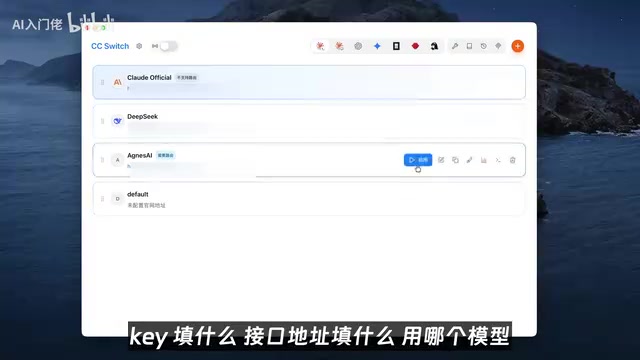
·4 min
Free Claude Code Tutorial: Complete Configuration Guide for Connecting to Agnes Multi-Modal Models
Learn how to connect Claude Code to Agnes AI's free models via Sense Switch for zero-cost text, image, and video generation, with complete setup steps and real-world results.
Read more →

·3 min
Kimi K3 Reaches 2.5T Parameters, MiniMax M3 Pro Brewing Simultaneously: China's LLM Arms Race Escalates
Kimi K3 adopts new architecture with 2.5T parameters and 1M token context. MiniMax M3 Pro targets 2.7-3T. OpenAI surpasses 7M users, HY-OCR 1.5 achieves SOTA, Amap launches world model.
Read more →

·5 min
July 24 AI Daily Brief: Flux 3 Multimodal Release, Kimi K3 Lags in Testing, Qwen Tops TTS Rankings
July 24 AI news: Black Forest Labs launches Flux 3 multimodal model, Kimi K3 lags in US-UK gov tests, Alibaba Qwen tops TTS rankings, Etched raises $300M, AMD unveils MI430X.
Read more →