#AI benchmark
2200 related articles

·1 min
Exa Launches Source Attribution: A New Benchmark for AI Content Traceability and Transparency
Exa launches Source Attribution, letting users view prompts, cited sources, and full recipes behind AI-generated content, with one-click iteration support.
Read more →

·3 min
AI Benchmarks: The Most Underrated Technical Startup Opportunity Right Now
AI benchmarks are emerging as a massive startup opportunity. With traditional evaluations maxed out and severe supply-demand imbalance, building quality public AI benchmarks means controlling industry narratives.
Read more →

·2 min
ViBench: A Benchmark Designed Specifically for Evaluating AI Application Building Capabilities
Deep dive into ViBench, a benchmark addressing SWE-bench's gaps in evaluating AI application building through end-to-end generation, visual quality, and functional completeness.
Read more →
·2 min
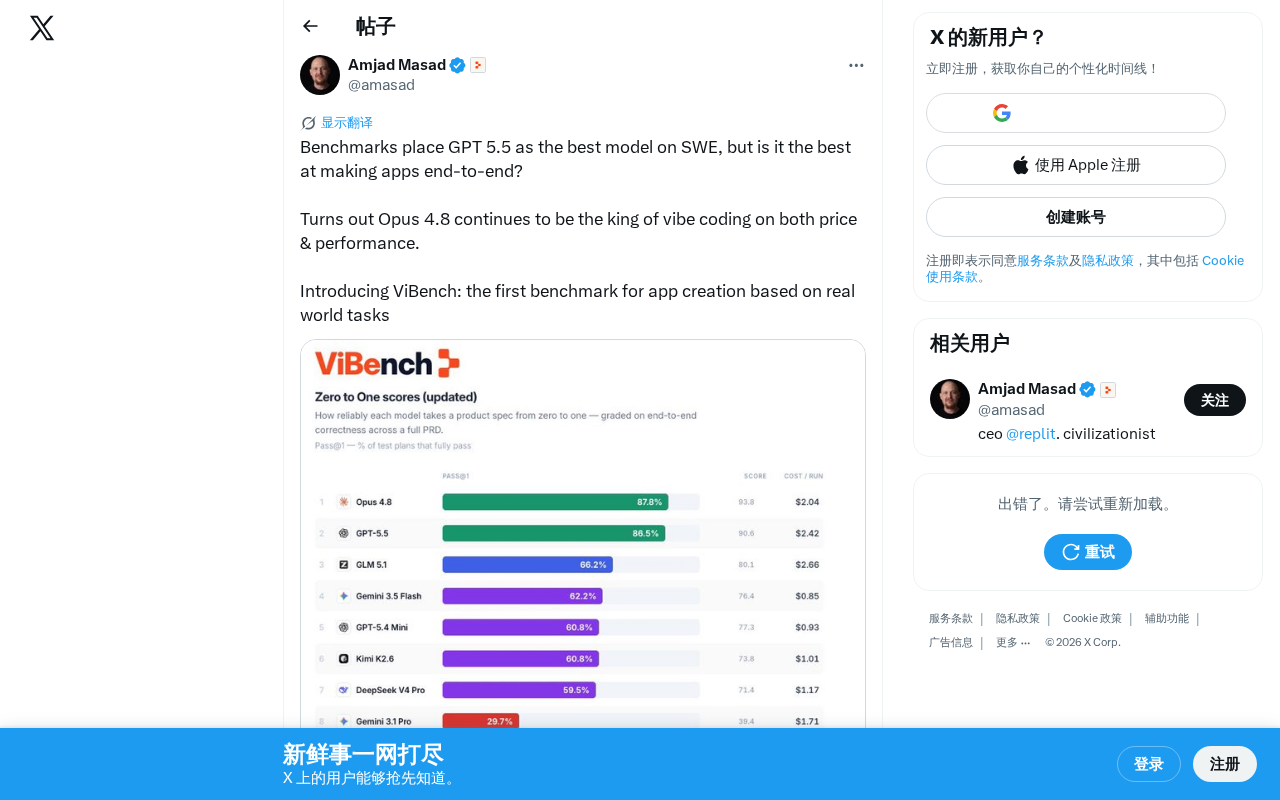
ViBench Benchmark: End-to-End App Creation Evaluation Reveals the True Level of AI Programming
ViBench is the first end-to-end app creation benchmark based on real-world tasks. Results show Claude Opus 4.8 leads in performance and cost-effectiveness, revealing gaps between SWE-bench scores and actual development capability.
Read more →
 Product Reviews
·2 min
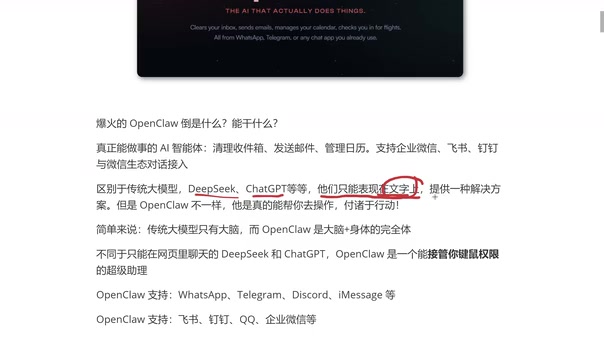
OpenClaw Hands-On Review: An AI Agent That Controls Your Computer — A New Benchmark for Office Automation
In-depth review of OpenClaw AI Agent: it takes over your keyboard and mouse to operate your computer directly. Covers environment setup, data scraping, file management, security, and cross-platform support.
Read more →
 Tech Frontiers
·1 min
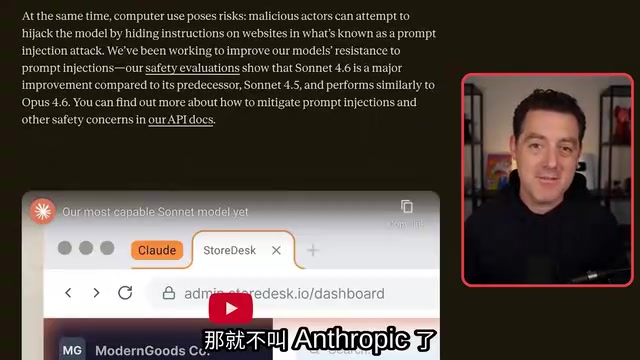
Claude Sonnet 4.6 Comprehensive Review: A New AI Benchmark for Knowledge Work with Near-Opus Performance
In-depth analysis of Anthropic's Claude Sonnet 4.6: agentic tool use, computer control, and office task upgrades. Multiple benchmarks surpass Opus 4.6, redefining mid-tier AI capabilities.
Read more →
 Product Reviews
·3 min
Benchmark: AI-Powered Financial Quote Analysis for Pricing Transparency in Brazil's Fintech Market
Benchmark is an AI pricing analysis tool for Brazil's fintech sector. Upload a PDF quote to auto-compare against 660+ data points with color-coded fairness ratings. Free, no signup required.
Read more →
 Deep Dives
·2 min
How Replit Evaluates AI Coding Agents: A Deep Dive into ByteBench Benchmark and Continuous Optimization Framework
Deep dive into Replit's dual-pillar AI Agent evaluation framework, including open-source ByteBench benchmark, Telescope semantic clustering tool, and A/B test-driven continuous iteration methodology.
Read more →
 Product Reviews
·3 min
Haiku 4.5 vs GPT-5 Mini vs GLM-4.6: Real-World Benchmark of Budget Coding Models
In-depth comparison of Claude Haiku 4.5, GPT-5 Mini, and GLM-4.6 across speed, cost, code quality, concurrency safety, and tool calling to help developers choose the right budget AI coding model.
Read more →
 Product Reviews
·2 min
Claude Haiku 4.5 Frontend Benchmark: One-Third the Price, Better Than GPT-5?
Benchmark comparing Claude Haiku 4.5, Sonnet 4.0, Gemini 2.5 Pro, and GPT-5 across three frontend scenarios. Haiku 4.5 at one-third the price matches or beats flagship models.
Read more →
 Tech Frontiers
·2 min
Claude Haiku 4.5 Released: Double the Speed at One-Third the Price, Setting a New Cost-Efficiency Benchmark for AI Coding
Anthropic releases Claude Haiku 4.5, a distilled version of Sonnet 4.5 with near-flagship coding performance, double the speed, and one-third the cost. Scores 73.3 on SWE-Bench, ideal for developers seeking cost-efficiency.
Read more →
 Tech Frontiers
·2 min
DeadEnd-CLI: Open-Source AI Penetration Testing Tool Achieves 81% Pass Rate on Black-Box Benchmark
DeadEnd-CLI is an open-source AI agentic penetration testing tool achieving 81% full black-box pass rate on the XBOW benchmark using KIMI K2.5, with multi-model support and self-hosted deployment.
Read more →
 Product Reviews
·3 min
MiroFlow Open-Source AI Workflow Framework Review: The Strengths and Concerns Behind Top Rankings Across Multiple Benchmarks
In-depth review of MiroFlow open-source AI workflow framework: technical architecture behind 5+ benchmark Top-1 rankings, multi-model support, Web UI, and comparison with LangChain and Dify.
Read more →
 Product Reviews
·3 min
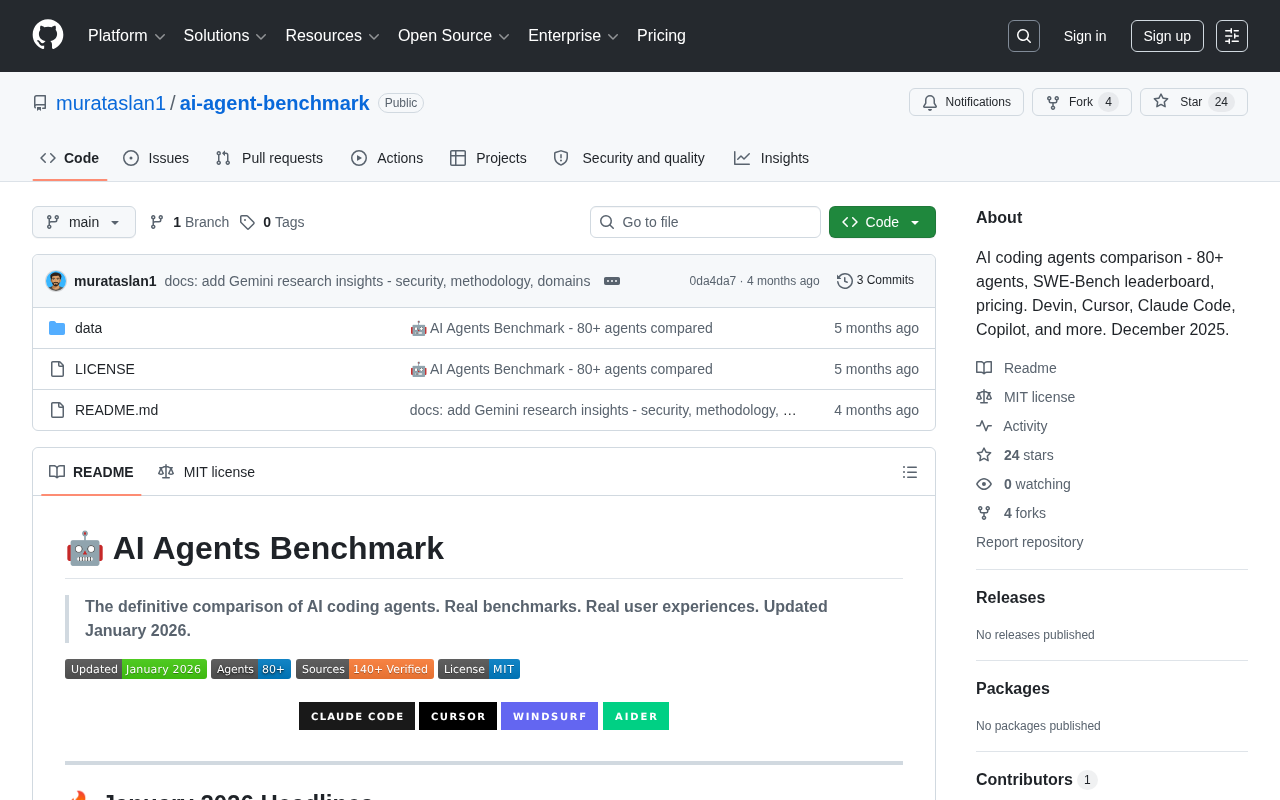
AI Coding Agent Benchmark: Comprehensive Ranking and Selection Guide for 80+ Tools
Comprehensive comparison of 80+ AI coding agent tools, with SWE-Bench benchmark rankings covering Devin, Cursor, Claude Code, GitHub Copilot and more, plus pricing analysis to help developers choose.
Read more →

·3 min
DeepSeek V4 Flash Released: Performance Approaching Claude at Just $0.18 per Million Tokens
DeepSeek V4 Flash launches with benchmark scores approaching Claude Opus 4.8 at just $0.18 per million output tokens. Deep analysis of performance, pricing, and industry impact.
Read more →

·3 min
Kimi-K3 Scores 60.4% on ARC-AGI-2: A Breakthrough in Abstract Reasoning
Kimi-K3 scores 60.4% on ARC-AGI-2, far surpassing most LLMs. This article analyzes what ARC-AGI-2 tests, what this score means for abstract reasoning, and its implications for the AI industry.
Read more →

·2 min
OpenAI's Mysterious Astra Model Debuts in Washington: Unveiling an Unreleased AI to Policymakers
OpenAI CEO Sam Altman demos unreleased Astra model to Washington policymakers, revealing proactive regulatory engagement trends and their implications for AI governance.
Read more →

·2 min
DeepSeek V4 Flash Free Access: Complete Breakdown of the 0731 Version on InferX
InferX offers free access to DeepSeek V4 Flash (0731 version) with zero data retention and OpenAI-compatible API. Full breakdown of features, pricing, and developer value.
Read more →

·6 min
Using RL to Please the Reward Model: The Reward Hacking Concern Behind Soaring Elo Scores
When RL continuously optimizes models to please reward models, do soaring Elo scores truly represent capability gains? A deep dive into Reward Hacking in RLHF, Goodhart's Law in AI, and industry countermeasures.
Read more →

·3 min
Reasoning Capabilities Unmatched, Pricing Still Too High: The Dilemma of AI Model Competition
Deep analysis of the dilemma in AI model competition where reasoning gaps and pricing imbalances force vendors to excel at either capability or cost-effectiveness to survive.
Read more →