#AI jailbreak
96 related articles

·5 min
ChatGPT Work Officially Launches: How GPT-5.6 Is Reshaping the Way You Work
OpenAI launches the GPT-5.6 model family (Sol/Terra/Luna) and ChatGPT Work, enabling automated financial analysis, local file operations, Codex coding, and cross-app workflows—AI officially becomes a real work partner.
Read more →

·4 min
Surge in Claude Mythos Preview Vulnerabilities: How Can We Ensure LLM Security?
After the release of Claude Mythos Preview, critical security vulnerabilities surged, raising widespread concern. This article analyzes the tension between rapid iteration and security, explores LLM attack surface challenges, and offers practical defense strategies.
Read more →

·4 min
The Boundaries of AI Safety Guardrails: Deep Reflections Sparked by a Single Prompt
A Reddit post sparks debate: what happens when a user asks AI to "push guardrails to the limit"? An in-depth look at AI safety guardrails, jailbreaks, and content balance.
Read more →
·5 min
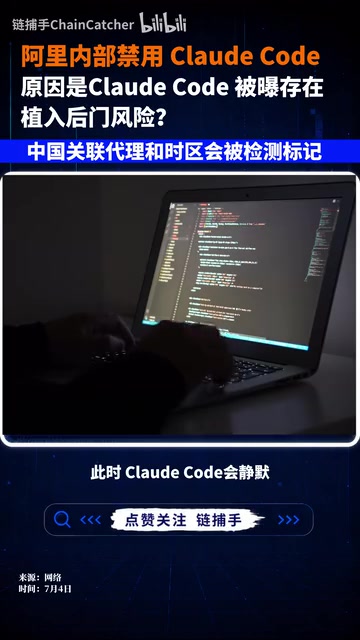
Alibaba Bans Claude Code: Invisible Fingerprints and the AI Tool Trust Crisis
Alibaba has banned Claude Code as high-risk software. Reverse engineering revealed a covert environment-identification mechanism hiding user fingerprints in punctuation via prompt steganography. A deep dive into the incident and AI tool trust.
Read more →
Boko Haram's Abuse of Frontier AI: How…
·3 min
Boko Haram's Abuse of Frontier AI: How Terror Groups Weaponize Technology and the Governance Crisis It Reveals
Boko Haram is systematically exploiting AI tools for propaganda automation, multilingual recruitment, and operational coordination. An in-depth analysis of generative AI abuse by terror groups, the open-source governance dilemma, and the AI safety arms race.
Read more →
·6 min
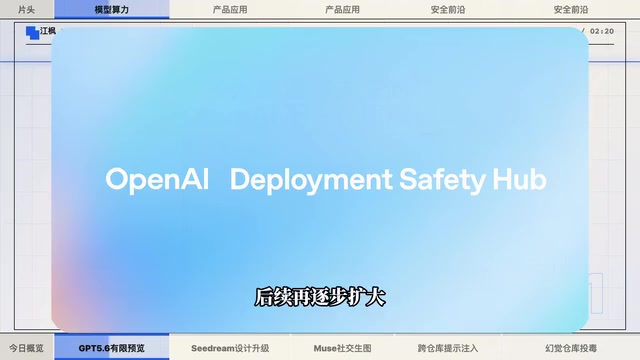
GPT-5.6 Sol Limited Preview: The Safety Boundaries Behind AI's Capability Expansion
OpenAI's flagship GPT-5.6 advances on three fronts—Sol, Kara, Luna tiered rollout; ByteDance CGN 5.0 Pro and Meta Muse push image generation toward controllable workflows; AI coding agents expose new supply chain risks.
Read more →

·3 min
GPT-5.6 Released: Sol, Terra, and Luna Reshape AI Programming and Office Automation
OpenAI launches GPT-5.6 with three models — Sol, Terra, and Luna — plus ChatGPT Work, a new desktop app, and Hosted Sites. Codex now autonomously trains models.
Read more →

·6 min
GPT-5.6 Hands-On Deep Dive: ChatGPT and Codex Merge, Full Analysis of the Sol Model
GPT-5.6 is officially released, merging ChatGPT and Codex into one app and launching the three-tier Sol, Terra, and Luna models. A detailed breakdown of 16 hands-on tests plus Worker mode and Codex dev upgrades.
Read more →

·6 min
GPT-5.6 Fully Available: A Deep Dive into the Sol/Terra/Luna Three-Tier Models and Four-Agent Parallelism
GPT-5.6 is now officially available to all users, launching the three-tier Sol, Terra, and Luna models with four-agent parallelism. An in-depth look at the official benchmarks, API pricing, safety, and Ultra mode.
Read more →

·3 min
AI Compliance Auditing: How to Build an Adversarial Testing Evidence System That Withstands Scrutiny
AI compliance is shifting from document storage to generating credible adversarial testing evidence. Learn how TRAIGA, NIST RMF, and ISO 42001 shape audit-grade red team testing requirements.
Read more →

·4 min
Hardware-Level Phone AI Agent Control: Bypassing Software Restrictions with HDMI + USB HID
An open-source project uses HDMI capture for screen vision and USB HID to simulate touch input, enabling root-free, app-free hardware-level phone AI Agent control. Explore the principles, advantages, and limitations.
Read more →
LLM Security Benchmarking: Current Sta…
·4 min
LLM Security Benchmarking: Current State, Challenges, and Practical Guide
Why is it so hard to establish unified LLM security benchmarks? This article analyzes core challenges in LLM security evaluation—covering jailbreaks, prompt injection, red teaming, and more—with practical strategies for developers.
Read more →

·6 min
Rust AI Agent System Prompt Engineering in Practice: A Seven-Dimensional Design Guide
An in-depth analysis of the four core roles of AI Agent system prompts and the four-step tool-calling method, covering behavioral boundaries, autonomous execution principles, and trigger pattern design—helping Rust developers build high-quality agents.
Read more →

·7 min
Andrew Ng's Prompt Engineering Course Essentials: Core Methodology Every Developer Must Learn
An in-depth analysis of the essentials of Andrew Ng and OpenAI's ChatGPT Prompt Engineering course. Covers the difference between base and instruction-tuned models, two core prompting principles, and how to wield LLM APIs to build apps.
Read more →

·3 min
Claude's Overzealous Safety Filters: How Anthropic's Classifiers Are Stifling Creative Writing
Anthropic's safety classifiers for Claude are generating too many false positives, blocking legitimate content on creative apps like Fable. A deep dive into classifier mechanics and the safety-usability tradeoff.
Read more →

·7 min
LLM Evaluation: The Testing Industry's Scarcest Career Pivot and the Timing to Enter
LLM evaluation roles are growing over 100% year-over-year, with top companies offering 50K/month yet unable to fill positions. This article explores how testing pros can seize the window.
Read more →
·7 min
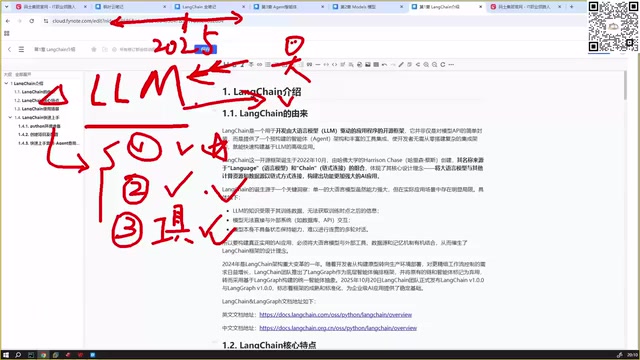
LangChain Hands-On Guide: From LLM Calls to Agent Development
Master LangChain from scratch: the three limitations of LLMs, init_chat_model unified interface config, the Message type system, and the path from LLM calls to Agent development.
Read more →

·7 min
GPT-5.6 Sol vs. Fable 5: Can Half the Price Match the Flagship?
OpenAI launches GPT-5.6 Sol at half the price of Anthropic's Fable 5. We compare both models on HealthBench, cybersecurity and more using hard system-card data, analyzing Sol's cost-effectiveness and shifts in AI power.
Read more →

·6 min
Fable 5 vs GPT-5.6 Sol: Cost-Efficiency Redefines the Frontier AI Landscape
An in-depth analysis of the head-to-head between Anthropic's Fable 5 and OpenAI's GPT-5.6 Sol: the performance gap, the logic behind pricing strategies, and the concentration-of-power concerns raised by U.S. government involvement.
Read more →

·6 min
Fable 5 vs. GPT-5.6 Sol: Benchmarks, Pricing, and the AI Power Struggle Explained
An in-depth comparison of Fable 5 and GPT-5.6 Sol: benchmarks across Terminal Bench, HealthBench, and ExploitBench, plus pricing strategy, OpenAI's government equity controversy, and shifting AI power dynamics.
Read more →