#Agent Framework
3634 related articles
Assess Your Engineering Team's AI Agen…
·3 min
Assess Your Engineering Team's AI Agent Maturity in 5 Minutes: A Tiered Framework and Key Dimensions
How to quickly gauge your engineering team's AI Agent adoption level? This article breaks down a four-tier AI maturity framework covering tool adoption, workflow integration, governance, and measurement.
Read more →

·3 min
What Should AI Agents Require Human Approval For? A Practical HITL Framework
Too much human approval kills efficiency; too little creates risk. This article provides a practical HITL framework covering reversibility, blast radius, data flow, and tiered thresholds to help teams balance safety and autonomy in AI Agent deployments.
Read more →
There's No Best Agent Framework — Only…
·2 min
There's No Best Agent Framework — Only the Right One for Your Needs: A Deep Comparison of Leading Options
LangGraph, PydanticAI, OpenAI Agents SDK, CrewAI — a senior developer's practical guide to choosing the right AI Agent framework for your project.
Read more →

·2 min
AI Agent Development in Practice: A Complete Guide to Framework Selection, Tool Calling, and Production Deployment
A comprehensive guide to AI Agent development: covering Agent vs. Chatbot differences, framework selection, tool calling design, RAG pipeline setup, and production deployment best practices.
Read more →

·3 min
31 Companies Sign Agent Privacy Pact: Industry Self-Regulation Framework Goes into Effect
31 companies sign China's first AI agent privacy pact covering screen-reading authorization, training data restrictions, and payment caps. Plus: domestic LLM tops OpenRouter, Meta's $40B compute bet, and agent commercialization challenges.
Read more →

·3 min
Local Gemma 3 12B as an AI Agent: A Practical Guide to Tool Calling and Framework Selection
Running Gemma 3 12B locally via Ollama and want to build an AI Agent? This guide covers tool calling, n8n/LangChain/CrewAI comparisons, context limits, and more.
Read more →

·4 min
TigrimOSR: An Open-Source Agent Framework in Rust with Configurable Agent Loops
TigrimOSR is an open-source multi-agent system written in Rust, supporting full agent loop definition via YAML config files with only 250MB memory usage. A deep dive into Loop Engineering, Rust advantages, and self-hosted Agentic AI.
Read more →

·5 min
Browser Use: A Deep Dive into the Event-Driven Browser AI Agent Framework
Browser Use is an open-source AI Agent framework that lets LLMs autonomously drive browser operations via natural language. This article breaks down its four-layer architecture, core Agent loop, CDP perception layer, dynamic Tools dispatch, and its Skills, Sandbox, and MCP extension capabilities.
Read more →

·6 min
A Deep Dive into AI Agent Harnesses: The Core Engineering Behind Agent Frameworks
What is an AI Agent's harness? This article systematically dissects the core components of agent frameworks: context management, tool use, control loops, and caching strategies—revealing why the same model performs so differently across harnesses.
Read more →

·6 min
Getting Started with AI Agents: Principles, Frameworks, and a Guide to Building Enterprise-Grade Agents
In-depth analysis of AI Agent core principles: why LLMs need Agent technology, the evolution from Prompt to RAG to Agent, Agent Tuning methods, and enterprise cost evaluation to help you build enterprise-grade agent applications.
Read more →

·6 min
AI Agent Development in Go: A Hands-On Guide to ByteDance's Eino Framework and Its Seven Core Capabilities
Build production-grade AI Agents with a pure Go stack using ByteDance's Eino framework. A deep dive into seven core capabilities: multi-Agent orchestration, long-task execution, command approval, RAG, MCP, Skills, and database reporting.
Read more →

·5 min
ECC: An Agent Enhancement Framework for AI Coding Assistants — Five Core Capabilities Explained
ECC is an agent optimization framework for AI coding assistants like Claude Code, Cursor, and Codex, enhancing them with skills, memory, security, and research-first development capabilities.
Read more →
·5 min
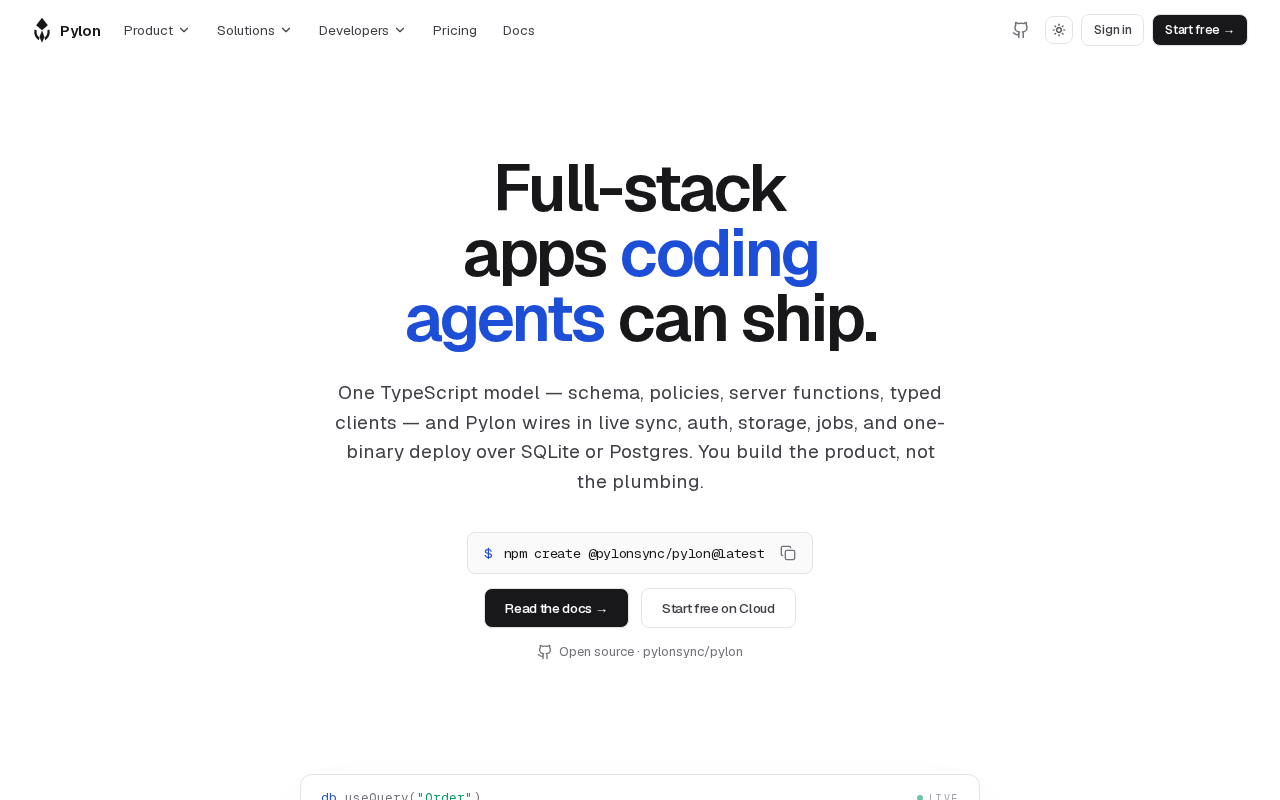
Pylon Sync: An In-Depth Look at the Full-Stack Realtime Framework Built for AI Agents
Pylon Sync is an "Agent-First" full-stack realtime framework that treats AI Agents as first-class design citizens, reducing coding errors via strong conventions.
Read more →

·6 min
Databricks Agent Framework in Practice: A Guide to ChatAgent Wrapping and Production Deployment
A deep dive into Databricks Agent Framework (Mosaic AI): unify LangGraph/OpenAI agents via ChatAgent, log & evaluate with MLflow, version with Unity Catalog, and deploy Model Serving Endpoints for production AI agents.
Read more →

·7 min
Harness Engineering: The Six-Layer Engineering Framework for Enterprise AI Agent Deployment
From Prompt Engineering to Harness Engineering, a deep dive into the core challenge of truly deploying AI Agents in enterprises. This article breaks down the six-layer architecture and shares real-world Hermes Agent practice.
Read more →

·3 min
Build an AI Agent Framework from Scratch: A Full Walkthrough of Function Call and MCP
Build an AI Agent framework from scratch — no LangGraph or Swarm. Deep dive into Function Call, MCP mirroring, dual-model dispatch, and short-term memory management.
Read more →

·7 min
Building AI Agent Frameworks with TypeScript: The Core Development Paradigm for Full-Stack Developers
An in-depth look at why TypeScript is the top choice for AI Agent development: covering Zod structured output validation, LangGraph's graph state machine design, and a full learning path for front-end devs transitioning to full-stack AI.
Read more →

·7 min
A Complete Guide to LangGraph's Core Concepts: The Framework of Choice for Enterprise Agent Development
An in-depth analysis of LangGraph's core concepts: short-term and long-term storage mechanisms, its differences from LangChain, the MIT open-source license, and private deployment solutions for enterprise Agent development.
Read more →
Enterprise AI Factory: Governance Fram…
·3 min
Enterprise AI Factory: Governance Frameworks and Practical Guides for Autonomous AI Agents
Explore how enterprises building AI Factories can govern autonomous AI agents through identity management, runtime protection, and defense-in-depth to balance autonomy with security.
Read more →

·5 min
Deep Dive into Vercel's eve Framework: How AI Agents Are Becoming an Entirely New Form of Software
Vercel's Chief of Software Andrew Qu explains the eve Agent framework's design philosophy, covering Skills modularity, Sandboxes security, and agent-readable websites—revealing the paradigm shift from instruction-driven to goal-driven software.
Read more →