#Beta code analysis
76 related articles

·4 min
Why CodeAct Code-First Agents Haven't Won Yet: A Deep Dive into the Paradigm's Dilemma
Deep analysis of why CodeAct code-first agents haven't replaced ReAct chat-first frameworks. Examining model training bias, protocol limitations, MCP design flaws, and sandbox challenges.
Read more →

·2 min
Why Are Users Demanding Kimi K3? A Reddit Rant Reveals the Truth About China's LLM Competition
A Reddit post sparks debate: users demand Kimi K3, citing DeepSeek's low prices. Deep analysis of Chinese LLM iteration speed, pricing strategies, and user loyalty.
Read more →

·3 min
LangChain Managed DeepAgents: Hosted Agent Infrastructure So You Can Focus on Core Logic
LangChain launches Managed DeepAgents public beta, hosting evals, memory, OAuth, Slack integration, and sandbox infrastructure so developers can focus on Agent core logic.
Read more →

·3 min
Why Does the Chess Engine Community Resist AI-Assisted Development? A Technical and Cultural Analysis
The chess engine dev community openly resists AI-assisted coding. This article analyzes the technical logic and cultural roots behind Stockfish's rejection of AI-generated code.
Read more →

·5 min
MemBoostAI: A Deep Dive into the AI-Powered Daily Memory Training Tool
MemBoostAI is a memory training app combining cognitive science with AI. Through short daily practice, active recall, and gamified challenges, it helps users boost memory retention. A deep analysis of its features, science, and differences from traditional flashcard tools.
Read more →

·2 min
Is Formal Language Theory Still Relevant in NLP? Deep Reflections Behind a Course Selection Dilemma
Formal Languages vs. Programming Language Principles—which course matters more for computational linguistics and NLP? A deep analysis from Chomsky Hierarchy to Lambda calculus to modern LLM theory.
Read more →

·2 min
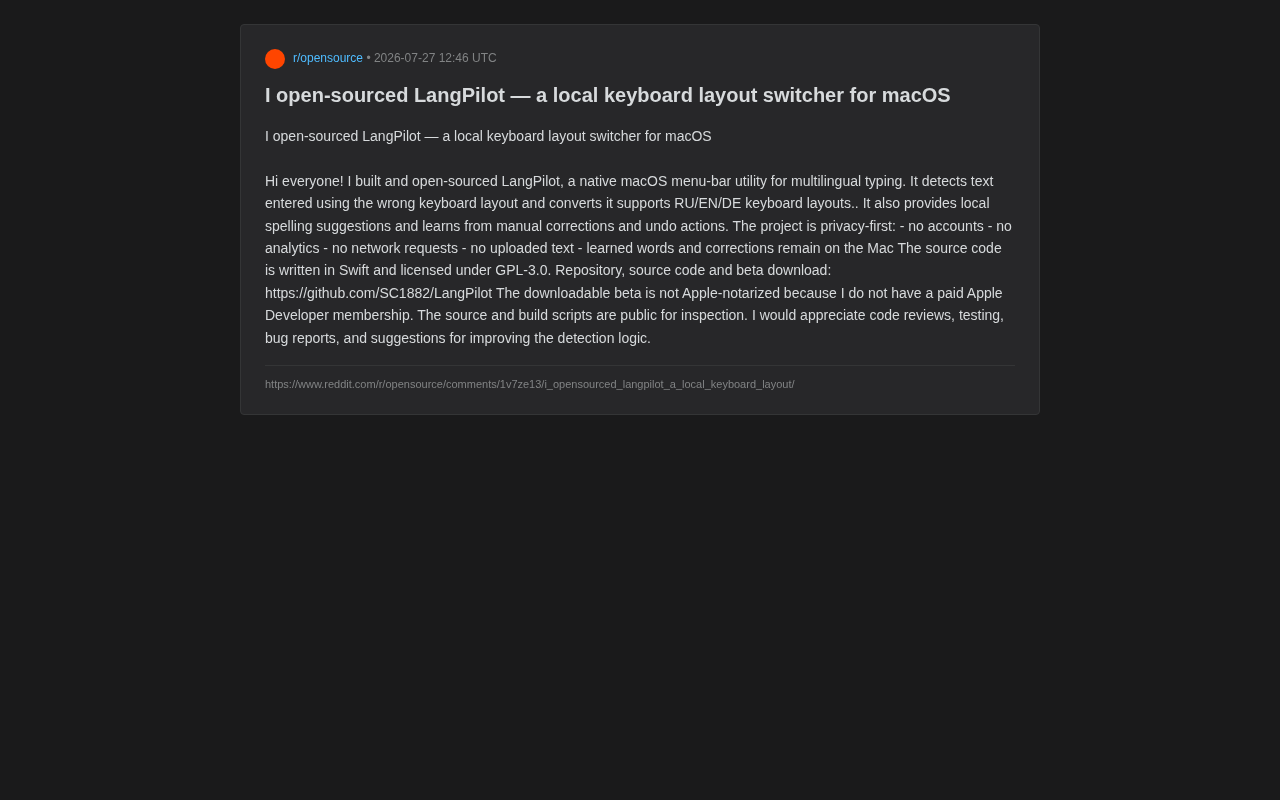
LangPilot Open-Sourced: A Localized Keyboard Layout Smart-Switching Tool for macOS
LangPilot is an open-source macOS menu bar tool that auto-detects and corrects keyboard layout mismatches for Russian, English, and German, with local spelling suggestions and adaptive learning. Fully offline, privacy-first, written in Swift under GPL-3.0.
Read more →
·2 min
LangPilot Open-Sourced: A Local Keyboard Layout Smart-Switching Tool for macOS
LangPilot is an open-source macOS menu bar tool that auto-detects and corrects keyboard layout mismatches for Russian, English, and German. Fully offline, privacy-first, written in Swift under GPL-3.0.
Read more →

·4 min
Burning Through 80 Billion Tokens: Why Vibe Coding Is Doomed to Fail
A creator spent 40 days and 80 billion tokens testing the real limits of Vibe Coding. This article dissects why AI programming crashes in production: complexity, context limits, and compression loss.
Read more →
·2 min
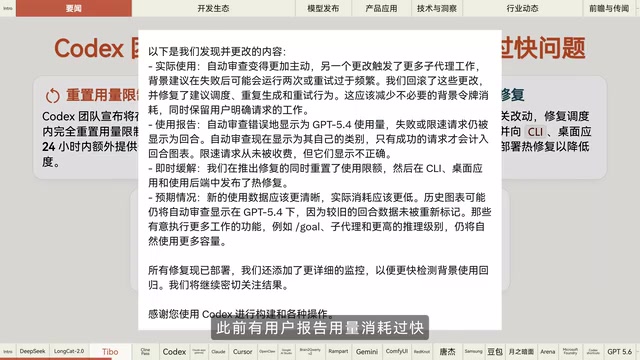
DeepSeek V4 Coming Soon, Meituan Open-Sources 1.6 Trillion Parameter LongCat 2.0
DeepSeek V4 launches mid-July with peak/off-peak pricing; Meituan open-sources trillion-parameter MoE model LongCat 2.0 with million-token context; Cursor debuts iOS app. A quick look at the latest AI industry news.
Read more →
·2 min
DeepSeek V4 Coming Soon; Meituan Open-Sources 1.6-Trillion-Parameter LongCat 2.0
DeepSeek V4 official release expected mid-July with peak/off-peak pricing; Meituan open-sources trillion-parameter MoE model LongCat 2.0 with million-token context; Cursor launches iOS app. A quick look at the latest AI industry news.
Read more →

·2 min
OpenCode: The Complete Guide to the Open-Source Coding Agent Chosen by 8 Million Developers
OpenCode has become the world's most popular open-source coding agent—8M monthly active developers, 75+ model providers, and custom sub-agent routing. This deep dive covers its core features, config tips, and business model.
Read more →

·3 min
Pinterest Medic: Engineering an AI Agent for Automated Spark Failure Diagnosis
How Pinterest engineers built Medic for Apache Spark — a multi-agent auto-diagnosis tool — covering the evolution from a single ReAct agent, observability, log denoising, and end-to-end testing.
Read more →
·6 min
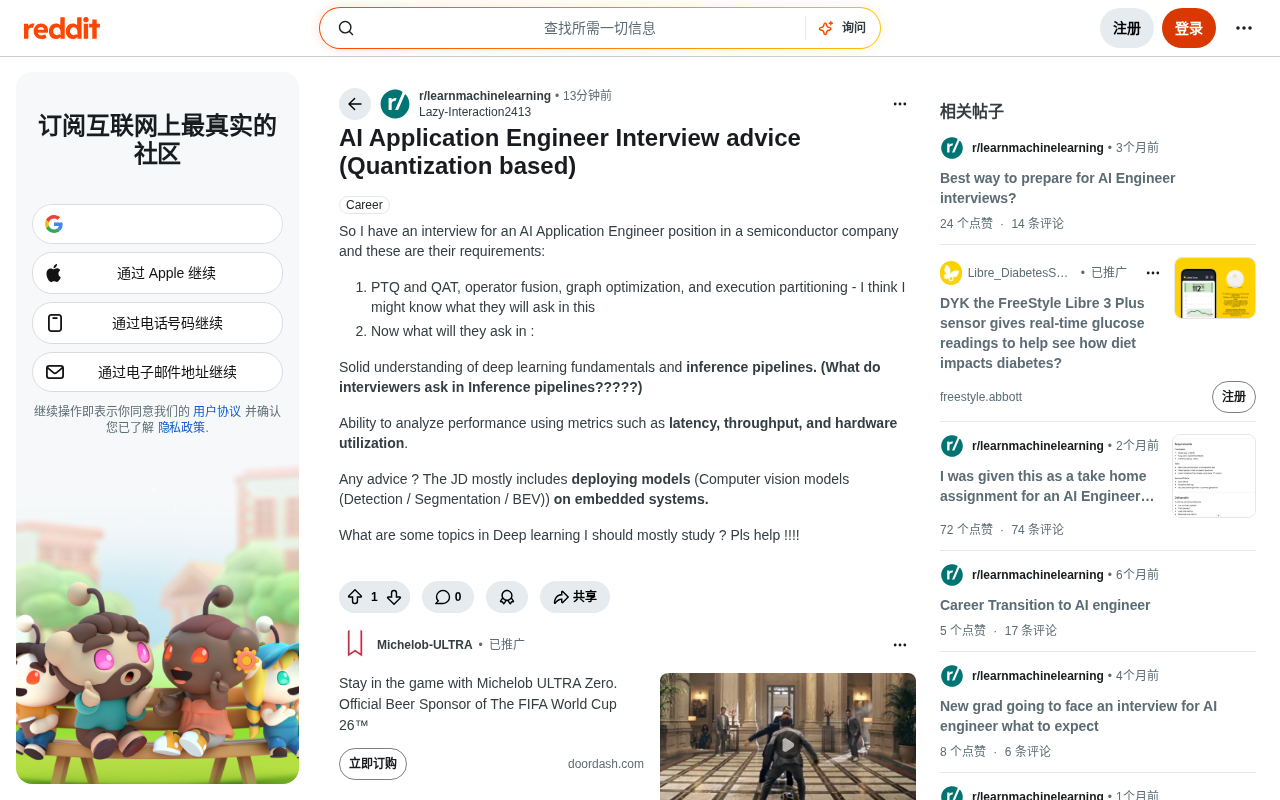
AI Application Engineer Interview Guide: Core Topics on Model Quantization and Inference Deployment
A systematic guide to must-know AI application engineer interview topics: PTQ/QAT quantization, operator fusion, inference pipelines, latency/throughput analysis, and edge deployment of detection/segmentation/BEV models.
Read more →
·6 min
AI Application Engineer Interview Guide: Core Topics in Model Quantization and Inference Deployment
A systematic review of must-know topics for AI Application Engineer interviews: PTQ/QAT quantization, operator fusion, inference pipelines, latency/throughput analysis, and edge deployment of detection/segmentation/BEV models.
Read more →

·2 min
Open Source Project "done": Satirizing AI Tool Metric Obsession With a Single Word
A Claude Code plugin called "done" went viral on Reddit by replying to every request with just "Done." — a sharp satirical take on AI tool hype and metric obsession.
Read more →

·4 min
Can AI Discover Alpha? A Deep Dive into Qlib and RD-Agent
Can AI truly discover Alpha automatically? This deep dive into Microsoft's open-source Qlib and RD-Agent reveals the 3 critical backtest pitfalls and 6 overfitting prevention gates every quant researcher needs to know.
Read more →

·2 min
The Truth Behind Anthropic's Account Bans: Client Detection Logic and a Wave of AI Model Launches
Unpacking the technical truth behind Anthropic's account bans: hidden timezone and proxy detection logic sparks privacy debate. Plus Claude Sonnet 5, Linux support, and new releases from OpenAI, NVIDIA, and Google DeepMind.
Read more →

·2 min
GPT-5.6 Deep Dive: Tiered Models + Multi-Agent Architecture, LLMs Evolve into Workflow Engines
GPT-5.6 isn't just a capability upgrade — it's an architectural shift: tiered models, programmatic tool calling, and multi-agent collaboration turn LLMs into workflow engines for production systems.
Read more →

·2 min
GPT-5.6 Three-Tier Model Breakdown: How Sol/Terra/Luna Rewrite the Agent Cost Structure
OpenAI releases GPT-5.6 with three tiers: flagship Sol, balanced Terra, and budget Luna. Sol leads competitors by 13 points on Agent benchmarks at one-quarter the cost, rewriting Agent economics.
Read more →