#Claude 5
3527 related articles

·2 min
Claude Opus 5 Released: Performance Leap at Half the Price, the New Foundation for AI Agents
Anthropic releases Claude Opus 5 flagship model, delivering near-top-tier intelligence at half the price, focused on long-running Agents, coding, and professional work scenarios.
Read more →

·2 min
Real User Feedback: Claude Opus 5 vs Gemini 3.1 Pro — Does Speed Determine the Experience?
A Reddit user's hands-on comparison of Claude Opus 5 vs Gemini 3.1 Pro reveals that response speed and interaction fluidity may matter more than raw intelligence in choosing an LLM.
Read more →

·3 min
Can Claude Opus 5 Refactor 25-Year-Old Legacy Code? The Real Capability Boundaries of AI Programming
Reddit debates whether Claude Opus 5 can independently refactor a 25-year, 50K-line undocumented legacy codebase. Analyzing AI programming's real capability boundaries and human-AI collaboration.
Read more →

·4 min
GPT-6 Reportedly Completed, Claude Opus 5 Leaked: The AI Model Race Accelerates
GPT-6 may be completed, Anthropic's Claude Honeycomb appears to be an early Opus 5 version, Kimi K3 is imminent, and Google Gemini faces further delays. Deep analysis of the latest AI model competition.
Read more →

·4 min
GPT-6 Reportedly Completed, Claude Opus 5 Leaked: The AI Model Race Accelerates
GPT-6 may be complete, Anthropic's mysterious Claude Honeycomb appears to be an early Opus 5 version, Kimi K3 is imminent, and Google Gemini continues to delay. Deep analysis of the latest AI model competition.
Read more →
·3 min
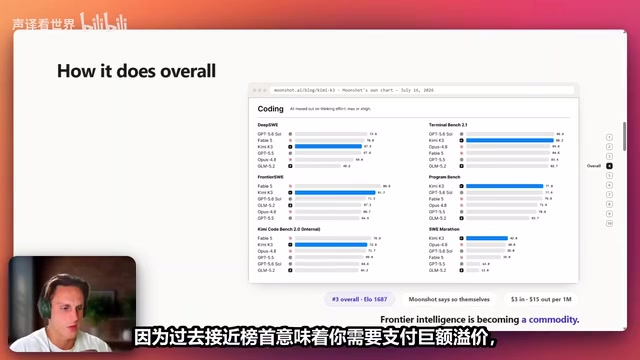
Kimi K3 Hands-On Tutorial: Claude Code Sub-Agent Configuration & GPT-5.6 Comparison Test
Complete guide to configuring Kimi K3 as a Claude Code sub-agent, including API setup, YFlow workflow building, and head-to-head comparison with GPT-5.6 and Claude Fable 5.
Read more →

·3 min
Kimi K3 Hands-On Review: 2.5 Trillion Parameter Open-Source Model Challenges Claude
Kimi K3 hands-on review: Moonshot AI's 2.5T parameter MoE model matches Claude in coding, surpasses it in 3D game development, with API pricing at one-tenth the cost of competitors.
Read more →

·3 min
Kimi K3 Hands-On Review: 2.5 Trillion Parameter Open-Source Model Takes on Claude
Hands-on review of Kimi K3, Moonshot AI's latest 2.5T parameter MoE model. Coding ability ties with Claude, surpasses it in 3D game dev, with API pricing at one-tenth of competitors.
Read more →

·5 min
Running GPT-5.6 Inside Claude Code: Best Practices for Subagent Orchestration and System Prompts
Deep dive into running OpenAI GPT-5.6 inside Claude Code: comparing Codex vs Claude Code on subagent orchestration, workflow design, and system prompt quality, revealing how harness engineering determines model output.
Read more →

·3 min
Claude Opus 5 Officially Released: Performance Approaching the Top Tier as the Open-Weight Debate Heats Up Again
Anthropic releases Claude Opus 5 with near-frontier performance at lower prices. Same day, Jensen Huang co-signs open-weight letter with 20+ companies while DeepSeek fundraising rumors surface.
Read more →

·3 min
Claude Opus 5 High Reasoning Mode: The Concerns and Insights of Overthinking
Claude Opus 5's high+ reasoning mode has been jokingly called an "anxious overthinker." This article analyzes why LLMs over-reason, the diminishing returns tipping point, and how to balance reasoning intensity.
Read more →
In-Depth Analysis of the Claude Opus 5…
·3 min
In-Depth Analysis of the Claude Opus 5 Elevated Error Rate Incident and Response Strategies
Deep analysis of the Claude Opus 5 elevated error rate incident, exploring LLM service reliability challenges and providing developers with practical strategies including multi-model redundancy, retry mechanisms, and graceful degradation.
Read more →

·2 min
Why Does GPT-5.6 Perform Better in Claude Code Than in Codex? A Deep Dive
Tech blogger Theo found GPT-5.6 runs better in Claude Code than in OpenAI's own Codex. A deep dive into their differences in system prompt quality and subagent orchestration.
Read more →

·7 min
Qwen3 235B A22B in Practice: A 2.4-Trillion-Parameter Open Model Surpasses Claude Opus
Hands-on with Alibaba Tongyi Qianwen's strongest Qwen3: a 2.4-trillion-parameter open weight model scoring 81.25% on KingBench, ranking second and beating Claude Opus 4.8 with perfect scores in game dev, math, and agent tasks.
Read more →
·3 min
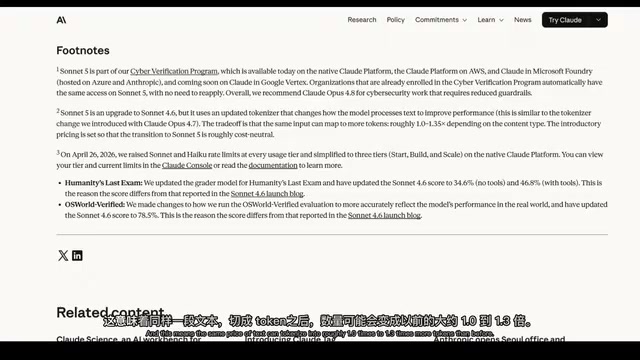
Claude Sonnet 5 Deep Dive: Impressive Benchmarks, Questionable Value — Just Use Opus 4.8?
Claude Sonnet 5 review: 63.2% SWE-bench, near Opus 4.8 performance, but new tokenizer hides real costs. Ranks 13th on CursorBench. Most tasks: stick with Opus 4.8.
Read more →

·2 min
GPT-5.6 Sol Tops Frontend Leaderboard · Claude Code Gets Built-in Browser · 50-Year Math Conjecture Solved
GPT-5.6 Sol tops Chatbot Arena's frontend leaderboard, Claude Code gains a built-in browser, Sol Ultra proves a 50-year math conjecture, and Gemma 4 gets 5x faster.
Read more →

·4 min
5 Tips to Cut Claude Opus 5 Costs by Up to 80%
Opus 5 moving to API billing? 5 proven tips to cut token costs by up to 80%: lower Effort Level, architect-executor split, Ponytail compression, Deep Research, and Advisor Mode — while outperforming Opus 4.8.
Read more →

·6 min
Claude Sonnet 5 In-Depth Testing: 8 Real-World Tasks Reveal Its True Capability Boundaries
Bilibili creator KaterSony tests Claude Sonnet 5 across 8 real-world tasks—image recognition, 3D modeling, web generation—comparing it against GPT-5.5, Gemini 3.1 Pro, and revealing its true capability limits and cost traps.
Read more →

·2 min
Claude Sonnet 5 Leaked: Near-Opus Performance at a Fraction of the Price
Claude Sonnet 5 leak: rumored input price of just $2/million tokens with near-Opus 4.8 performance. We break down the evidence, pricing, and what it means for developers.
Read more →
·3 min
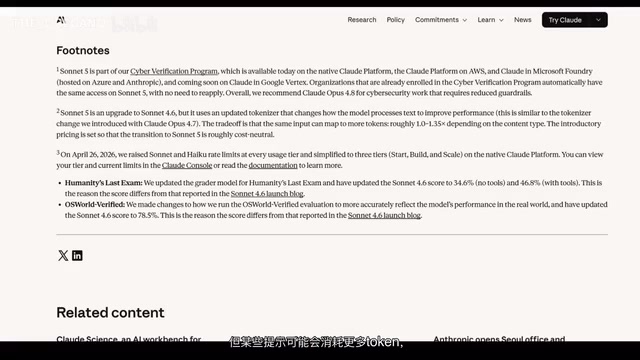
Claude Sonnet 5 Deep Dive: Impressive Benchmarks, Disappointing Reality — Stick with OPUS 4.8
Anthropic's Claude Sonnet 5 claims near-OPUS 4.8 performance at lower cost. Real-world tests reveal hidden tokenizer costs, weak creative output, and only 13th place on Cursor rankings.
Read more →