#Claude Agents
1884 related articles

·2 min
Getting Started with Claude Code: Why Terminal Agents Are the Top Choice for Enterprise AI Testing
What is the fundamental difference between terminal agents and device agents? This article breaks down Claude Code's core positioning, the key logic for enterprise AI testing selection, and the advantages of the Claude Code + DeepSeek combination.
Read more →

·4 min
Zero-Code AI Voice Agents with Claude Code: 5 Real-World Business Scenarios Unpacked
Build a production AI voice agent with Claude Code + Telnyx single-stack — no code needed, live phone number in 5 minutes. Covers 5 business scenarios including appointment booking, lead qualification, and support triage.
Read more →
Claude Is Mr. Meeseeks: The Disposable…
·2 min
Claude Is Mr. Meeseeks: The Disposable Nature of AI Agents and Its Engineering Implications
Using Rick and Morty's Mr. Meeseeks to explain Claude and AI agents: stateless execution, task atomicity, and multi-agent recursive failure risks. A deep dive for developers building better AI workflows.
Read more →

·3 min
AirOps in Practice: Building Enterprise-Grade AI Agents with the Claude Agent SDK
How AirOps replaced traditional workflow builders with the Claude Agent SDK to build an AI agent platform for content marketers — covering three architectural iterations, harness engineering, and sub-agent context management.
Read more →

·3 min
AI Coding Agents Explosion: CodeWell Goes Open Source, Kimi K3 Launches, Claude Gets Browser Access
CodeWell open-sources a multi-model terminal coding agent, Kimi K3 launches with ultra-long context, MiniMax Code 2.0 rebuilds its Agent architecture, and Claude gets browser access. AI is accelerating from content generation to task execution.
Read more →

·2 min
Claude Code for Beginners: How Non-Programmers Can Build AI Agents
Bilibili creator Nates releases a 6-hour, 30-lesson Claude Code course for complete beginners. No tech background needed. Learn to build AI agents and automated systems using natural language.
Read more →
Local Coding Agents in Practice: A Com…
·6 min
Local Coding Agents in Practice: A Complete Guide to Replacing Your Claude Subscription with Open-Source Models
An in-depth look at local coding agents—core concepts, advantages, and real challenges. Compare against Claude Code and learn to build a zero-subscription, private AI coding workflow with open-weight models.
Read more →

·2 min
Abralo: A Free Tool for Running Multiple Claude Code Agents in Parallel Within a Single Window
Abralo is a free, easy-to-use multi-agent coding tool that runs multiple Claude Code agents in parallel within a single window, solving task parallelism, solution comparison, and context isolation challenges.
Read more →

·2 min
The Security Risks of Running Unfamiliar Repos with Claude Code: How AI Agents Get Hijacked
Mozilla research reveals real attack chains targeting AI agent tools like Claude Code: malicious instructions hidden in DNS records bypass code scanning to steal API keys and cloud credentials.
Read more →

·3 min
Getting Started with Codex: A Deep Dive Comparison of AI Coding Agents vs. Claude Code
A deep dive into AI coding agents like Codex and Claude Code — real-world comparisons, MCP protocol explained, and how these tools are transforming programming for developers and beginners alike.
Read more →

·3 min
The 7-Level Claude Code Mastery Guide: From Basic Chat to Autonomous AI Agents
From chat to autonomous agents: a 7-level Claude Code mastery guide covering model selection, effective prompting, tool integration, sub-agents, skills, safety, and autonomous operation.
Read more →

·5 min
UE5.8 + Claude Code: A Complete Guide to AI Agents Directly Controlling Unreal Engine
UE5.8's official MCP plugin enables Claude Code and other AI Agents to directly control Blueprints, PCG graphs, materials, and level design. Complete setup and testing guide included.
Read more →

·2 min
Getting Started with Claude Code: Reshaping Software Testing Workflows with AI Agents
Learn Claude Code from scratch: understand LLMs vs. AI agents, explore a 3-day onboarding path, and discover how testing engineers can use agents to automate test case and script generation.
Read more →

·4 min
Four Core Strategies for Building Effective Claude Code Agents
Master Claude Code agents with four core strategies: planning, verification, context management, and system evolution. Move beyond Vibe Coding to systematic AI development.
Read more →

·3 min
Claude Code Routines Explained: Automation in Practice with Proactive AI Coding Agents
Deep dive into Claude Code Routines: build proactive AI coding agents with time-scheduled and event-driven triggers. Covers automated docs, deploy verification, and on-call investigation.
Read more →

·3 min
Claude Code Workflow in Action: 68 Sub-Agents Working Concurrently
Hands-on test of Claude Code's Workflow mode with 68 concurrent sub-agents. Covers setup, write-review separation, real concurrency results, and token costs.
Read more →

·2 min
Claude Code Workflow in Practice: Hundreds of Agents Automatically Migrating PHP to Golang
Deep dive into Claude Code Workflow's multi-Agent auto-orchestration: a real-world PHP to Golang migration running 14 hours with 100+ Agents, covering planning, execution, and Token cost analysis.
Read more →
·3 min
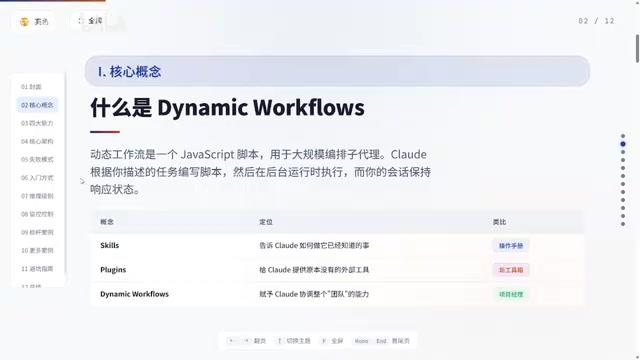
Claude Code Dynamic Workflows: Orchestrating Hundreds of Sub-Agents Working in Parallel
Deep dive into Claude Code Dynamic Workflows: enable parallel sub-agent orchestration via three methods for multi-agent collaboration and automated pipelines.
Read more →

·3 min
Codex vs Claude Code: An In-Depth Comparison of AI Coding Agents
In-depth comparison of Codex, Claude Code, and Cursor across pricing, features, GitHub integration, and team collaboration to help developers pick the best AI coding agent.
Read more →

·3 min
What Is Claude Code? A Guide to Choosing Between Terminal Agents and Device Agents
Explore Claude Code's core strengths and two major AI Agent categories. Compare Terminal Agents vs Device Agents, learn why Claude Code leads enterprise AI coding, and how to pair it with DeepSeek.
Read more →