#Claude Artifacts
113 related articles

·6 min
Hands-On with Mixar: An AI-Native Blender Fork That Handles Baking and LOD with a Single Prompt
Mixar is an AI-native fork of Blender 5.0 that embeds AI into the kernel layer. This hands-on review tests texture baking, LOD generation, mood boards, image-to-3D, and more, comparing it to MCP. Fully open source and free.
Read more →

·6 min
Fable 5 vs GPT-5.6 Sol: Cost-Efficiency Redefines the Frontier AI Landscape
An in-depth analysis of the head-to-head between Anthropic's Fable 5 and OpenAI's GPT-5.6 Sol: the performance gap, the logic behind pricing strategies, and the concentration-of-power concerns raised by U.S. government involvement.
Read more →

·2 min
Unsloth v0.1.45 Released: Gemma 4 MTP Acceleration, Cross-Platform Fixes, and Studio Upgrades
Unsloth v0.1.45-beta adds Gemma 4 MTP support, AMD ROCm & NVIDIA Blackwell fixes, a new Hub download manager, and a compact RAG system for local LLM fine-tuning.
Read more →

·3 min
Unsloth v0.1.46-beta Update: DiffusionGemma Tool Calling Disabled and Artifacts Canvas Enabled by Default
Unsloth v0.1.46-beta is out with key DiffusionGemma changes: tool calling disabled by default, artifacts canvas enabled. A deep dive for LLM fine-tuning devs.
Read more →

·7 min
Complete Guide to Claude Code Desktop: Access DeepSeek Domestic Models Without an Account
Step-by-step guide to installing Claude Code Desktop, enabling developer mode for account-free use, integrating DeepSeek via CC Switch, Chinese localization, and custom Skills in ten minutes.
Read more →

·5 min
Claude Sonnet 5 Integrated with Devin: Enhanced Coding Performance with 30% Lower Quota Consumption
Anthropic's Claude Sonnet 5 launches on Devin Desktop and CLI, delivering frontier-level coding performance while reducing quota consumption by ~30% compared to the previous generation.
Read more →

·3 min
Unsloth Major Update: DiffusionGemma & Gemma 4 MTP Support, 2x Inference Speed Boost
Unsloth v0.1.464-beta adds DiffusionGemma, Gemma 4 MTP, and MiniMax-M3 support, delivering ~2x inference speed boost, new Hub, RAG Q&A, tensor parallelism, and full CUDA/ROCm/Windows coverage.
Read more →

·7 min
Claude Code Command Orchestration: One-Click Content Research and Auto-Publishing
Learn how to orchestrate Claude Code custom commands to chain content research and social media publishing agents into a fully automated workflow with one command.
Read more →

·7 min
Inside the AI Fraud Industry Chain: Deepfakes and Identity Deception Revealed Through the Lily Jay Incident
The Lily Jay incident exposes the AI fraud industry chain: how deepfakes, image synthesis, and content automation create fake identities. Practical methods for identifying false content in the AI era.
Read more →

·7 min
Claude Sonnet 5 Released: The Most Powerful Agent-Capable Mid-Tier AI Model
Anthropic releases Claude Sonnet 5, its most agentic mid-tier model with planning, browser/terminal tool use, and autonomous execution—bringing flagship Agent capabilities at significantly lower cost.
Read more →

·7 min
Claude Sonnet 5 Released: The Most Capable Agent Model at Mid-Tier Pricing
Anthropic releases Claude Sonnet 5, its most agentic Sonnet model yet. With planning, browser/terminal tool use, and autonomous execution, it brings flagship Agent capabilities to mid-tier pricing.
Read more →
T3MP3ST: The Open-Source Framework Tha…
·4 min
T3MP3ST: The Open-Source Framework That Turns Coding Agents into Autonomous Red Team Operators
T3MP3ST is an open-source offensive security framework that turns coding agents like Claude Code and Codex into autonomous red team tools. Achieves 90.1% pass@1 on XBEN, supports Web pentesting, CVE discovery, and smart contract auditing.
Read more →

·2 min
Getting Started with Claude Code: Reshaping Software Testing Workflows with AI Agents
Learn Claude Code from scratch: understand LLMs vs. AI agents, explore a 3-day onboarding path, and discover how testing engineers can use agents to automate test case and script generation.
Read more →

·3 min
Short Drama Agent Tested: Is AI One-Click Video Production Actually Feasible?
Full hands-on test of Short Drama Agent: from scriptwriting and character three-view sheets to AI video generation. We break down the workflow for cute-style and xianxia dramas and analyze three key pain points: cost, rigidity, and visual inconsistency.
Read more →

·4 min
AI Weekly: Top Coding Model Returns, Google's New Flash Checkpoint, and the Video Generation Race
This week in AI: Anthropic's flagship coding model returns globally with new safety classifiers, Google tests a new Gemini Flash checkpoint, video generation heats up, and Figure AI robots enter BMW factories.
Read more →

·7 min
App Builder: Generate Runnable Applications from a Single Sentence — A New Paradigm in AI Programming Tools
App Builder generates single-file runnable apps from natural language, with real-time sandbox preview and conversational revision. Deep analysis of its workflow, architecture, limitations, and costs.
Read more →

·3 min
Cursor & Claude Code Enterprise Training: AI Coding Tool Division of Labor and Practical Methodology
How can R&D teams truly leverage AI coding tools? This article breaks down Cursor vs. Claude Code division of labor, an eight-step framework, and how to build reusable AI collaboration assets.
Read more →
·3 min
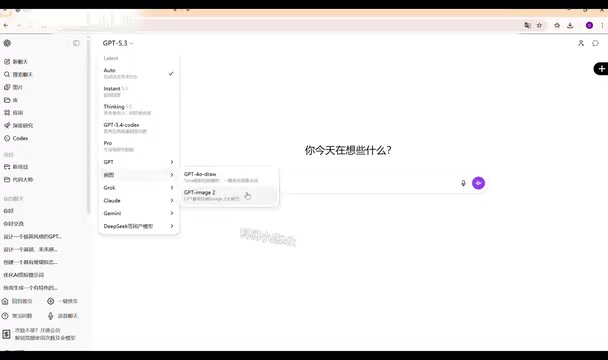
AI Aggregator Hub: Free Access to GPT, Gemini, Grok, and Other Major LLMs — A Hands-On Review
In-depth review of an AI aggregator site offering free access to GPT, Gemini, Grok, and Claude official versions. Analysis of account pool rotation, cross-model context memory, and shared account privacy risks.
Read more →

·3 min
MiniMax M3 Coding Benchmark: 1/765th the Price of Opus, but Better Code Quality?
Real-world coding tests compare MiniMax M3 vs Cursor Composer 2.5 across three tasks. At 1/765th the price of Claude Opus, M3 delivers better code quality, tests, and project structure.
Read more →

·3 min
How Much Math Do AI Practitioners Really Need? A Deep Dive into Three Role Types
How much math do AI/ML practitioners really need? This article breaks down three roles — Users, Developers, and Researchers — and analyzes the math requirements for each to help you plan your learning path.
Read more →