#ComfyUI LoRA training
34 related articles
 Tutorials
·3 min
ComfyUI LoRA Training Tutorial: TrainTools-MZ Plugin Turns Model Training into Node-Based Visual Workflow
ComfyUI-TrainTools-MZ is a ComfyUI training node plugin based on kohya-ss/sd-scripts, enabling LoRA fine-tuning directly in the node editor. This guide covers installation, configuration, and usage.
Read more →

·2 min
AI Art Same-Character Multi-Style Experiment: Why Version #3 of the Desert Mage Was Most Popular
Analyzing a Reddit Desert Mage multi-style AI art experiment: why the version with hidden face and skeletal details won, exploring mystery, narrative tension, and prompt engineering in AI character design.
Read more →

·3 min
Famegrid Auto Color: A ComfyUI Node for Automatic Color Correction to Fix LoRA Color Cast Issues
Famegrid Auto Color is an open-source ComfyUI node that automatically corrects LoRA color casts through per-image adaptive analysis, with skin-hue protection, batch processing, and Float32 precision.
Read more →

·3 min
SCAIL 2 Deep Dive: Character Replacement, Physics Simulation & Object Permanence Performance Analysis
In-depth testing of SCAIL 2 video generation AI across character replacement, physics simulation, object permanence, and more—covering reference image prep, ComfyUI workflows, and real results.
Read more →
·4 min
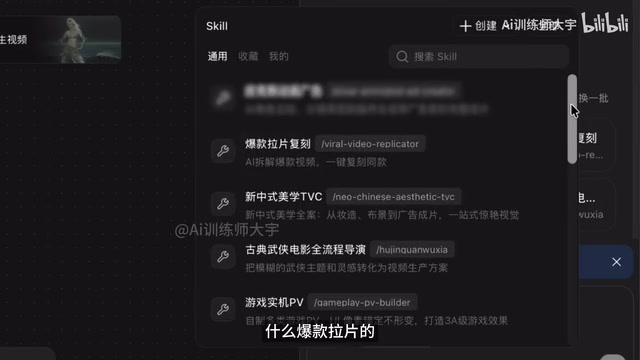
LibTV Hands-On: A Full Breakdown of How an AI Agent Produces an Animated Short in One Day
Hands-on test of LibTV's AI Agent: from script and storyboarding to video compositing, one person completes an animated short in a day. Full breakdown of the Skill library, node workflow, and Story Board features.
Read more →

·3 min
Krea 2 Identity Edit Lora Hidden Technique: Precise Image Control Through Text Annotations
Deep dive into Krea 2 Identity Edit Lora's hidden feature: add text annotations to input images for precise spatial control of generated content. Learn the technique, mechanism, and workflow impact.
Read more →

·3 min
Ideogram 4.0 Turbo Workflow: An AI Image Generation Solution Balancing Speed and Quality
Detailed look at the Ideogram 4.0 mixed turbo workflow: RTX 4090 tested at just 15s inference, matching Krea2 speed with up to 8K resolution output.
Read more →
·3 min
Ideogram 4.0 Turbo Workflow: An AI Image Generation Solution Balancing Speed and Quality
Detailed look at the Ideogram 4.0 mixed turbo workflow: RTX 4090 inference in just 15 seconds, rivaling Krea2 speed, with stable output up to 8K resolution.
Read more →

·6 min
The CivitAI Early Access Controversy: Where Is the Boundary Between Open-Source Ethos and Commercialization?
CivitAI's paid "Early Access" mechanism has sparked heated debate on Reddit: should functional models stay locked behind paywalls long-term? An in-depth look at creator monetization, community consensus, and platform responsibility.
Read more →

·6 min
DiffusionGemma Character Motion Transfer in Practice: A ComfyUI Workflow Breakdown
Explore a character motion transfer experiment based on a DiffusionGemma custom node—swap identity in ComfyUI using just a static image, a reference video, and one prompt. A breakdown of the tech stack, control signal preservation, and real limitations for AI video creators.
Read more →

·3 min
InvokeAI In-Depth Review: Can It Replace SD WebUI and ComfyUI?
A hands-on InvokeAI review covering installation, VRAM optimization, infinite canvas, node workflows, and model management — with an objective comparison to SD WebUI and ComfyUI.
Read more →

·7 min
The Complete AI Character LoRA Training Workflow: Hands-On Multi-Character Consistency Generation with Local Deployment
A detailed guide to a complete local AI character generation workflow: from the five golden rules of LoRA training and automated ComfyUI dataset construction to hands-on comparisons of Crea2, Ideogram4, and Wan for multi-character same-frame interaction—all running free on personal hardware.
Read more →

·2 min
Wildcards in Action: A Guide to Batch Exploration and Diversity in AI Image Generation
Wildcards are one of AI image generation's most underrated features. Learn how the randomization mechanism works, how to use ChatGPT to bulk-generate vocabulary lists, and how to build reproducible, systematic creative workflows.
Read more →

·3 min
LTX2.3 Open-Source Model Tested: Full AI Comic Drama Pipeline on Just 6GB VRAM
LTX2.3 ComfyUI bundle tested: runs locally on 6GB VRAM, covering character generation, image-to-video, storyboarding, motion transfer, and frame interpolation for full AI comic drama workflows.
Read more →

·2 min
The Truth About AI Webcomic Side Hustles: Why Most People Never Make Money
Can AI webcomics really earn $1,500/month? This deep dive unpacks the full monetization pipeline and reveals why most beginners fail — the gap is in scripting, consistency control, and operations.
Read more →

·2 min
Abliteration Explained: Building a Custom Uncensored Text Encoder for Krea 2
How a developer ran 4,000 multi-seed abliteration trials to build a 100% HarmBench-compliant uncensored text encoder for Krea 2's Qwen3-VL-4B, with five quantization formats and ComfyUI deployment guide.
Read more →

·3 min
Four Paths for Frontend Engineers to Level Up in AI: From RAG to Vertical Agents
How can frontend engineers transition into AI development? This guide covers four agent development directions: RAG, workflow agents, vertical agents, and general-purpose agents — with framework picks like LangChain.js.
Read more →

·2 min
LTX 2.3 Hands-On: How Efficient Is Local AI Video Generation on the RTX 5080?
Hands-on with LTX 2.3 and ComfyUI for local AI video generation on the RTX 5080: 8-second clips in just 2-3 minutes while running DaVinci Resolve simultaneously. Covers hardware, workflow setup, and multi-tool creation.
Read more →

·4 min
Eight Text-to-Image Models Compared: Which Excels at Realism, Ghibli, and Anime Styles
A comprehensive comparison of eight mainstream text-to-image models including Krea2, Flux2, and Qwen Image, covering realistic portraits, Ghibli, 3D anime, and Japanese anime styles.
Read more →

·4 min
LingBot-World 2.0 Meets SGLang: A Deep Dive into the Evolution of Real-Time Interactive World Models
SGLang-Diffusion now officially supports LingBot-World 2.0, delivering leaps in resolution and temporal consistency. With live sessions, chunked streaming, and camera control, world models achieve low-latency controllable interaction.
Read more →