#DevOps CI/CD
207 related articles

·3 min
MLOps or Automation Technician? Choosing a Career Path for Breaking into Tech with Zero Background
A 27-year-old warehouse worker faces a choice between MLOps engineer and Automation Technician. This article analyzes both paths' employment certainty, entry barriers, and growth potential for zero-background career changers.
Read more →

·3 min
How Developer Productivity Startups Boost Their Own Efficiency: Practicing What You Preach
How developer productivity startups practice what they preach—from automated toolchains and DORA metrics to engineering culture that shortens feedback loops and reduces cognitive load.
Read more →

·3 min
How Developer Productivity Startups Boost Their Own Efficiency: Practicing What You Preach
How developer productivity startups practice their own efficiency principles—from automated toolchains and DORA metrics to engineering culture that shortens feedback loops and reduces cognitive load.
Read more →

·3 min
What Kind of GUI Do AI Agents Need? The Evolution from Chat Boxes to Task Consoles
Exploring GUI design for AI Agents: why chat boxes fall short, and how ideal agent interfaces need task visualization, human-in-the-loop intervention, state presentation, and multi-agent orchestration.
Read more →

·3 min
Modulify 2.0 Deep Dive: How a Full-Lifecycle AI Website Platform Keeps Sites Growing
Deep analysis of Modulify 2.0's full-lifecycle AI website platform — from design and publishing to management and optimization. Exploring its core differences from traditional AI builders.
Read more →

·3 min
Cekura: A Deep Dive into the Automated Testing, Monitoring, and Self-Healing Closed-Loop Platform for Voice AI Agents
Deep analysis of how Cekura's five-step closed loop—scenario simulation, failure capture, root cause diagnosis, automatic prompt rewriting, and regression verification—solves voice AI agent quality assurance in production.
Read more →

·2 min
Prefactor: Production-Grade Monitoring and Quality Assurance Tool for Real-Time AI Agent Evaluation
Prefactor is a production-grade monitoring tool for real-time AI Agent evaluation, using real-time scoring, quality drift detection, and performance visualization to solve the core pain point of Agents passing offline tests but failing in production.
Read more →

·2 min
Prefactor: Production-Grade Monitoring and Quality Assurance Tool for Real-Time AI Agent Evaluation
Prefactor is a production-grade monitoring tool for real-time AI Agent evaluation, using live scoring, quality drift detection, and performance visualization to solve the core problem of Agents passing offline tests but failing in production.
Read more →

·3 min
Local Merge Queues: Solving Code Conflicts for Parallel AI Programming Agents
Deep dive into how local merge queues solve code conflict challenges when multiple AI programming agents work in parallel, covering merge queue principles and multi-agent development trends.
Read more →

·3 min
Local Merge Queues: Solving Code Conflicts from Parallel AI Coding Agents
Deep dive into how local merge queues solve code conflict challenges when multiple AI coding agents work in parallel, covering merge queue principles and multi-agent development trends.
Read more →

·3 min
LLMOps Tool Selection Guide: An In-Depth Comparison of Tracing, Evaluation, and Governance Capabilities
In-depth analysis of LLMOps tool selection, comparing Langfuse, LangSmith, Helicone, and Orq.ai across tracing, evaluation, and governance capabilities with practical recommendations.
Read more →

·4 min
Transitioning from DevOps to MLOps: A Complete Learning Roadmap
How can DevOps engineers efficiently transition to MLOps? This guide covers MLOps core concepts, standard workflows, essential tools, and Azure practices with a progressive learning roadmap.
Read more →

·4 min
What It Feels Like When Production Actually Runs Like Localhost
Why does production never match local? This article analyzes root causes like config gaps and dependency drift, and explores how Docker, Twelve-Factor App, and IaC practices bridge the dev-prod divide.
Read more →

·4 min
Getting Started with Claude Code: Environment Setup, Common Commands, and Git Workflow in Practice
A detailed guide to Claude Code installation, domestic model switching, project analysis commands, and Git workflow practice to help developers quickly master this AI programming collaboration tool.
Read more →

·6 min
Harness Engineering: From Context Engineering to the Third Phase of AI Programming
Explore Harness Engineering: the next evolution beyond context engineering for AI programming. Learn how to build enterprise-grade Skill systems and deliver real projects with mid-tier models.
Read more →

·3 min
The Real Daily Life of MLE and MLOps Engineers: Key Differences Between Three Roles and Career Paths
An in-depth look at the real daily work of data scientists, MLEs, and MLOps engineers — covering responsibilities, essential tools, and career paths to help you find your direction in AI.
Read more →
·3 min
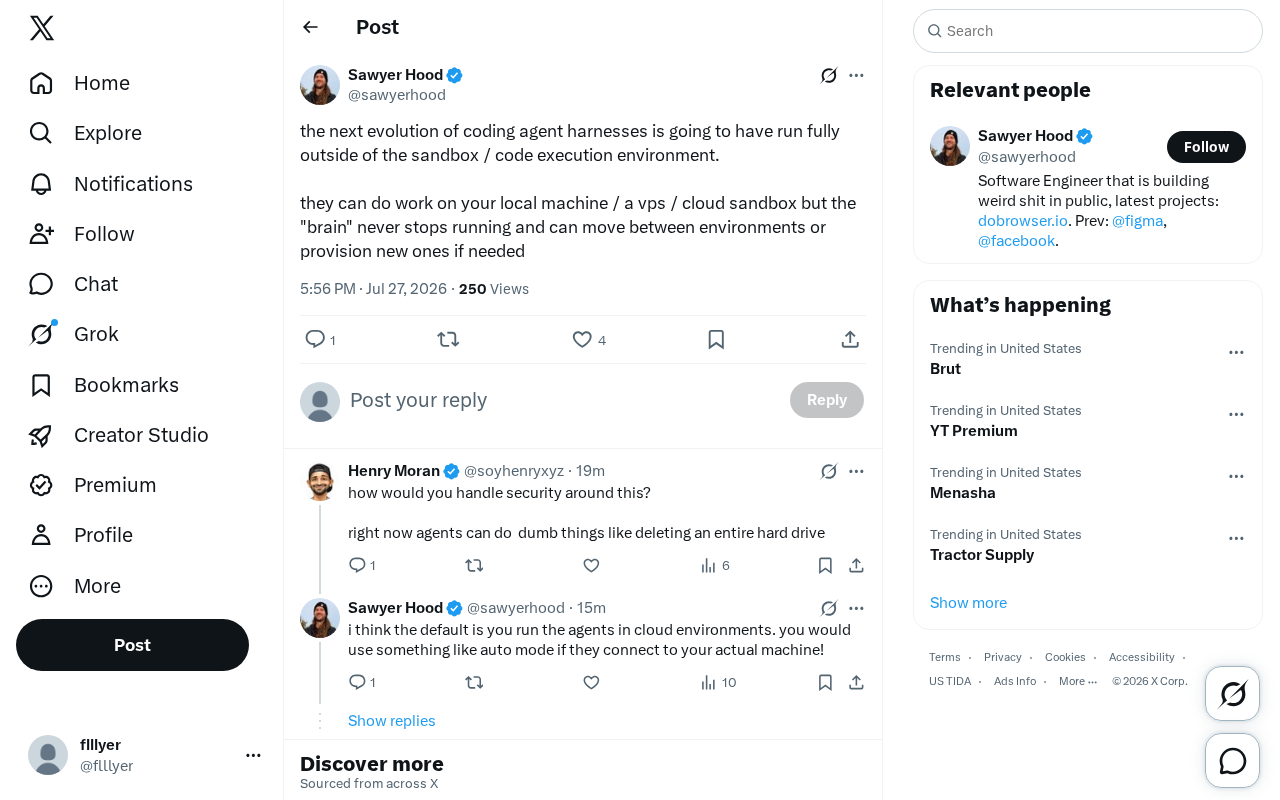
The Next Evolution of Coding Agents: Letting the Brain Break Free from the Sandbox
Exploring the key evolution in coding agent architecture: separating the reasoning core from code execution environments to decouple control and execution planes.
Read more →
·3 min
The Next Evolution of Coding Agents: Letting the Brain Escape the Sandbox
Exploring the next evolution in coding agent architecture: decoupling the reasoning core from code execution environments to separate control and execution planes.
Read more →

·3 min
Jenkins Deep Dive: The Evergreen King of CI/CD Automation
An in-depth analysis of Jenkins' technical architecture, plugin ecosystem, distributed builds, and use cases — explaining why it remains the CI/CD leader.
Read more →

·2 min
Dependabot Cooldown Period Explained: Why Delaying Dependency Updates by Three Days Is Safer
GitHub Dependabot now defaults to a three-day cooldown for version update PRs to guard against supply chain attacks and improve dependency stability.
Read more →