#GPU kernel optimization
218 related articles

·6 min
14x Speedup: How Manticore Rebuilt the ONNX Embedding Inference Path
Manticore Search restructured its ONNX inference path to achieve 14x faster text embeddings. Deep dive into batching, session reuse, zero-copy memory, and thread tuning for vector search systems.
Read more →

·6 min
Codex Beginner's Guide: Four Product Forms Explained, Plus Comparison with Claude Code and Cursor
In-depth analysis of OpenAI Codex's four usage forms, comparing Codex, Claude Code, and Cursor across price, stability, and frontend/backend fit to help developers choose the right AI programming tool.
Read more →

·3 min
Harness Engineering in Practice: A Guide to Enterprise-Grade Multi-Agent System Architecture
A deep dive into Harness Engineering architecture: building an AI procurement assistant on ERP systems, covering multi-agent orchestration, MCP protocol, ASGI deployment, and sandbox isolation.
Read more →

·2 min
Getting Started with LLMs: A Complete Roadmap from Zero to Practice
How to learn LLMs from scratch? This guide covers personalized learning paths for 3 types of learners, hardware tips (16GB RAM is enough), Python prep, and cloud GPU options.
Read more →

·3 min
Liang Wenfeng and DeepSeek: How an Idealist Is Disrupting Global AI with Algorithmic Efficiency
Why did DeepSeek go open-source? How does a 300-person team beat tech giants? A deep dive into Liang Wenfeng's logic: flat org, algorithmic efficiency, and open-source disruption.
Read more →

·3 min
Running Local LLMs on AMD GPUs: Ditching Ollama for LM Studio Delivers 7x Speed Boost
AMD GPU black screens running local LLMs? This post-mortem covers Ollama's 3 fatal flaws and how switching to LM Studio boosted token speed from 5 to 36, with ROCm setup, Speculative Decoding, and GFX version tips.
Read more →
Should Frontier AI Models Like GPT-5.6…
·4 min
Should Frontier AI Models Like GPT-5.6 Be Open-Sourced? A Deep Dive into the Open vs. Closed Debate
Should frontier AI models be open-sourced? This deep dive explores the key debates around democratization, misuse risks, commercial sustainability, and governance — and the middle paths between open and closed.
Read more →

·7 min
Complete Guide to OpenCode: Installation, Configuration, and Custom Commands in Practice
A systematic guide to OpenCode, the open-source terminal AI coding tool: installation methods (including WSL), model configuration, rules files, Agent types, custom commands, and MCP tool extensions.
Read more →

·7 min
GPT Account Sharing Traps: The Hidden Risks Behind Low-Cost Shared Subscriptions
Is GPT Pro carpooling or account top-up really reliable? This article analyzes the risks of low-cost sharing including account security, privacy leaks, financial loss, and compliance issues.
Read more →

·7 min
AI Agent Code Execution Sandbox Selection Guide: In-Depth Comparison of E2B and Four Other Solutions
In-depth comparison of five AI Agent code execution sandbox solutions—E2B, Daytona, Modal, Cloudflare Sandbox, and Vercel Sandbox—across isolation, cold start latency, state management, and pricing.
Read more →
·4 min
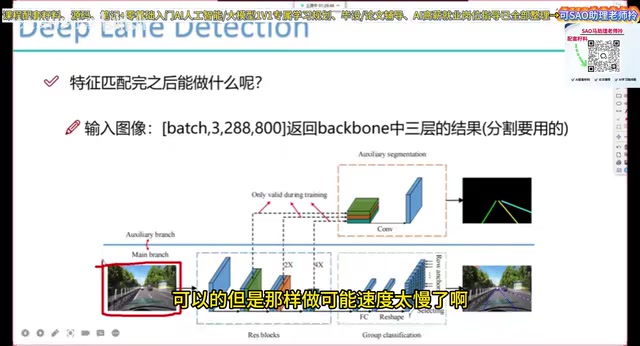
Deep Learning Lane Detection: From Segmentation to Classification for 300+ FPS Real-Time Inference
Deep learning lane detection algorithm that simplifies dense segmentation into efficient grid classification, achieving 300+ FPS real-time inference with row selection, Focal Loss, and expectation-based localization.
Read more →

·3 min
NVIDIA ACE SDK: On-Device AI Inference for Intelligent Game NPC Companions
Deep dive into NVIDIA ACE Game Agent SDK's integration with Unreal Engine 5, exploring how on-device AI inference enables low-latency, privacy-safe intelligent NPC dialogue and behavior.
Read more →

·3 min
Making LLMs Faster and Lighter: A Practical Approach to Reshaping Sparsity for GPUs
Deep dive into Sakana AI and NVIDIA's latest research using TwELL sparse packing format and custom CUDA kernels to convert LLM sparsity into real GPU speedups, achieving 20%+ faster inference/training and significantly lower memory usage.
Read more →

·3 min
DAQIRI Platform Explained: Deep Integration of High-Speed Data Acquisition and Real-Time AI Inference
Deep dive into how the DAQIRI platform embeds NVIDIA GPU-accelerated computing into high-speed data acquisition pipelines, enabling real-time AI inference for industrial inspection, scientific experiments, and autonomous driving.
Read more →

·4 min
GLM 5.2 & Zcode Hands-On Review: A Deep Dive into the Free AI Coding Tool with 5 Million Tokens/Day
In-depth review of Zhipu's GLM 5.2 model and Zcode programming tool: interface experience, coding benchmarks, and long-horizon Agent performance compared to GPT and Opus. 5M free tokens/day with MIT license.
Read more →

·3 min
PyTorch Image Classification in Practice: Complete Pipeline from Data Preprocessing to Model Training
A PyTorch flower classification project covering the full image classification pipeline: data preprocessing, transforms augmentation, ResNet pretrained models, and Resize strategies with reusable template code.
Read more →

·4 min
AI Full-Stack Development Architecture: A Three-Layer Progressive Path from Prototype to Production
A detailed guide to AI full-stack development architecture covering Node.js+TypeScript+Monorepo engineering, Docker CI/CD deployment, and AI engine design with interview tips.
Read more →

·3 min
Huawei HDC Deep Dive: Pangu 2.0 Goes Open Source and HarmonyOS 7 Agents Reshape the Mobile AI Ecosystem
Huawei HDC unveils Pangu 2.0 full open source and HarmonyOS 7 system-level Agent capabilities. Deep analysis of sparse architecture efficiency, on-device 30B models, and the Agent gateway battle.
Read more →

·3 min
AI Large Model Learning Roadmap Breakdown: Three Stages from Application Development to Model Fine-Tuning
Deep breakdown of a popular AI large model learning roadmap covering LangChain, RAG, Agent, and LoRA fine-tuning across three stages, with analysis of its strengths and limitations for career changers.
Read more →

·3 min
LFM2.5 Local Deployment Hands-On: An 8B Parameter Model That Outperforms GPT-o3s in Tool Calling
Hands-on test of Liquid AI's LFM2.5 local deployment: architecture breakdown, 16GB VRAM troubleshooting, and GraphRAG tool-calling benchmarks vs GPT-o3s.
Read more →