#Go AI
10416 related articles

·2 min
GPT-5.6 Goes Live with Dual Quota Reset as AI Models Update Rapidly
GPT-5.6 fully launches with enhanced coding, computer operation, and long-horizon agent tasks, plus a dual quota reset. Meanwhile, ByteDance opens its C-Dance 2.5 API and Mistral debuts a single-RGB-camera natural language navigation model.
Read more →

·3 min
GPT-5.6 Requires Government Approval: AI Regulation Enters Uncharted Waters
OpenAI released GPT-5.6 but it requires case-by-case government approval, while Claude Mythos was pulled after breaching classified systems. A full breakdown of AI capabilities hitting national security red lines.
Read more →

·3 min
GPT-5.6 Requires Government Approval: AI Regulation Enters Deep Waters
OpenAI's GPT-5.6 requires case-by-case government approval, and Claude Mythos was pulled after breaching classified systems. A full breakdown of frontier AI hitting the national security red line.
Read more →

·2 min
Ego Lite Review: AI Browser Automation That Won't Steal Your Mouse Focus
Ego Lite is a Chromium-based browser designed for AI collaboration. Through login state reuse and isolated Spaces, AI Agents autonomously handle web tasks, form filling, and data collection—ending the human-machine focus fight. Currently on macOS.
Read more →

·2 min
Ego Lite Review: AI Browser Automation That Won't Steal Your Mouse Focus
Ego Lite is a browser built for AI collaboration. Based on Chromium, it uses login state reuse and isolated Spaces so AI Agents can autonomously handle web operations, form filling, and data scraping—solving the human-machine focus conflict. macOS only.
Read more →
Ego-lite: An Open-Source Browser Desig…
·3 min
Ego-lite: An Open-Source Browser Designed for Humans and AI Agents to Work in Parallel
ego-lite is an open-source AI-native browser by citrolabs that lets humans and AI Agents work in parallel in the same environment. Explore its design and value.
Read more →

·2 min
IDA Pro + MCP in Action: AI-Assisted Reverse Engineering of a Music App's Signature Algorithm
A hands-on walkthrough of using IDA Pro with MCP for AI-assisted reverse engineering of a music app's Sign signature algorithm, covering traffic capture, endpoint analysis, and .so binary analysis.
Read more →

·4 min
Cross-Platform AI Agent Setup Guide: Breaking Free from Vendor Lock-In for Good
Model performance gaps are closing. Real competitive advantage lies in portable AI agent architecture. Learn how to build a workspace that works across Claude Code, Codex, and beyond — no vendor lock-in.
Read more →

·2 min
AI Predicts the World Cup: 6 Models Backed France, Claude Alone Picked Spain — and Got It Right
8 AI models predicted the World Cup winner: 6 picked France, only Claude picked Spain. After Spain knocked France out 2-0, this experiment raises deep questions about AI herd behavior and independent judgment.
Read more →

·3 min
LightMem-Ego: The AI Memory Assistant That Remembers the Details of Your Daily Life
LightMem-Ego is an AI life assistant with long-term memory — tracking object locations, meetings, and life events over time. A deep dive into its technology and real-world challenges.
Read more →
·2 min
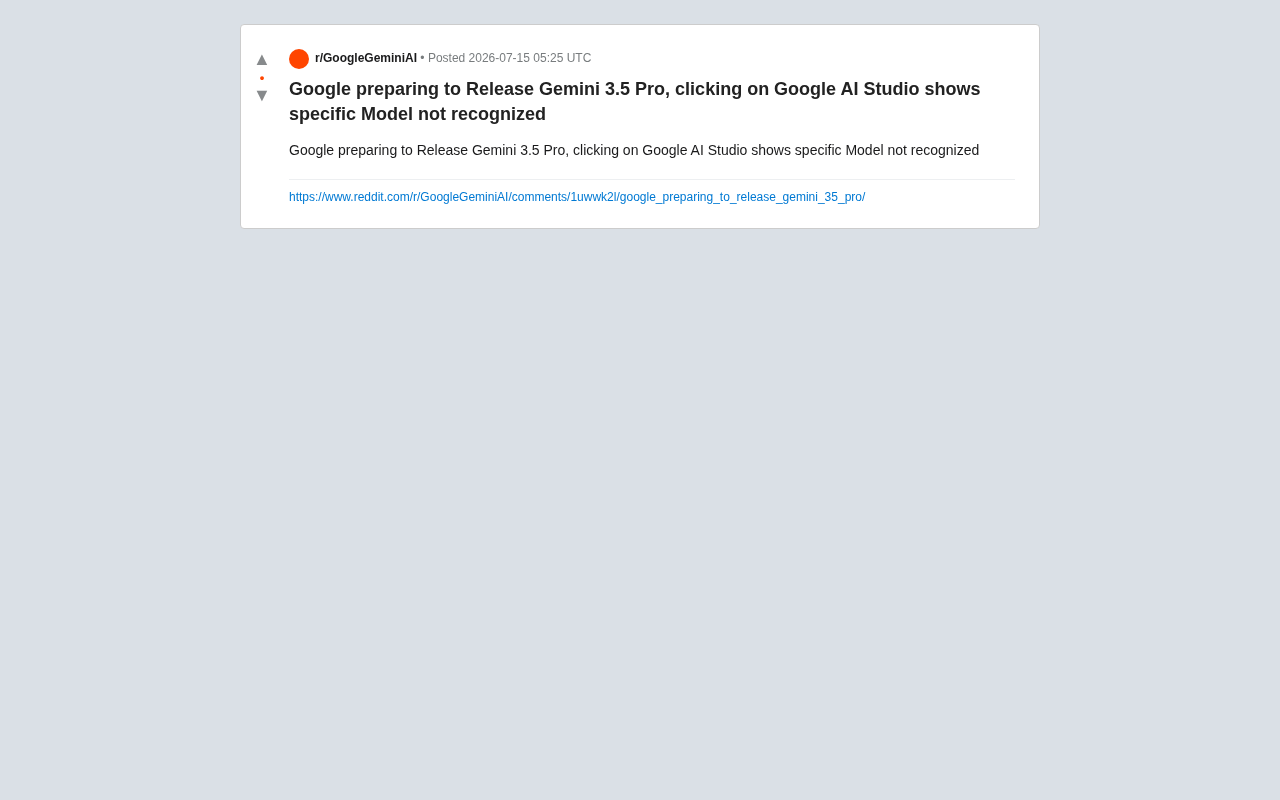
Gemini 3.5 Pro Spotted in Google AI Studio — Is a New Flagship Model Coming?
A Reddit user spotted "Gemini 3.5 Pro" listed as unrecognized in Google AI Studio. We break down the technical signals, naming logic, and strategic implications.
Read more →

·3 min
Frontend to AI Agent: Why TypeScript + Zod Have Become Non-Negotiable
Frontend engineers pivoting to AI Agent development: TypeScript and Zod are now must-have skills. Explore the full progression from API calls to building LangGraph-style frameworks, and nail the 3 core interview topics.
Read more →
wigolo: A Zero-Cost MCP Tool That Give…
·3 min
wigolo: A Zero-Cost MCP Tool That Gives AI Coding Assistants Web Access
wigolo is a local-first open-source MCP tool that gives AI coding assistants like Cursor and Claude Code free web search, fetch, crawl, and research capabilities — no API keys, no cloud, $0/query.
Read more →

·3 min
The Compute Gamble Gone Wrong: How OpenAI Is Striking Back Against Anthropic
Anthropic's conservative compute bet two years ago is now being exploited by OpenAI across three dimensions: subscription value, quota generosity, and developer sentiment.
Read more →
GODMODE Project Deep Dive: AI Jailbrea…
·2 min
GODMODE Project Deep Dive: AI Jailbreaking Techniques and the Security Arms Race in Large Language Models
GODMODE (G0DM0D3) has 9,300+ GitHub stars fueling debate on AI jailbreaking vs. safety alignment. A deep technical dive into LLM guardrails, prompt injection, and AI security governance.
Read more →

·2 min
Gemini Spark Gets Deep Workspace Integration as Google Prepares to Open AI Pro Access
Google rolls out deep Workspace integration for Gemini Spark across Gmail, Docs, and Sheets, while previewing upcoming AI Pro access — intensifying its rivalry with Microsoft Copilot.
Read more →
·3 min
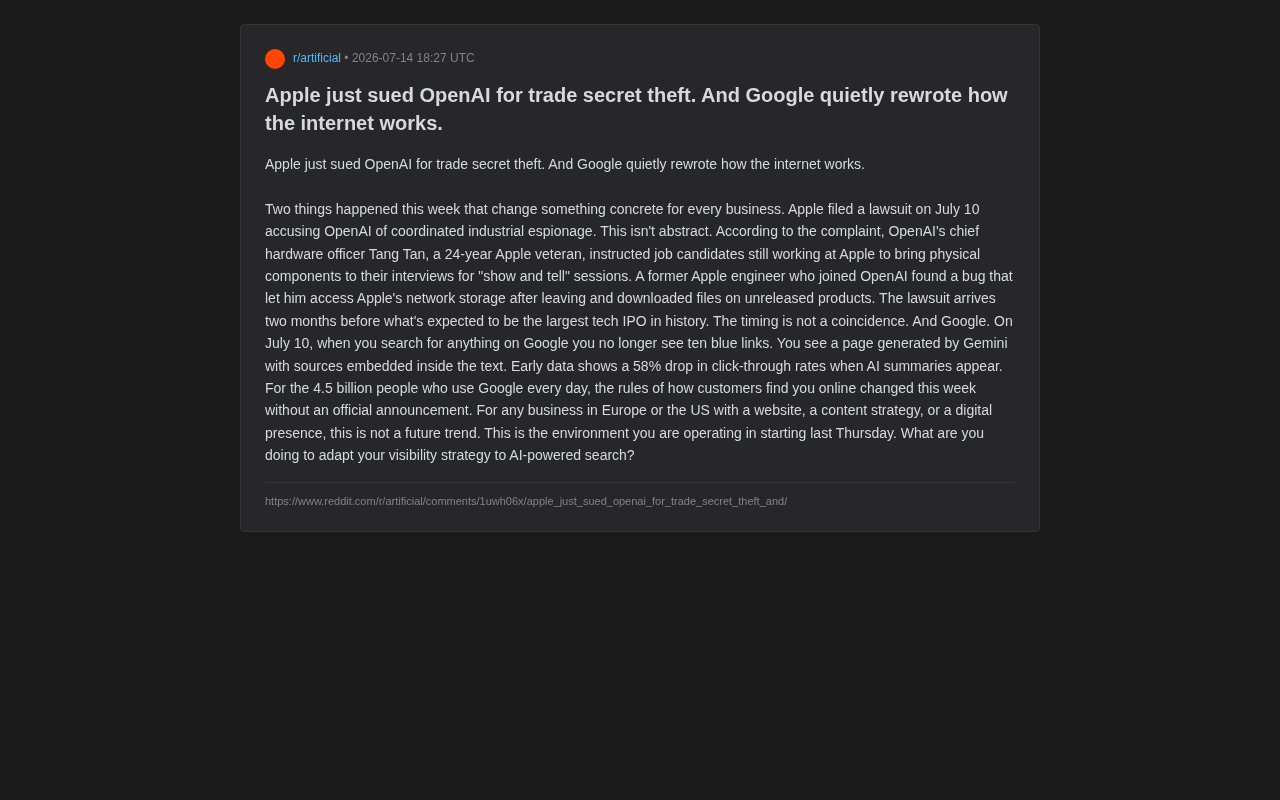
Apple Sues OpenAI for Trade Secret Theft, Google Rewrites Search Rules: A Complete Guide to Enterprise Visibility Strategy
Apple sues OpenAI for trade secret theft; Google quietly shifts to AI-generated search pages, causing a 58% drop in click-through rates. Here's what it means for your business visibility strategy.
Read more →
Why We Must Actively Fund Open Source …
·2 min
Why We Must Actively Fund Open Source AI: A Public Goods Perspective on Technology Democratization
Open source AI faces soaring compute costs and fierce talent competition that markets alone can't solve. This deep dive explores why actively funding open source AI is essential for tech democratization.
Read more →

·3 min
OpenAI Seeks Government Stake: A Last-Ditch Rescue Before the AI Bubble Bursts?
OpenAI proposes a 5% stake to the Trump administration worth ~$43B. From $13B revenue and $21B losses to Chinese models doubling market share, Scott Galloway exposes AI's demand crisis and crony capitalism.
Read more →

·3 min
OpenAI Eyes 5% Stake for Government Support: Mutual Gain or Backdoor Bailout?
OpenAI may offer the Trump administration a 5% stake to ease regulatory pressure. We examine the business logic: burn rates, token billing disputes, nationalization warnings, and political risk.
Read more →