#Google One
4633 related articles

·3 min
dolv: The Unified AI Execution Operator for Growth Teams
dolv is an AI execution operator for growth teams that reads real-time funnel data, executes tasks across tools, and includes human approval—upgrading from AI assistant to true business executor.
Read more →

·3 min
How a Senior Data Scientist Navigates Job Hunting After Being Laid Off: A Survival Guide for the AI Job Market
A senior data scientist with a Physics PhD and 4.5 years of experience gets laid off, revealing the AI job market's shift from traditional ML to Agent engineering. Practical advice on bridging skill gaps.
Read more →

·2 min
Muse Glimmer Lands on Arena.ai: What Rankings of #24 in Text and #26 in Code Really Mean
Muse Glimmer ranks #24 in Text and #26 in Code on Arena.ai. This article explains the blind-test scoring mechanism and analyzes what these rankings mean in the competitive LLM landscape.
Read more →

·3 min
Claude's Invisible Watermark Technology Explained: How AI Text Tracing Works
Anthropic embeds invisible text watermarks in all Claude outputs for machine-readable tracing. Deep dive into the watermark technology, C2PA file provenance standard, and industry impact.
Read more →

·3 min
How to Plan an AI Security Career at 16? A Roadmap for Building Core Skills from Scratch
A 16-year-old wants to become an ML security engineer. This article outlines the AI security knowledge system, covering math foundations, ML, cybersecurity, and adversarial attack practice.
Read more →

·3 min
How to Maintain Progress When Self-Learning Machine Learning: A Project-Anchored Middle Path
When syllabi and deadlines disappear, self-learning ML easily devolves into topic-hopping. Explore project-anchored learning, loose weekly plans, and completion-based metrics to sustain progress.
Read more →

·2 min
Reasoning Chain Theft Attacks on Closed-Source LLMs: Security Risks of API Side Channels
Are hidden reasoning chains in closed-source LLMs truly secure? Research shows attackers can reconstruct full thought chains via API side-channel signals, threatening trade secrets and IP.
Read more →

·2 min
AFK: A Unified Command Center for Team-Collaborative AI Coding Agents
AFK is a team-oriented AI coding Agent management platform using Daemon local architecture, permission governance, task handoff, and BYOK to solve multi-user Agent collaboration challenges.
Read more →

·3 min
Mistral's Patent Application for Code-Based Tool Calling Sparks Controversy: The Open Source vs. Patent Paradox
Mistral AI's patent filing for "code-based tool calling" sparks developer debate. Analysis of the technology, how it differs from JSON Function Calling, and its potential impact on the AI Agent open-source ecosystem.
Read more →

·3 min
How to Become a Stronger Engineer in the AI Era: Neither Surrendering Nor Rejecting
How can engineers avoid skill atrophy from over-relying on AI coding tools? This article provides an actionable growth path covering system design, debugging, and code review to build core competitiveness.
Read more →

·2 min
The deep_think Tool Accidentally Leaks Hidden Reasoning Chains from Large Language Models: The Fragility of Chain-of-Thought Security Boundaries
Researchers found that providing a deep_think tool to OpenAI and Anthropic models causes unexpected leakage of hidden reasoning chains, exposing the fragility of CoT security boundaries.
Read more →

·2 min
Mysterious Codes Appear in Google Image Search: AI Hallucination Concerns Resurface
A Reddit user searching numerology got mysterious codes and nonsensical numbers from Google Images. We analyze AI hallucination causes and generative search accuracy concerns.
Read more →

·3 min
Remix: An AI Tool for Running Design Experiments Directly on Production Apps
Remix is an AI tool combining Figma's design freedom with production environments, letting teams create variants via prompts in safe sandboxes and submit GitHub PRs with one click.
Read more →

·3 min
Heym: Deep Dive into a Self-Hosted Visual Agent Building Platform
Heym is a self-hostable visual platform for building agentic systems, offering multi-agent workflow orchestration, built-in observability, human approval mechanisms, and MCP protocol support.
Read more →
·2 min
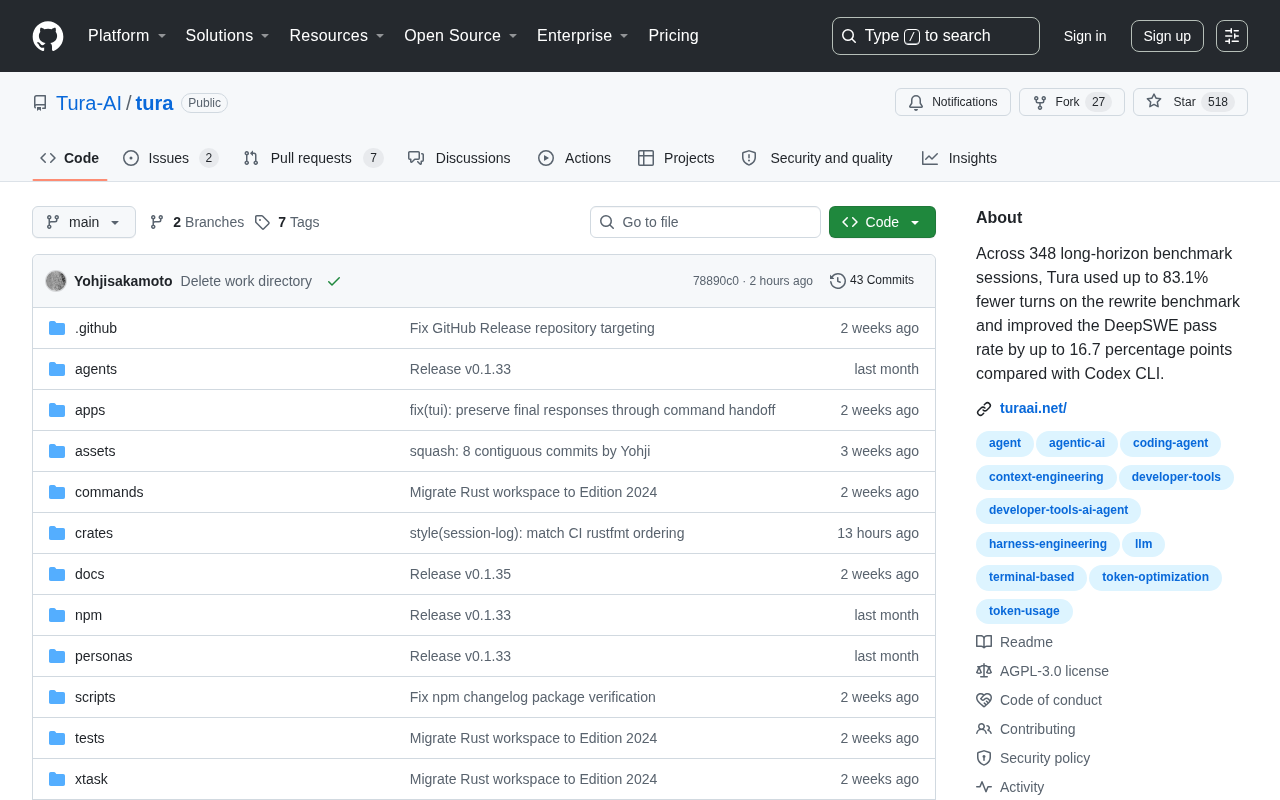
Tura: A New Approach to Saving 80% of Tokens for AI Agents
An in-depth analysis of how the Tura framework helps AI Agents reduce 80% of token consumption while improving task quality through intelligent context management and structured tool calling.
Read more →

·2 min
ChatGPT Now Blocks Requests to Mimic Authors' Writing Styles: Causes and Implications
OpenAI's ChatGPT now blocks requests to mimic living authors' writing styles. Explore the copyright pressures, blocking mechanisms, and implications for users and the AI industry.
Read more →

·3 min
Math PhD to AI: A Transition Path from Operator Theory to Machine Learning
Is transitioning from a math PhD to AI/ML viable? This article analyzes core advantages, feasible paths, and practical strategies for operator theory backgrounds moving into artificial intelligence.
Read more →

·4 min
Generalization Is the Core of Machine Learning: The Critical Factors That Determine Success Before Training Begins
The ultimate goal of ML is generalization, not training metrics. This article analyzes five critical pitfalls in data preparation that determine model success before training even begins.
Read more →

·2 min
The Persian 'Book of Snakes': How an Ancient Divination Text Finds New Life in the Digital Age
Explore how the 1892 Persian divination text MâR-Nâmeh finds new life through digitization, and how AI is transforming ancient manuscript research.
Read more →

·3 min
Gesture Synth School: A Free Practice App for Playing Music with Hand Gestures
Gesture Synth School is a free learning app for playing music through gestures, featuring chord charts, gesture tutorials, and a play-along player to help users progressively master gesture synthesizer techniques.
Read more →