#HNSW
138 related articles

·6 min
Dify Local Deployment in Practice: A Complete Guide to Building an AI Application Platform with Docker
A complete guide to Dify local deployment: from Docker environment setup, source code pulling, and container startup to first access. Build a private AI app development platform across Linux, Windows, and Mac for fast enterprise AI deployment.
Read more →

·6 min
What Is an FDE? Decoding the Most Sought-After Hybrid Engineer in the AI Deployment Era
FDE (Forward Deployed Engineer) is the hottest emerging role in the AI deployment wave, combining a technical CTO, full-stack AI engineer, and business consultant. Learn the two FDE tracks, core skills, and how to transition into one.
Read more →

·7 min
The Four-Stage Learning Path for AI Agent Development: From Beginner to Real-World Deployment
A systematic four-stage roadmap for AI Agent development: fundamentals, core principles, enhancement, and real-world deployment. Build complete Agent skills.
Read more →

·6 min
Introduction to Prompt Engineering: A Complete Guide from Understanding to Implementation
Prompt engineering is more than messaging AI. This guide breaks down the four core functions of prompts, the six-step prompt engineering process, and key limitations to help you build the right foundation.
Read more →

·7 min
Dify 1.8.0 in Practice: A Complete Guide to Building Enterprise-Grade AI Workflows with Zero Code
An in-depth walkthrough of deploying Dify 1.8.0 and building applications: three-step Docker deployment, five app types compared, and Workflow vs Chatflow use cases—build enterprise AI apps with zero code.
Read more →
·6 min
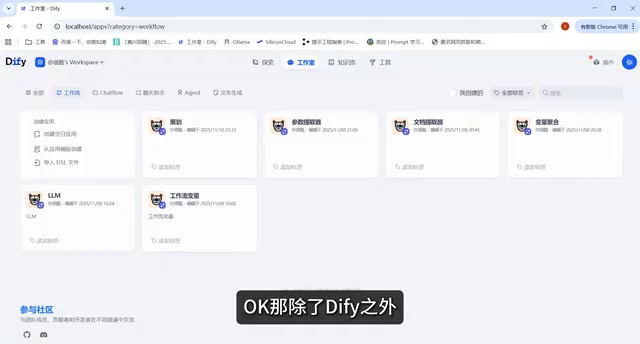
Complete Guide to Deploying Dify Locally: Docker + Ollama + RAG Setup Tutorial
A detailed guide to deploying the Dify agent platform locally: from Docker setup and integrating Ollama + DeepSeek local LLMs to workflow orchestration and RAG knowledge base construction.
Read more →

·7 min
Getting Started with Dify: A Complete Guide from Local Deployment to Building Enterprise-Grade AI Applications
A detailed guide to Dify, the open-source LLM app development platform, covering its core features and full local deployment via VMware + Ubuntu + aaPanel + Docker. Supports 100+ models like DeepSeek and ChatGPT to build enterprise AI apps fast.
Read more →

·6 min
Getting Started with Dify: A Complete Guide to Deployment, Configuration, and Workflow Practice
A systematic guide to Dify's three deployment methods (Docker/source/online), five application types, and hands-on workflow nodes—covering LLM integration, MySQL config, and app publishing.
Read more →
·7 min
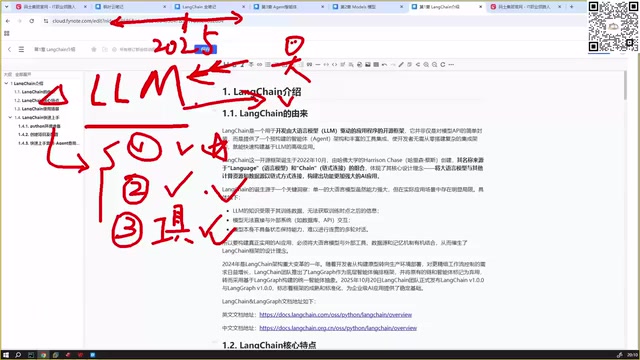
LangChain Hands-On Guide: From LLM Calls to Agent Development
Master LangChain from scratch: the three limitations of LLMs, init_chat_model unified interface config, the Message type system, and the path from LLM calls to Agent development.
Read more →

·7 min
Getting Started with LangChain: The Core Framework Connecting LLMs and AI Applications
A deep dive into LangChain's positioning and value—why do LLMs need a middle layer? How does LangChain serve as the 'glue' unifying multi-model interfaces and supporting Agent development? Learn its core modules and learning path.
Read more →

·7 min
Getting Started with OpenAI LLM Development: A Practical Guide to Model Selection, Token Pricing, and API Usage
A systematic guide to the three cores of OpenAI LLM app development: GPT-4/GPT-3.5 model selection, token billing and cost-saving tips, and practical use of the Models, Completion, and Chat Completion APIs.
Read more →

·7 min
Zero-Basis Learning Path for AI Agents: A Three-Stage Journey from Beginner to Deployment
A systematic zero-basis learning path for AI Agent development, covering Python and LLM fundamentals, five core capabilities like task planning and RAG, and LangChain hands-on practice.
Read more →

·7 min
A Java Developer's Guide to AI: Framework Selection and Practical Tutorial for LangChain4J
As LLM costs keep falling, how can Java developers seize the AI opportunity? This article explores LangChain4J's core capabilities, supported models and vector databases, and compares LangChain4J vs. Spring AI to help you build local knowledge bases and intelligent customer service systems.
Read more →

·4 min
6-Week Agent Engineering Roadmap: From Beginner to Enterprise Deployment
A structured 6-week roadmap for enterprise Agent deployment covering LangChain, LangGraph, MCP, and RAG — from planning and memory to multi-agent collaboration and production deployment.
Read more →

·7 min
The Trap of AI Visibility Dashboards: Why Most Metrics Are Meaningless
Can a brand's "visibility" in AI answers really be quantified? This article deeply dissects the methodological flaws of AI visibility dashboards—from LLM output randomness and black-box mechanisms to vanity metric traps.
Read more →

·7 min
Context Warp Drive: A Deep Dive into Deterministic Context Folding for AI Agents
An in-depth look at 'Deterministic Context Folding' from Context Warp Drive: solving AI agent context window management with reproducible, cacheable, debuggable context compression for production-grade agents.
Read more →

·6 min
A Beginner's Guide to AI Agents: How Large Models Are Driving a New Computing Revolution
What is an AI Agent? This article systematically explains the core architecture of AI agents (LLM + Planning + Memory + Tools), how they differ from ChatGPT, their combination with robots, and why developers must master Agent development skills.
Read more →

·4 min
5 Google Search AI Features That Transform Thrift and Vintage Shopping
Google Search and Google Shopping integrate AI features including semantic search, visual recognition, price comparison, and personalized recommendations to help users discover secondhand and vintage items more efficiently.
Read more →

·7 min
A Complete Guide to LangGraph's Core Concepts: The Framework of Choice for Enterprise Agent Development
An in-depth analysis of LangGraph's core concepts: short-term and long-term storage mechanisms, its differences from LangChain, the MIT open-source license, and private deployment solutions for enterprise Agent development.
Read more →

·6 min
The Seven Core Components of Building Long-Running AI Agents
An in-depth look at the seven core components for building long-running AI agents: Goal, Evaluator, Verifier, Outer Loop, Orchestration, Observability, and Memory. Master this control system for reliable autonomous agents.
Read more →