#HNSW
120 related articles
Adaptive Recall: A Deep Dive into Pers…
·2 min
Adaptive Recall: A Deep Dive into Persistent Memory for AI Assistants via MCP
Adaptive Recall uses MCP (Model Context Protocol) to give AI assistants like Claude persistent memory across sessions, featuring vector storage, semantic retrieval, and adaptive forgetting.
Read more →

·3 min
The Deterministic Factual Substrate for Multi-Agent AI: A Deep Dive into Knowledge Kernel's Reproducible Grounding Design
A deep dive into how Knowledge Kernel builds a deterministic factual substrate for multi-agent AI through layered decoupling of reality, evidence, facts, and reasoning — with dataset_hash fingerprinting, atomic reloads, and observable telemetry.
Read more →

·6 min
A Beginner's Guide to Claude Code: Why Is It More Powerful Than Cursor and Trae?
Claude Code is Anthropic's local AI programming assistant that reads your entire codebase, auto-debugs, and delivers far higher accuracy than Cursor and Trae. Here's why it's the strongest AI coding tool today.
Read more →
AI Costs Out of Control: Real-World St…
·6 min
AI Costs Out of Control: Real-World Strategies for Enterprises to Rein In Soaring Bills
More enterprises are finding AI operational costs spiraling out of control. This article dissects token billing traps and blind flagship-model use, and maps out cost-reduction strategies like model routing, open-source self-hosting, and semantic caching.
Read more →

·5 min
How Can Working IT Professionals Learn AI Efficiently? A Practical Learning Path from Zero to Real-World Projects
Limited time but want to learn AI systematically? This guide maps out a practical learning path for working IT pros—from AI application engineering and prompt engineering to RAG and Agents.
Read more →

·4 min
The Ultimate RAG Interview Guide: 204 Questions, 12 Architectures, and 6 Failure Modes Explained
The open-source project "Interview System" offers 204 RAG interview questions, 12 architecture approaches, and deep analysis of 6 failure modes. Prepare systematically for RAG engineer roles.
Read more →
·6 min
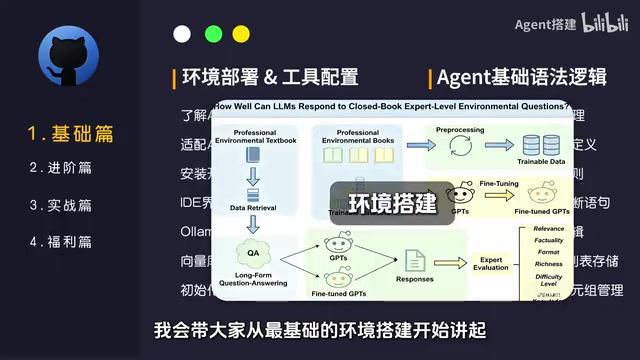
AI Agent Development Learning Path: Four Stages from Zero to Hands-On Projects
A systematic breakdown of the AI agent development learning path, covering four stages: fundamentals, RAG knowledge bases, tool use, multi-agent collaboration, and hands-on projects.
Read more →

·4 min
The Complete AI Agent Development Learning Path: From Zero to Enterprise-Grade Practice
A systematic AI Agent development learning path covering fundamentals, prompt engineering, tool calling, multi-agent collaboration, and hands-on practice with LangChain, CrewAI, and Dify.
Read more →

·7 min
Breaking Down the Core Skills of an AI Application Engineer: From Beginner to Industrial-Grade Deployment
Knowing how to call an API doesn't make you an AI engineer. This article breaks down the complete skill structure of an AI application engineer, covering Python fundamentals, LLM fine-tuning, Agent development, and enterprise projects.
Read more →
·5 min
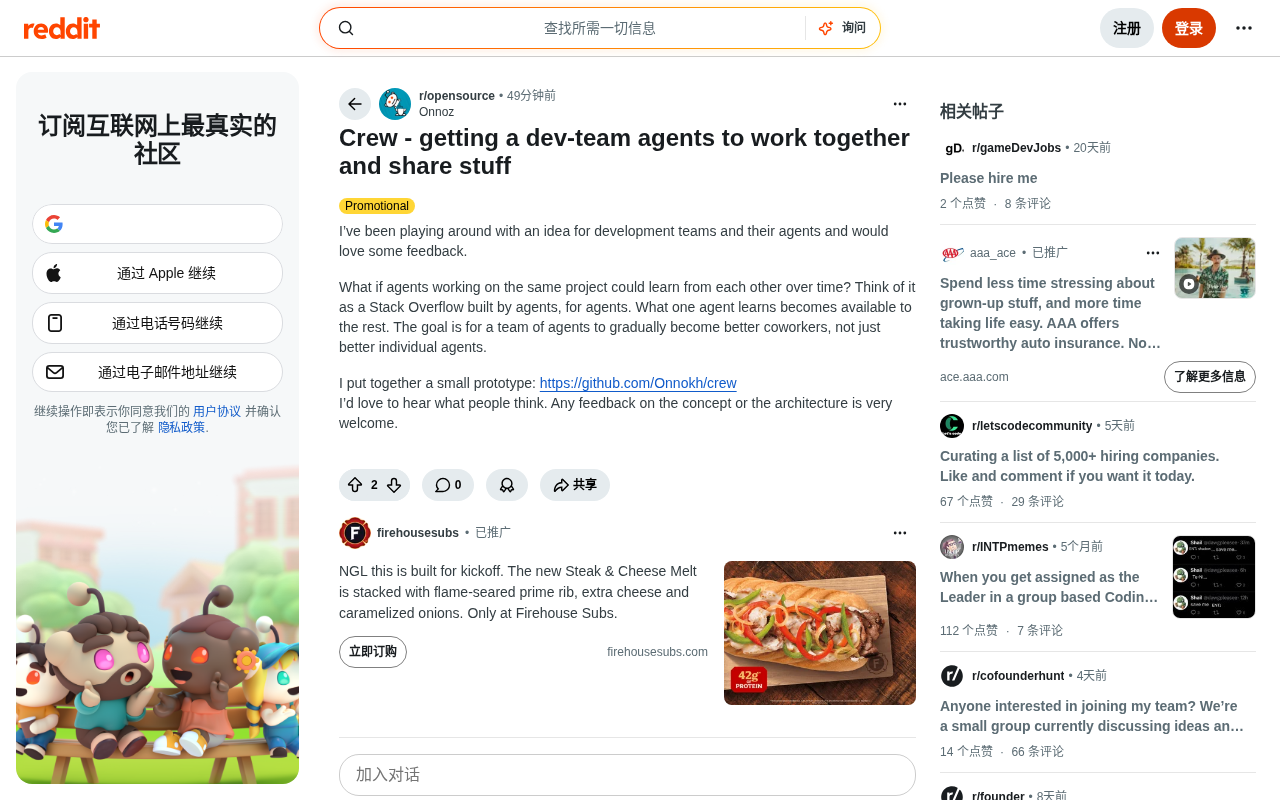
Crew: Enabling Multiple AI Agents to Collaborate and Share Knowledge Like a Team
Crew is an open-source AI agent collaboration framework whose core idea is to build a "Stack Overflow" for agents—letting multiple agents share experience and accumulate knowledge, shifting from optimizing single agents to building evolving teams.
Read more →

·3 min
Getting Started with n8n: A Deep Dive into the Open-Source AI Workflow Automation Platform
A comprehensive look at n8n, the open-source workflow automation platform: core features, 500+ node ecosystem, AI Agent and RAG integration, plus a fast learning path.
Read more →
·4 min
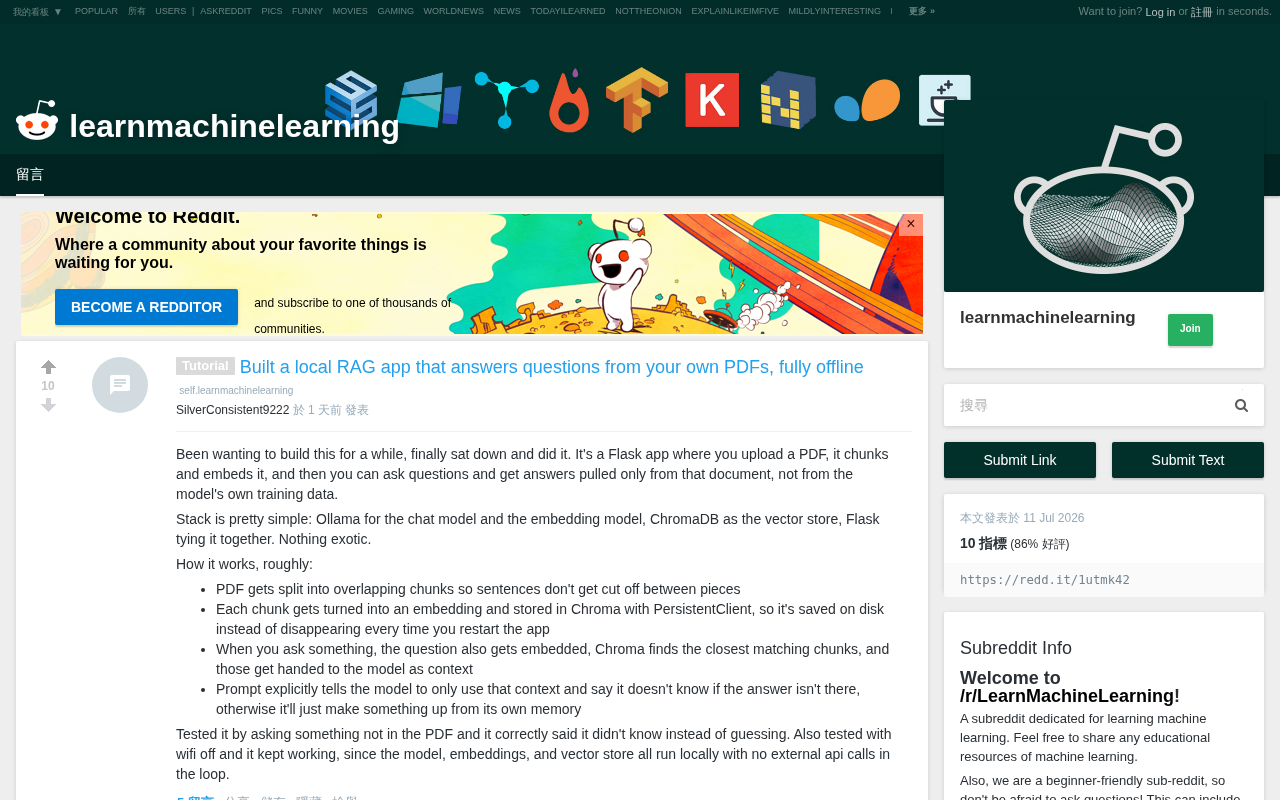
Building an Offline RAG Application from Scratch: A Complete Guide to a Private PDF Knowledge Base
A step-by-step breakdown of building a local RAG app: Ollama local models + ChromaDB vector database + Flask, enabling PDF document Q&A, fully offline operation, and zero data leakage. Perfect for developers new to RAG.
Read more →

·4 min
From Engineer to Machine Learning Practitioner: A Practical Roadmap from Data Compliance to Deployment
Have an engineering or data background and want to transition to machine learning? This article covers data anonymization compliance essentials, knowledge base tech route selection (RAG/traditional ML/BI), and a phased practical learning path.
Read more →

·4 min
AIML Capstone Project Selection: Is a Multi-Agent Debate System Worth Building?
Torn over your capstone topic? This article analyzes the academic value, feasibility, and innovation potential of a Multi-agent Debate system to help AIML students decide.
Read more →

·5 min
Multi-Model Tiered Deployment: Is an AI Gateway Worth Adopting?
More teams are adopting multi-model tiered scheduling. AI gateways solve cross-vendor API management, automatic fallback, and cost tracking — but add a new abstraction layer. Learn when a gateway is worth it.
Read more →

·6 min
AI Agent Development in Go: A Hands-On Guide to ByteDance's Eino Framework and Its Seven Core Capabilities
Build production-grade AI Agents with a pure Go stack using ByteDance's Eino framework. A deep dive into seven core capabilities: multi-Agent orchestration, long-task execution, command approval, RAG, MCP, Skills, and database reporting.
Read more →

·6 min
Andrew Ng × Anthropic: A Hands-On Claude Code Tutorial and Core Methodology
Andrew Ng partners with Anthropic to launch a hands-on Claude Code course, revealing its simple architecture, local security edge, and core context methodology across three cases: RAG chatbot, Jupyter analysis, and Figma-to-frontend.
Read more →

·4 min
433 Fitness Exercises Open-Source Dataset: Structured Fields + Animation Demos Fully Explained
GitHub trending project exercises-dataset features 433 fitness exercises with target muscles, equipment types, instructions, and animation demos—ideal for fitness apps, AI coaches, and RAG systems.
Read more →

·4 min
AI Persistent Memory Three-Layer Architecture Explained: In-Depth Comparison of Mem0, Zep, and ContextNest
Deep dive into the three-layer architecture of AI persistent memory systems—storage, management, and retrieval—with an in-depth comparison of Mem0, Zep, and ContextNest to help developers choose the right memory solution for AI Agents.
Read more →

·5 min
From Large Models to AI Agents: A Complete Analysis of the Four Evolutionary Stages and Four Major Commercial Tracks
Prompt engineering and RAG can no longer meet enterprise digital transformation needs—AI Agents are the key. This article breaks down the four evolutionary stages of large model deployment and the four major Agent commercial tracks.
Read more →