#Hot Reload
146 related articles

·2 min
f.Tintra: Free Open-Source Android Color Picker — Privacy-First, No Ads
f.Tintra is a free, open-source Android color picker by Flakesoft. Pixel-accurate HEX/RGB extraction, Material 3 UI, no ads, no tracking. GPL v3.0 licensed.
Read more →

·2 min
RL3: A Zero-Code Reinforcement Learning Platform Where You Train Agents by Dragging and Dropping
RL3 is a zero-code, browser-based reinforcement learning platform featuring drag-and-drop environment design, visual reward configuration, and Q-learning/PPO training. Built by an indie developer over 15 months to make RL accessible to everyone.
Read more →

·3 min
Google Gemma 4 On-Device Model: Optimized for Pixel 10 TPU — Offline Multimodal Capabilities Tested and Analyzed
Google's Gemma 4 E2B for TPU runs offline on Pixel 10's Tensor G5 chip, enabling local AI chat, image recognition, and audio transcription. We break down the features and real-world test results.
Read more →

·3 min
ASE Control Panel: How STATE_SYNC Tokens Enable AI State Persistence
A deep dive into ASE's core mechanism — the STATE_SYNC checkpoint token — and how it transforms stateless LLMs into stateful AI systems for complex multi-turn workflows.
Read more →

·3 min
The Deterministic Factual Substrate for Multi-Agent AI: A Deep Dive into Knowledge Kernel's Reproducible Grounding Design
A deep dive into how Knowledge Kernel builds a deterministic factual substrate for multi-agent AI through layered decoupling of reality, evidence, facts, and reasoning — with dataset_hash fingerprinting, atomic reloads, and observable telemetry.
Read more →

·3 min
GPT-5.6 Hands-On: Building a Shooter Game and a Premium Website from a Single Prompt, Plus GPT-Live Voice Experience
Hands-on with GPT-5.6 and GPT-Live: build a playable shooter game from one prompt in 19 minutes, generate a premium animated website via multimodal understanding, and experience emotional two-way voice conversation. A full review of ChatGPT and Codex deeply integrated.
Read more →

·4 min
A Deep Dive into ASP.NET Core: The Complete Guide to Microsoft's Cross-Platform Web Framework
A comprehensive analysis of ASP.NET Core's architecture and technical strengths: cross-platform deployment, high-performance Kestrel server, modular middleware, built-in DI, and modern web capabilities like Blazor, gRPC, and SignalR.
Read more →

·7 min
Unity Custom MCP Tool Development Guide: Enabling AI Agents to Precisely Control the Editor
Learn how to develop custom tools based on the Unity MCP Relay Server, enabling AI agents like Cursor to directly control the Unity editor. Covers setup, tool building, parameter validation, and MCP Pro comparison.
Read more →

·5 min
AI Agent Custom Tool Development Guide: Boost Efficiency by One-Click Reuse of Repetitive Tasks
An in-depth guide on developing Custom Tools for AI agents, compressing repetitive tasks like Excel-to-Markdown conversion from 30 minutes to under 5 seconds. Covers AGENTS.md registration, tool directory setup, and AI-assisted development.
Read more →

·7 min
GPT-5.6 and Grok 4.5 Launch Simultaneously, Meta Unveils Agent-Based Image Model
OpenAI GPT-5.6 expands its preview, xAI Grok 4.5 opens access at the same time, Meta releases the Agent-based Muse Image model and Muse Video model, while Apple and DeepSeek launch in-house AI inference chip programs. A quick look at the week's five biggest AI stories.
Read more →

·2 min
Bun: The All-in-One High-Performance JS Toolkit — Runtime, Bundler, and Package Manager
Bun combines a JS runtime, bundler, test runner, and package manager into one executable. Built on JavaScriptCore and Zig, it offers blazing-fast startup, native TypeScript support, and Node.js compatibility.
Read more →

·3 min
TB/s Memory Tier Accelerates SGLang: How X-Mem Reduces TTFT by 6.7x
Netpreme integrates X-Mem™ MPU into SGLang HiCache, achieving up to 6.7× TTFT reduction and 33–50% TPS gains at 98% prefix cache hit rates. Here's the technical breakdown.
Read more →

·5 min
Runs on Low VRAM! A Hands-On Look at the ID LoRA Face-to-Video Workflow
A face-to-video workflow built on GGUF quantized models and ID LoRA runs on just an RTX 3060 with 6GB VRAM. This article breaks down its core principles, four-step process, and how it tackles facial consistency in AI video.
Read more →
·5 min
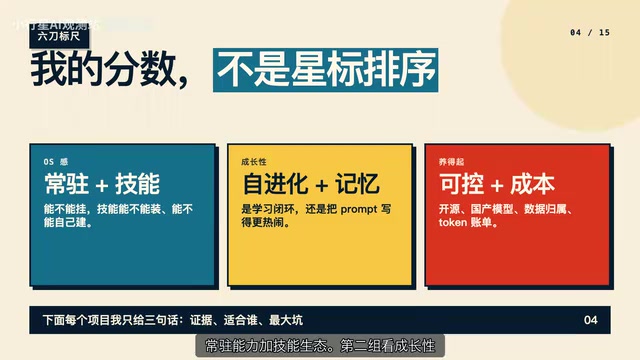
6 Self-Hosted AI Agents Compared: Which One Is a Truly Self-Evolving Digital Employee?
An open-source AI Agent with 380K stars ranks only third? This comparison of 6 self-hosted AI Agents scores them on persistence, self-evolution, and data control—revealing why Generic Agent won with just 3,000 lines of code.
Read more →

·6 min
A Practical Guide to Removing the AI Flavor from Fiction: Three Techniques to Make Your Writing More Human
Why does AI-written fiction always have an "AI flavor"? This article breaks down its two root causes and offers three practical techniques—reduce atmospheric padding, drive emotion through events, and control action steps—to write more natural, human fiction.
Read more →

·7 min
Free Mermaid Diagram Editor: An Essential Code-Based Diagramming Tool for Developers
Explore the core features and use cases of the free Mermaid Diagram Editor. Supporting flowcharts, sequence diagrams, Gantt charts and more, it follows the 'diagrams as code' philosophy to enable version-controlled technical documentation for developers and architects.
Read more →

·7 min
Electron + LangGraph in Practice: Building an AI Agent Visual Orchestration App from Scratch
A hands-on guide to building an enterprise-grade AI Agent workflow orchestration app with Electron Forge and LangGraph, covering local LLM deployment (Qwen3-0.6B), node-based visual canvas design, and full Function Calling integration.
Read more →
·5 min
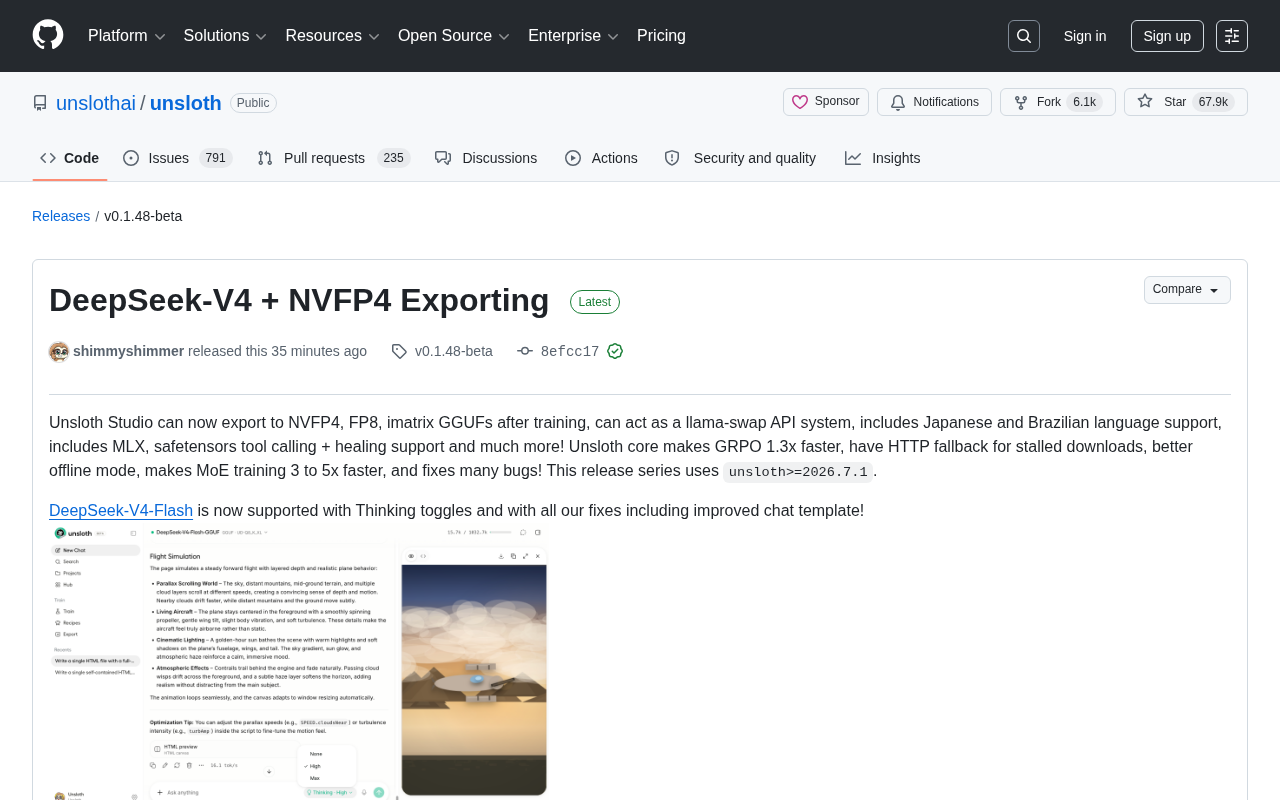
Major Unsloth Update: NVFP4 Quantization Export and DeepSeek-V4 Training Support
Unsloth v0.1.48-beta released, adding NVFP4/FP8 quantization export, OpenAI-compatible API hot-swapping, 3-5x faster MoE training, and 1.3x faster GRPO, covering the full LLM fine-tuning, quantization, and local deployment pipeline.
Read more →

·7 min
The Birth of Claude Code: Design Philosophy from Internal Tool to AI Programming Assistant
An in-depth look at Claude Code's development and design philosophy: why the CLI form, how the "minimal scaffolding" architecture works, and how it balances safety with autonomy in AI programming.
Read more →

·7 min
DryFox v0.3.3: AI Agent Team Collaboration + Composable UI Panels Explained
In-depth look at DryFox v0.3.3's three core features: multi-role agent team collaboration, one-click reusable team templates, and block-style composable UI panels. With Stop Hook, file mailbox comms, and hot-reload plugins.
Read more →