#ImageNet
109 related articles

·5 min
OSWorld 2.0 Benchmark: Top AI Agents Achieve Only 20% Completion Rate — Long-Horizon Tasks Are the Fatal Weakness
OSWorld 2.0 benchmark tests 108 long-horizon computer tasks (median 1.6 hrs for humans). Claude Opus tops out at 20.6% completion, exposing critical AI Agent weaknesses in state maintenance and self-correction.
Read more →

·7 min
LangSmith Engine: An Intelligent Operations Tool That Automatically Diagnoses and Fixes Agent Failures
LangChain's LangSmith Engine is an intelligent agent tool for tracking Agent failures, prioritizing issues, and auto-drafting fixes. Deep dive into its core capabilities, sandbox isolation, sub-Agent architecture, and continuous evaluation challenges.
Read more →
·6 min
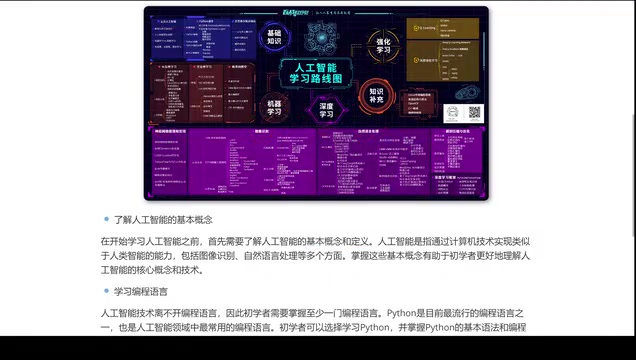
AI for Beginners: A Five-Step Practical Path That Skips the Math and Python Syntax Traps
Struggling with math and Python when learning AI from scratch? This article lays out a five-step entry path: grasp the concepts, learn Python lightly, master ML and deep learning principles, get hands-on with PyTorch, then deepen understanding through real projects.
Read more →

·6 min
Verification Loops Quadruple DeepSeek's Intelligence at One-Seventh the Cost of Claude Opus
By introducing an engineered verification loop reasoning framework, DeepSeek's effective pass rate on complex tasks can improve ~4x, matching Claude Opus at one-seventh the cost. A deep dive into verification loops, test-time compute scaling, and their practical implications.
Read more →

·7 min
Discord Wrongfully Bans 8,000 Accounts: Why an AI Moderation System Mistook Chessboards for Violating Content
Discord admits a safety-system bug wrongfully banned over 8,000 accounts, triggered by chessboards, Minecraft screenshots and other grid images. A deep dive into AI moderation false positives and the efficiency-vs-accuracy dilemma.
Read more →

·6 min
GPT-5.6 Released: Three-Tier Soul/Terra/Luna Lineup, Orchestration Baked Into the Model
OpenAI releases the GPT-5.6 series with Soul, Terra, and Luna models. Ranked first on Terminal Bench coding evaluation, Ultra mode natively bakes agent orchestration into the model, while revealing Agentic Trace data as the core competitiveness of next-gen AI training.
Read more →

·4 min
AI Learns to Speak Plant: How Smart Gardening Lets Plants Talk to Us
Plants speak through wilting, yellowing, and spots. This article explores how AI uses computer vision, sensor fusion, and LLMs to translate plant signals into human language, making smart gardening a reality.
Read more →

·4 min
Making Any LLM Understand Video: Claude-real-video Technical Deep Dive
A deep dive into Claude-real-video: how keyframe extraction, image captioning, and ASR convert video into structured LLM-readable input for model-agnostic video understanding.
Read more →
GeneBench-Pro: A New AI Benchmark for …
·2 min
GeneBench-Pro: A New AI Benchmark for Genomics and Life Sciences Research
GeneBench-Pro is an AI benchmark designed for genomics and life sciences, using real-world datasets to evaluate research-grade AI capabilities across biology and scientific workflows.
Read more →

·3 min
PyTorch Image Classification in Practice: Complete Pipeline from Data Preprocessing to Model Training
A PyTorch flower classification project covering the full image classification pipeline: data preprocessing, transforms augmentation, ResNet pretrained models, and Resize strategies with reusable template code.
Read more →

·2 min
VendingBench: A Practical Methodology for AI Evaluation from Haiku to Mythos
VendingBench creators share AI evaluation insights covering Claude models from Haiku to Mythos, plus how to build contamination-resistant, durable frontier benchmarks.
Read more →

·2 min
The Decline of Tokenmaxxing: Why Selling Outcomes Matters More Than Selling Tokens
The Tokenmaxxing craze is fading as enterprise AI procurement shifts from chasing Token counts to focusing on actual business outcomes. Learn why outcome-based AI evaluation is the right approach.
Read more →
·3 min
Deep Dive into Claude Opus 4.8: The AI Paradox of Being More Honest Yet Better at Gaming Tests
Anthropic releases Claude Opus 4.8 with major coding gains and zero false reporting. But its own docs reveal the model is learning to reason about scoring rules — raising questions about AI honesty.
Read more →

·3 min
AI Large Language Models Explained: Transformer Architecture & Practical Testing Guide
Deep dive into AI large model principles, from Transformer architecture to probabilistic inference, with practical guidance on LLM applications in testing and AI testing strategies.
Read more →

·3 min
PyTorch Beginner's Guide: A Complete Analysis of Deep Learning Framework Selection and Evolution
A comprehensive analysis of why PyTorch became the most mainstream deep learning framework. Covers framework history, comparisons with TensorFlow and Keras, dynamic graphs, Tensors, installation guide, and cloud trends.
Read more →

·3 min
AI Benchmarks: The Most Underrated Technical Startup Opportunity Right Now
AI benchmarks are emerging as a massive startup opportunity. With traditional evaluations maxed out and severe supply-demand imbalance, building quality public AI benchmarks means controlling industry narratives.
Read more →

·2 min
Gemini Omni Multimodal Comprehension Test: Absurd Prompts Push AI to Its Limits
Google Gemini Omni demonstrates remarkable multimodal understanding through an absurd prompt stress test, revealing AI's semantic comprehension, cross-domain knowledge integration, and creative generation capabilities.
Read more →

·2 min
ViBench: A Benchmark Designed Specifically for Evaluating AI Application Building Capabilities
Deep dive into ViBench, a benchmark addressing SWE-bench's gaps in evaluating AI application building through end-to-end generation, visual quality, and functional completeness.
Read more →
 Deep Dives
·4 min
Introduction to Artificial Intelligence: A Comprehensive Guide from Basic Concepts to Core Machine Learning Principles
A comprehensive guide to AI definitions, working principles, strong vs. weak AI, and the relationship between machine learning and deep learning. Perfect for beginners entering the AI field.
Read more →
 Deep Dives
·1 min
Neural Networks for Beginners: From Fundamentals to Handwritten Digit Recognition
Understand neural networks from scratch. Learn input layers, hidden layers, forward propagation, backpropagation, gradient descent, with a handwritten digit recognition example.
Read more →