#In-Context Learning
99 related articles

·6 min
Skill vs MCP: The Essential Difference Between Two Types of AI Agent Capabilities and How They Work Together
Skill and MCP are two core concepts for building AI Agents. Skill encapsulates task execution methodology, while MCP provides a standardized protocol for connecting external tools. This article breaks down their core differences, abstraction levels, and collaboration.
Read more →

·4 min
Career Switch to LLM Development: A Four-Level Skill Progression Roadmap
Want to switch careers into LLM development but don't know where to start? This guide breaks down a four-level skill roadmap — from basics and API calls to RAG, fine-tuning, Agent development, and multimodal — to help you build real AI career value.
Read more →

·6 min
LangChain 1.3 in Practice: A Complete Guide to DeepAgent Architecture and the Harness Philosophy
An in-depth look at LangChain 1.3's core modules and DeepAgent architecture—covering the Harness philosophy, LangGraph internals, HITL, memory management, and guardrails to master production-grade AI Agent development.
Read more →

·6 min
A Beginner's Guide to AI Agents: How Large Models Are Driving a New Computing Revolution
What is an AI Agent? This article systematically explains the core architecture of AI agents (LLM + Planning + Memory + Tools), how they differ from ChatGPT, their combination with robots, and why developers must master Agent development skills.
Read more →
·7 min
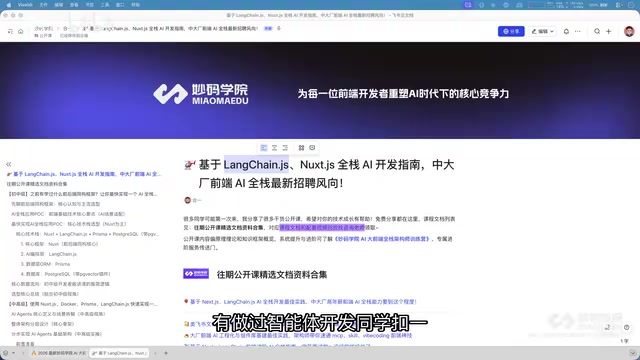
LangChain.js + Nuxt.js: An AI Full-Stack Advancement Path for Frontend Engineers
Frontend hiring now treats AI capabilities as a core assessment, covering RAG knowledge bases, AI Agent development, and LangChain.js engineering. Learn how LangChain.js + Nuxt.js helps frontend developers build memory- and retrieval-capable AI full-stack apps.
Read more →

·6 min
AI Agent Learning Roadmap: A Four-Stage Guide from Beginner to Practical Mastery
A systematic AI Agent learning roadmap in four progressive stages: fundamentals → ReAct core paradigm → memory & tools → multi-agent collaboration. Master LangChain, AutoGen, and more, growing from beginner to practical developer in three months.
Read more →

·5 min
The Rise of Slow Content: A Tweet Sparks Reflection on the Attention Economy and Content Creation
A tweet about "live streaming reading a book aloud" reflects the deep dilemma of content creators in the attention economy. This article explores the revival of slow content, the irreplaceability of the human voice in the AI era, and lessons on content differentiation.
Read more →

·5 min
Introduction to Prompt Engineering: A Complete Guide to Core Concepts, Methodologies, and Limitations
Prompt engineering is a core skill in the AI era. This article breaks down the essential differences between prompts and prompt engineering, the six-step workflow, four evaluation criteria, and key limitations like context limits and hallucination.
Read more →

·7 min
Harness Engineering: Core Methodology and Practical Guide for Enterprise-Level AI Programming
Can AI really replace programmers? This article explains Harness Engineering principles and its three evolutionary stages, revealing real pain points of enterprise AI programming.
Read more →

·7 min
The Complete Guide to OpenCode: Installing, Configuring, and Using the Terminal AI Coding Assistant
An in-depth guide to installing, configuring, and extending OpenCode, the terminal AI coding assistant. Covers desktop and WSL installation, model config, MCP integration, and custom Agents.
Read more →
GPT-5.5 Codex Reasoning-Token Clusteri…
·2 min
GPT-5.5 Codex Reasoning-Token Clustering Explained: Causes of Performance Regression and How to Respond
An in-depth look at reasoning-token clustering in GPT-5.5 Codex — exploring causes like reasoning budget imbalance and model iteration side effects, with prompt engineering strategies for developers.
Read more →

·3 min
Fixing the Three Big Weaknesses of LLMs: Knowledge, Computation, and Tool Use
LLMs struggle with knowledge accuracy, math, and external capabilities. This article explains three prompt engineering solutions — generated knowledge prompting, PAL/PoT, and tool use — to systematically strengthen LLM reliability and build better AI Agents.
Read more →

·8 min
The Codex Orange Book: An Open-Source Full-Stack Practical Guide for AI Programming Beginners
The Codex Orange Book is an open-source unofficial guide with 2.5K+ GitHub Stars, covering installation, plugins, MCP extensions, and hands-on projects to help beginners master AI programming tools.
Read more →

·7 min
Building an AI Agent from Scratch: Implementing Core Conversational Agent Features in Python
Learn AI Agent development from scratch. This tutorial covers LLMs and prompts, then builds a conversational agent in Python using the DeepSeek API with multi-turn dialogue and system prompts.
Read more →

·7 min
Complete Guide to OpenCode: Installation, Configuration, and Custom Commands in Practice
A systematic guide to OpenCode, the open-source terminal AI coding tool: installation methods (including WSL), model configuration, rules files, Agent types, custom commands, and MCP tool extensions.
Read more →

·7 min
Cost Optimization for AI Agent Fleets: Why an Expensive Commander + Cheap Workers Is More Cost-Effective
Deep analysis of multi-agent system cost optimization: why the 'expensive commander + cheap workers' combination outperforms all-frontier fleets, covering decision-intent cost logic and Sonnet 5 tokenizer traps.
Read more →

·3 min
Hermes Agent Deep Dive: Anatomy of a Self-Evolving AI Agent Architecture
Deep dive into Hermes Agent's core architecture including the Skills system, GPA governance mechanism, and 47 built-in tools. Learn how Hermes self-evolves to get smarter with use.
Read more →
·3 min
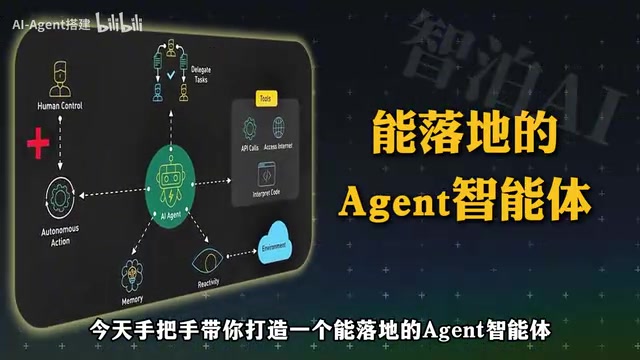
AI Agent Beginner's Guide: A Complete Four-Stage Learning Path
A complete learning path for AI Agent development from scratch, covering core theory, ReAct paradigm, multi-agent collaboration, Prompt optimization, and hands-on projects across four stages.
Read more →

·3 min
Andrew Ng's Prompting Course: Four Core Gaps Between AI Beginners and Power Users
Andrew Ng's AI Prompting for Everyone course reveals four key gaps between AI beginners and power users: deep thinking tasks, context, neutral prompting, and iterative workflows.
Read more →

·3 min
Getting Started with AI Agent Development: Core Concepts, Architecture, and Practical Essentials
A comprehensive guide to AI Agent development covering core concepts, the Perception-Brain-Action architecture, key differences from chatbots, four essential components, and mainstream framework selection.
Read more →