#LLM behavior editing
172 related articles

·2 min
ChatGPT vs Claude: A 20-Minute AI Game Coding Showdown
A developer tested ChatGPT and Claude with the same prompt to build a Dragon Ball fighting game in 20 minutes. See how they compared in architecture, UX, and completeness.
Read more →

·3 min
Cursor Practical Tutorial: A Complete Guide from Installation to Efficient Workflows
A detailed guide to Cursor AI programming tool covering installation, prompting techniques, model selection, Rules configuration, and practical workflows for developers and content creators.
Read more →

·3 min
Cursor Pay-Per-Use Billing Explained: How Account Pool Scheduling Reduces Usage Costs
Deep analysis of Cursor's low-cost usage solution: clean account pool scheduling, 35% pay-per-use billing, and intelligent quota flow mechanisms to help developers evaluate third-party alternatives.
Read more →

·3 min
Claude Code vs. Codex: A Practical Guide to Enterprise-Grade AI Programming
A deep dive into enterprise AI programming with Claude Code and Codex — from Vibe Coding limitations to SuperPower engineering workflows, model selection, and AI aggregation platforms.
Read more →

·2 min
SWE-bench Multilingual: A Comprehensive Guide to the Multi-Language Programming Benchmark
A deep dive into SWE-bench Multilingual benchmark covering 9 programming languages, 300 real GitHub tasks, its design methodology, language distribution, evaluation metrics, and significance for AI coding assistants.
Read more →

·3 min
Core Analysis of Agent Skill: Progressive Disclosure & Middleware Practical Guide
Deep dive into Agent Skill's core design—Progressive Disclosure—with detailed middleware and dynamic tool implementation, Multi-Agent comparison, and practical tips.
Read more →

·3 min
Claude Code Source Code Leak: 500,000 Lines of Code Reveal Core Multi-Agent Architecture Design
Anthropic accidentally leaked 500K+ lines of Claude Code TypeScript source via a Source Map misconfiguration, revealing its Coordinator multi-agent architecture, Kairos prediction system, and shadow rollback mechanism.
Read more →
·4 min
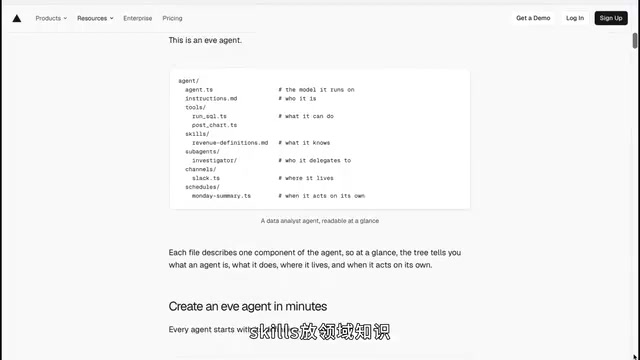
Deep Dive into Six AI Development Tools: Loop Recipe Library, Vercel Agent Framework, and More
Deep analysis of Loop workflow recipes, Vercel's open-source Agent framework, Pyker AI-native project management, Arrow P2P tool, DBX database client, and NVIDIA's Skill Spectre security tool.
Read more →

·3 min
The Vibe Coding Trap: Why AI Only Gives You the Bare Minimum
The most common AI coding pitfall: ask for a BGM feature, get WAV-only support. Learn why AI defaults to minimum delivery and how to avoid it with multi-tool workflows.
Read more →

·4 min
Deep Dive into Pi Coding Agent: Why One Developer Abandoned Mainstream AI Tools to Build from Scratch
Veteran developer Mario Zechner dissects flaws in Cloud Code, OpenCode, and Cursor, then builds Pi — a minimalist coding Agent with just four tools and deep extensibility.
Read more →

·2 min
Three Essential Claude Code Configuration Techniques: A Practical Guide to CLAUDE.md, Memory & MCP
Master three Claude Code configuration techniques: use CLAUDE.md for project rules, Memory for auto-learning preferences, and MCP for connecting GitHub and external tools.
Read more →

·3 min
Codex + Claude Code in Practice: From Vibe Coding to Enterprise-Grade AI Engineering
A deep dive into Codex and Claude Code for real-world AI programming—from Vibe Coding prototypes to Plan mode and SuperPAL engineering, with LLM selection strategies and enterprise workflows.
Read more →

·2 min
OpenCode In-Depth Review: Hands-On with a Free Open-Source AI Coding Assistant
In-depth review of OpenCode, an open-source AI coding assistant. Covers its three-layer architecture, setup, building a to-do app, and model comparisons with DeepSeek Flash and more.
Read more →

·3 min
Complete Guide to Custom Models and Agent Configuration in Trae
A detailed guide to configuring custom models in Trae via provider APIs and proxy APIs, plus how to create personalized agents for your own AI assistant.
Read more →

·3 min
DeepSeek-Reasonix: An AI Coding Agent Built for DeepSeek That Cuts Costs by 80%
DeepSeek-Reasonix is an open-source AI coding agent optimized for DeepSeek models. With 12K stars in 3 days, it offers 5 reasoning levels, 4 execution modes, MCP integration, and smart caching that cuts long-session costs by 80%.
Read more →

·4 min
Complete Guide to Commercial AI Agent Development: From Requirements Analysis to Production Deployment
Complete guide to commercial AI agent development from scratch, covering requirements analysis, architecture design (ReAct framework, deep search, intent recognition), hands-on Coze platform implementation, workflow creation, and production deployment.
Read more →

·4 min
The Complete AI App Development Workflow: Six Steps from Idea to Launch
A complete guide to building apps with AI coding tools, covering product docs, prototyping, full-stack development, database design, project management, and testing — no coding required.
Read more →

·3 min
Open-Source Models Keep Throwing Errors in Your Code? The Problem Might Be the Framework
DeepSeek and Kimi keep failing at coding? The problem may not be the model but the framework. Learn how Commander Code fixes this with cache routing, tool call repair, and continuous learning.
Read more →

·3 min
CrewAI Multi-Agent Collaboration in Practice: A Complete Guide from Setup to API Service
A detailed guide to CrewAI multi-Agent collaboration covering core concepts, FastAPI service setup, and real-world comparisons of GPT-4o Mini, Qwen Max, and Llama 3.1.
Read more →

·3 min
How to Add Custom API Keys to Cursor Free: A Complete Cursor++ Setup Guide
Learn how to add custom API Keys to Cursor Free using Cursor++. Complete setup guide covering installation, authorization, network config, and API channels.
Read more →