#LLM calibration
138 related articles

·6 min
Deploying Enterprise AI Agents to Production: The Five Pillars from Demo to Launch
A Databricks expert breaks down the complete methodology for taking AI Agents from demo to production, covering the five pillars of evaluation, observability, data foundation, multi-Agent orchestration, and AI governance, with a real eight-week banking chatbot POC case.
Read more →

·2 min
AI Cheating Exposed: What a 50% Grade Drop in an Ivy League In-Person Exam Really Means
An Ivy League professor switched to an in-person exam and average scores dropped 50%. This accidental experiment reveals the true scale of AI cheating and what it means for education.
Read more →
·2 min
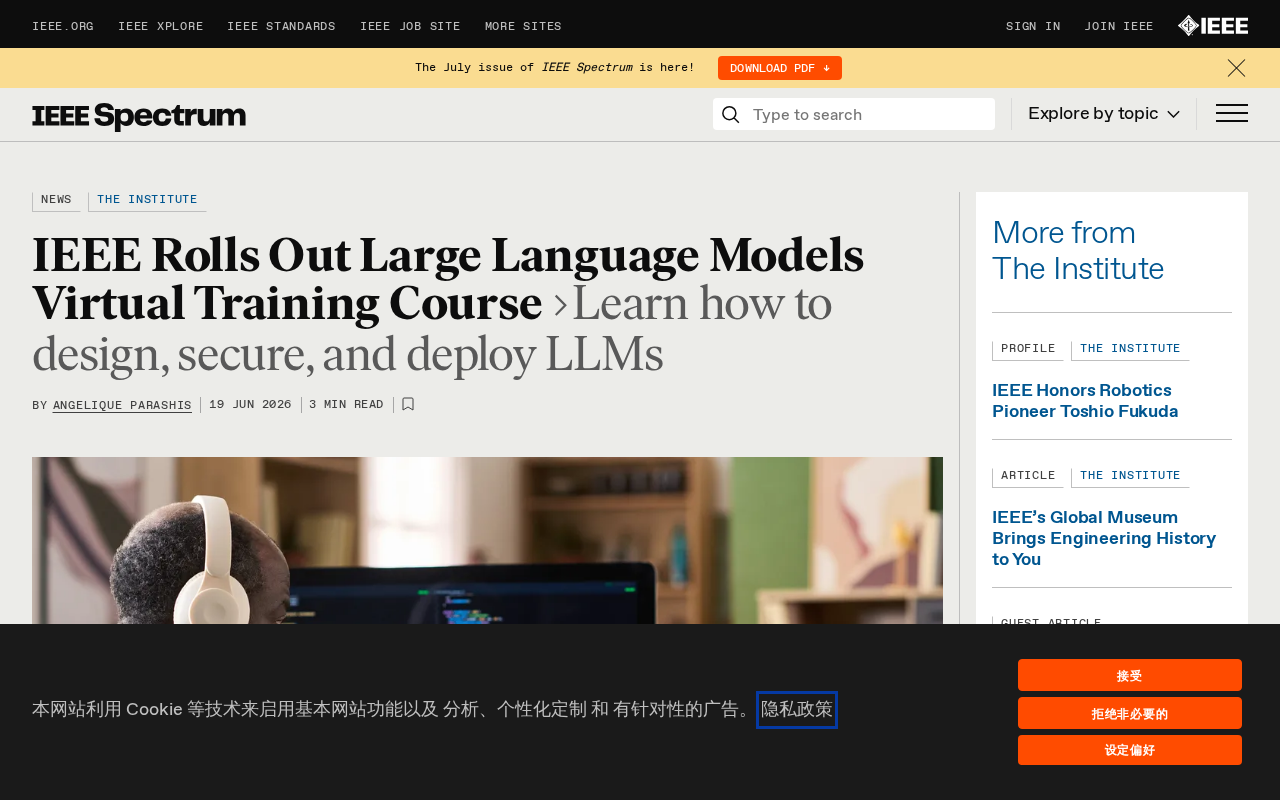
IEEE Launches LLM Training Course: Large Language Model Education Goes Mainstream
IEEE launches an official LLM training course, signaling large language models are entering standardized professional education. What this means for the AI talent gap and your career.
Read more →

·6 min
Unsloth Major Update: DeepSeek-V4 Support and a Deep Dive into NVFP4 Quantized Export
Unsloth v0.1.481-beta adds full DeepSeek-V4-Flash support, NVFP4/FP8/imatrix GGUF quantized export, 1.3x faster GRPO, 3-5x faster MoE training, and an OpenAI-compatible API service in Studio.
Read more →

·7 min
Sakana Fugu vs GLM 5.2 Hands-On Test: Who Can Truly Challenge Top-Tier AI Models?
A head-to-head hands-on test of Sakana Fugu vs GLM 5.2 based on real Hermes agent workflows. Covering tool calling, frontend generation, and code improvement to reveal each model's true performance, speed, and value.
Read more →

·7 min
Harness Engineering: The Six-Layer Engineering Framework for Enterprise AI Agent Deployment
From Prompt Engineering to Harness Engineering, a deep dive into the core challenge of truly deploying AI Agents in enterprises. This article breaks down the six-layer architecture and shares real-world Hermes Agent practice.
Read more →
·5 min
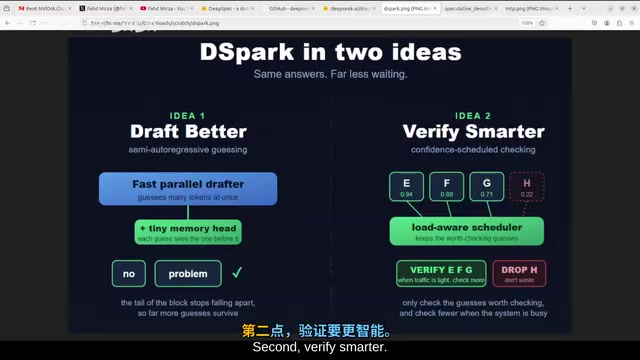
DeepSeek DSpec Hands-On: How Speculative Decoding Accelerates LLM Inference by 6x
Hands-on report on DeepSeek's open-source inference acceleration toolkit DSpec: draft model + smart scheduling delivers lossless speedup, hitting acceptance length 6 on GSM8K and reproducing official data.
Read more →

·7 min
Fable AI Coding in Practice: Optimizing Reasoning Levels and Multi-Model Collaboration to Save Money
Hands-on guide: Use Anthropic's Fable model to optimize AI coding workflows — control reasoning levels, leverage Claude-Codex multi-model collaboration, and cut costs from thousands to $150.
Read more →

·2 min
Domestic Budget AI Models for Web Novel Writing: A Head-to-Head Comparison of Four Models
Lingxie SoloEnt tested QDAM 3.7 Plus, DeepSeek Feast Pro, LongCat 2.0, and MiniMax Mi3 for web novel writing. Three editors scored results to help authors choose the right AI tool.
Read more →

·5 min
U.S. Treasury Warns of AI Bubble Risk: Systemic Concerns and Investment Rationality
The U.S. Treasury has issued a rare internal warning that the AI investment boom may be forming an asset bubble, with valuations detached from fundamentals and systemic risks mounting.
Read more →

·7 min
The Revenge of the Philosophy Majors in the AI Era: Why Critical Thinking Has Become the New Scarce Resource
As generative AI sweeps the workplace, once-marginalized philosophy and humanities are being revalued. This article explores why critical thinking, ethical judgment, and questioning are the new scarce competencies in the AI era.
Read more →

·7 min
Electron + LangGraph in Practice: Building an AI Agent Visual Orchestration App from Scratch
A hands-on guide to building an enterprise-grade AI Agent workflow orchestration app with Electron Forge and LangGraph, covering local LLM deployment (Qwen3-0.6B), node-based visual canvas design, and full Function Calling integration.
Read more →

·7 min
Metacognitive Feedback: Using Reinforcement Learning to Help LLMs Accurately Express Uncertainty
LLMs are often overconfident and prone to hallucination. How can AI learn to say "I'm not sure"? This article explains the reinforcement learning approach with metacognitive feedback and how calibrating confidence boosts LLM trustworthiness.
Read more →

·6 min
The Seven Core Components of Building Long-Running AI Agents
An in-depth look at the seven core components for building long-running AI agents: Goal, Evaluator, Verifier, Outer Loop, Orchestration, Observability, and Memory. Master this control system for reliable autonomous agents.
Read more →

·6 min
GLM 5.2 Arrives: Industry Upheaval on the Eve of AI Margin Collapse
The rise of Zhipu's GLM 5.2 is accelerating the democratization of LLM capabilities. This article analyzes the commoditization of foundation models, the logic behind margin collapse, and the opportunities and challenges facing application-layer and foundation model firms.
Read more →

·6 min
How AI Rumors 'Killed' Jim Carrey: A Trust Crisis in the Age of Search
Jim Carrey was 'declared dead' by AI rumors, revealing how AI-generated content and SEO content farms systematically pollute the information ecosystem.
Read more →

·4 min
NVFP4 Quantization in Practice: A Guide to Compressing Large Models with NVIDIA Model Optimizer
Deep dive into NVFP4 quantization: using NVIDIA Model Optimizer to compress Nemotron 3 Ultra to FP4 checkpoints, reducing memory by 75% and boosting inference throughput on Blackwell GPUs.
Read more →

·3 min
DeepSeek Open-Sources DiSpark: Up to 85% Faster AI Inference Without Changing Hardware
DeepSeek and Peking University release DiSpark, an open-source framework that speeds up LLM inference by 60–85% using speculative decoding and hierarchical verification — no hardware changes or retraining required.
Read more →

·6 min
AI Superforecasters: Can Machines Surpass Human Experts at Prediction?
Have AI superforecasters truly arrived? A deep dive into how LLMs challenge human superforecasters in probability calibration, information integration, and scalable forecasting, plus core debates on data leakage, interpretability, and real-world applications.
Read more →

·5 min
NVIDIA AI-Q Blueprint × OCI: A Practical Guide to Production Deployment of Enterprise AI Agents
Deep dive into NVIDIA AI-Q Blueprint production deployment on Oracle Cloud Infrastructure, covering NIM microservices, RAG architecture, multi-agent orchestration, and OCI GPU selection for enterprise AI agents.
Read more →