#LLM calibration
129 related articles

·6 min
Is AI Really Smart? The Future Directions and Capability Boundaries of Next-Generation Artificial Intelligence
Are large language models truly intelligent? This article analyzes core AI limitations — pattern matching, hallucinations, reasoning deficits — and explores next-gen directions like inference-time compute, neuro-symbolic AI, and embodied intelligence.
Read more →

·3 min
Intent Recognition Interview Question: Three-Layer Funnel Architecture Breakdown and Answer Template
Asked 'how do you implement intent recognition' in an interview? Dumping everything into an LLM is a red flag. This guide breaks down the 3-layer funnel architecture with a ready-to-use answer template.
Read more →

·5 min
GPT-5.6 Trio Released: A Deep Dive into Sol/Terra/Luna and the Breakthrough in Design Judgment
OpenAI officially releases the GPT-5.6 series with three models: flagship Sol, balanced Terra, and economy Luna. A deep dive into its core breakthroughs—a step change in design judgment and enhanced computer-use capabilities.
Read more →

·5 min
Real-World Comparison of 6 Open-Source LLMs for On-Premise Deployment: A Selection Guide to Avoid Pitfalls
A hands-on comparison of 6 open-source LLMs (DeepSeek, Qwen3, Zhipu GLM, Kimi K2, MiniMax M3, Tencent Hunyuan 3) for on-premise deployment—covering hardware cost, inference efficiency, and deployment difficulty.
Read more →

·5 min
DeepSeek Boosts Inference Speed by 85%: How Speculative Decoding Is Reshaping the AI Speed Race
DeepSeek and Peking University's DS Spark paper boosts AI inference speed by up to 85% via confidence scheduling and semi-autoregressive speculative decoding — no model or GPU changes.
Read more →

·7 min
Krea2 Tested: Does the FP8 vs BF16 Quality Gap Still Exist?
A Reddit user compared FP8 and BF16 precision on the Krea2 model and found almost no difference in image quality. This article analyzes the technical reasons behind the shrinking quantization gap and its real-world impact on VRAM usage and inference speed.
Read more →

·3 min
Vibe-Trading: The Rise and Practice of Open-Source AI Trading Agents
HKUDS's open-source Vibe-Trading gained nearly 1,000 GitHub stars in a day. This deep dive covers its LLM+Tool Calling architecture, core modules, and the risks of AI-driven trading agents.
Read more →

·5 min
TensorRT Multi-Device Inference: Engineering Practices for Breaking Through Single-GPU Memory Bottlenecks
NVIDIA TensorRT now supports multi-device inference via pipeline and tensor parallelism, distributing large models across multiple GPUs to break through single-card memory limits.
Read more →

·3 min
Zuckerberg's Frank Admission: AI Agents Aren't Where They Need to Be — Where Are the Technical Bottlenecks?
Meta CEO Zuckerberg admits AI Agents aren't progressing as expected, revealing core bottlenecks like error compounding and long-horizon planning. A deep dive into the gap between AI Agent hype and reality, plus practical enterprise guidance.
Read more →

·7 min
The Five Pillars of Production-Grade AI Agents: A Battle-Tested Guide from Demo to Deployment
Databricks tech lead Sandy shares a five-pillar framework for production-grade AI Agents—evaluation, observability, data foundation, orchestration, and governance—with a £85K retail banking failure case to bridge the demo-to-production gap.
Read more →

·2 min
Beyond Voice Commands: The Future Evolution of Multimodal Human-Robot Interaction
Voice isn't the only answer for human-robot interaction. Explore how gesture recognition, eye tracking, and environmental sensing are transforming robots from command-followers to intent-understanding partners.
Read more →

·6 min
Deploying Enterprise AI Agents to Production: The Five Pillars from Demo to Launch
A Databricks expert breaks down the complete methodology for taking AI Agents from demo to production, covering the five pillars of evaluation, observability, data foundation, multi-Agent orchestration, and AI governance, with a real eight-week banking chatbot POC case.
Read more →

·2 min
AI Cheating Exposed: What a 50% Grade Drop in an Ivy League In-Person Exam Really Means
An Ivy League professor switched to an in-person exam and average scores dropped 50%. This accidental experiment reveals the true scale of AI cheating and what it means for education.
Read more →
·2 min
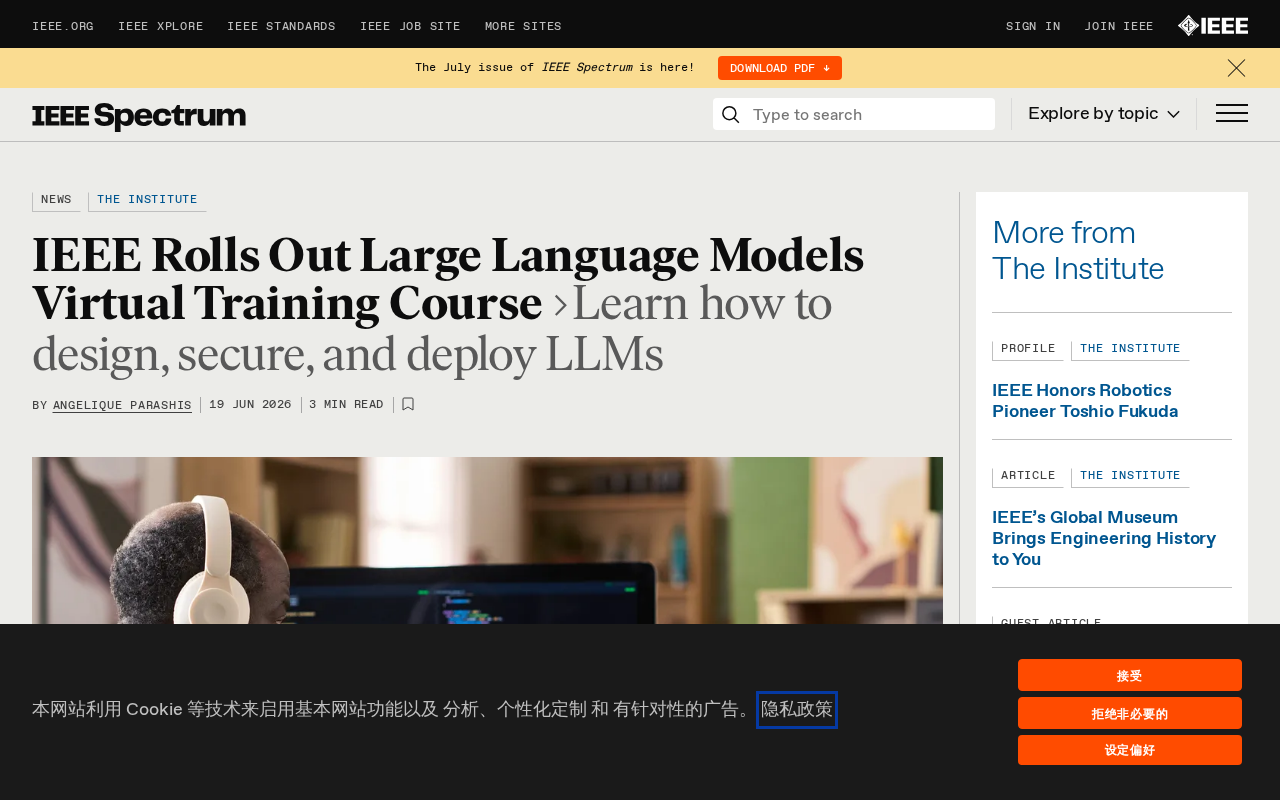
IEEE Launches LLM Training Course: Large Language Model Education Goes Mainstream
IEEE launches an official LLM training course, signaling large language models are entering standardized professional education. What this means for the AI talent gap and your career.
Read more →

·6 min
Unsloth Major Update: DeepSeek-V4 Support and a Deep Dive into NVFP4 Quantized Export
Unsloth v0.1.481-beta adds full DeepSeek-V4-Flash support, NVFP4/FP8/imatrix GGUF quantized export, 1.3x faster GRPO, 3-5x faster MoE training, and an OpenAI-compatible API service in Studio.
Read more →

·7 min
Sakana Fugu vs GLM 5.2 Hands-On Test: Who Can Truly Challenge Top-Tier AI Models?
A head-to-head hands-on test of Sakana Fugu vs GLM 5.2 based on real Hermes agent workflows. Covering tool calling, frontend generation, and code improvement to reveal each model's true performance, speed, and value.
Read more →

·7 min
Harness Engineering: The Six-Layer Engineering Framework for Enterprise AI Agent Deployment
From Prompt Engineering to Harness Engineering, a deep dive into the core challenge of truly deploying AI Agents in enterprises. This article breaks down the six-layer architecture and shares real-world Hermes Agent practice.
Read more →
·5 min
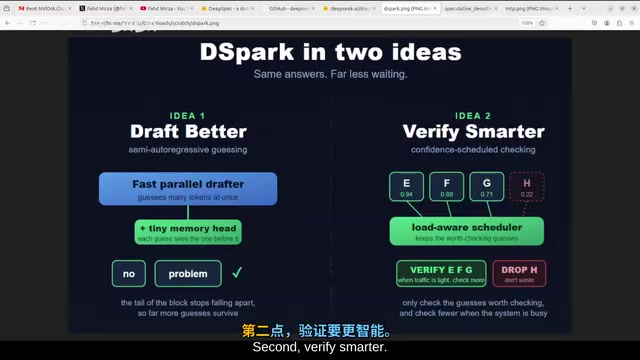
DeepSeek DSpec Hands-On: How Speculative Decoding Accelerates LLM Inference by 6x
Hands-on report on DeepSeek's open-source inference acceleration toolkit DSpec: draft model + smart scheduling delivers lossless speedup, hitting acceptance length 6 on GSM8K and reproducing official data.
Read more →

·7 min
Fable AI Coding in Practice: Optimizing Reasoning Levels and Multi-Model Collaboration to Save Money
Hands-on guide: Use Anthropic's Fable model to optimize AI coding workflows — control reasoning levels, leverage Claude-Codex multi-model collaboration, and cut costs from thousands to $150.
Read more →

·2 min
Domestic Budget AI Models for Web Novel Writing: A Head-to-Head Comparison of Four Models
Lingxie SoloEnt tested QDAM 3.7 Plus, DeepSeek Feast Pro, LongCat 2.0, and MiniMax Mi3 for web novel writing. Three editors scored results to help authors choose the right AI tool.
Read more →