#LLM inference performance
1610 related articles

·2 min
Gemma 4:31b Hands-On: Major Stability Improvements in Ollama Local Deployment
Reddit user reports Gemma 4:31b on Ollama is now much more reliable: tool calls no longer fail frequently and gibberish output issues are gone.
Read more →

·4 min
Deep Dive into Kimi K3 Architecture: KDA, Stable Latent MoE, and Attention Residuals — Three Core Technologies Explained
Deep dive into Kimi K3's three core architecture technologies: KDA memory management, Stable Latent MoE with 896 experts activating only 16, and Attention Residuals — from math to implementation.
Read more →

·3 min
Dograh: Open-Source Voice AI Agent Platform, a Free Alternative to VAPI
Dograh is a fully open-source voice AI agent platform offering visual flow building, 30+ model integrations, self-hosting, telephony, and human transfer — a free alternative to VAPI.
Read more →

·3 min
Trigger.dev Chat Agent: Deep Dive into a Durable AI Chat Solution
Deep dive into Trigger.dev's Chat Agent durable AI chat solution with no timeouts, disconnect recovery, sleep-wake cycles, Vercel AI SDK compatibility, and built-in observability tracing.
Read more →

·3 min
Surging Demand for Qwen3-Max Cloud Deployment: Analyzing Ollama Cloud Model Availability Trends
Analysis of developer demand for Qwen3-Max on Ollama Cloud, exploring trends in local-to-cloud inference tools and China's LLM globalization.
Read more →

·3 min
Google AI Models Suddenly Getting Dumber? Causes and Coping Strategies for Model Degradation
Deep analysis of Google AI model performance fluctuations and model degradation, exploring technical causes like dynamic quantization and silent updates, with practical strategies for benchmarking, version pinning, and building robust AI applications.
Read more →

·3 min
Statewave Open-Source Memory Runtime: Delivering Persistent, Structured Memory for Production-Grade AI Agents
Statewave is an open-source memory runtime for production AI agents, self-hosted on PostgreSQL, offering persistent, structured, and provenance-aware context management.
Read more →

·2 min
Agent-Devtools: A Deep Dive into the Local-First AI Agent Debugging Tool
Agent-Devtools is a 100% local AI Agent debugging tool supporting causal debugging, behavior diff, deterministic replay, and context provenance. No API Key needed, with native LangChain integration.
Read more →

·2 min
Qwen 3.8 Weights Open-Sourced: Technical Analysis and Ecosystem Impact of Alibaba's Open-Source Model
Alibaba's Qwen 3.8 model weights are now open-source. This article analyzes Qwen's open-source strategy, the value of weight release for private deployment and fine-tuning, and its competitive position in the global open-source LLM landscape.
Read more →

·2 min
Is Gemini Flash's Document Processing Capability Underrated? Benchmark Tests Validate Real User Experience
Reddit users highlight Gemini 3.5 Flash as severely underrated for document and spreadsheet processing. New benchmarks validate real-world experience over generic leaderboards.
Read more →

·3 min
MRI Brain Tumor Detection Graduation Project: A Complete Technical Roadmap from Scratch
A complete guide for MRI brain tumor detection graduation projects: medical background, BraTS dataset selection, GAN/diffusion model/Transformer technical routes, Research Gap methodology, and Agent collaboration architecture.
Read more →

·3 min
DLLM: A Deep Dive into the Minimalist Local Coding Agent Built on llama.cpp
Deep dive into DLLM, a minimalist coding agent built directly on llama.cpp. Explore its zero-overhead architecture, local privacy advantages, use cases, and trade-offs vs. cloud AI coding tools.
Read more →

·4 min
OpenAI Chief Research Officer Mark Chen: Within Three Years, AI Will Independently Conduct End-to-End Scientific Research
OpenAI CRO Mark Chen shares frontier AI research insights: RL boundaries, why Scaling Laws aren't dead, the o1 reasoning model's origin story, and the bold three-year goal of AI conducting end-to-end scientific research independently.
Read more →

·4 min
Advancing Your Self-Taught Machine Learning Journey: Three Paths Forward After Completing Foundational Projects
After completing MNIST implementation and paper reproduction, how should self-taught ML learners advance? This article outlines three paths: computer vision, NLP, and math foundations.
Read more →

·3 min
Java + AI in Practice: Building an Enterprise-Grade Airline Intelligent Customer Service System
Learn how Java engineers can enter AI application development using Spring AI to build an enterprise-grade airline intelligent customer service system with RAG, Function Calling, and more.
Read more →
·3 min
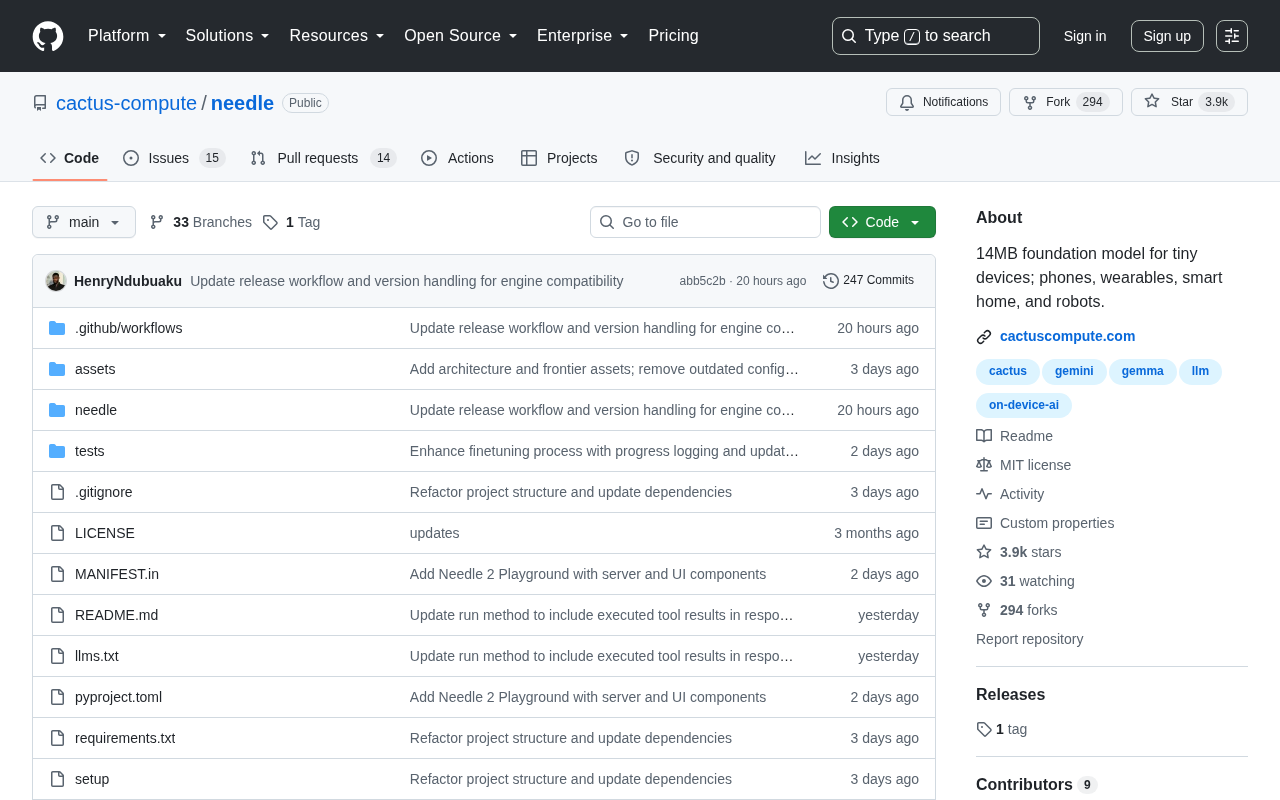
Needle: How a 14MB Foundation Model Is Unlocking Edge AI Deployment
Needle is a 14MB open-source foundation model from cactus-compute, designed for phones, wearables, smart home devices, and robots. Explore its edge AI potential.
Read more →

·2 min
NVIDIA Open-Sources Switchyard: An AI Task Scheduling Engine Built with Rust
NVIDIA-NeMo team open-sources Switchyard, a high-performance AI task scheduling engine built in Rust. Explore its technical positioning, why Rust was chosen, and its strategic role in the NeMo ecosystem.
Read more →

·5 min
Harness: The Operating System That Takes LLM Agents from Demo to Production
Deep dive into Harness technology: how context engineering, memory management, and multi-agent architecture transform LLM agents from stochastic demos into stable production systems.
Read more →

·2 min
Understanding GGUF Quantization: The Real Difference Between Q4_K_M and Q4_K_S
Detailed explanation of the core differences between GGUF model Q4_K_M and Q4_K_S: why same-Q4 files differ in size, k-quant protection strategies, quantization selection guide, and VRAM planning tips.
Read more →

·2 min
Aquifer Open Source: A Traffic Smoothing Solution for Peak Shaving Bursty GPU Inference Workloads
Aquifer is an open-source traffic smoothing runtime that uses durable queue buffering and backend backpressure to solve burst traffic challenges in GPU inference services, enabling peak shaving and cost reduction.
Read more →