#LLM tool invocation
794 related articles

·3 min
Stop Flying Blind: A Complete Practical Guide to Writing Evals for AI Agent Skills
A Google DeepMind engineer reveals that over 50,000 AI agent skills come with almost no evals. Learn how to write skill evaluations, from description tuning to test design.
Read more →

·3 min
Stop Flying Blind: A Complete Practical Guide to Writing Evals for AI Agent Skills
A Google DeepMind engineer reveals that over 50,000 AI agent skills come with almost no evals. This guide covers skill descriptions, test design, eval harnesses, and retirement strategies.
Read more →

·1 min
AI Agents Reshape the Testing Workflow: A Paradigm Revolution from LLMs to Agents
An in-depth look at how AI Agents disrupt traditional software testing: the core differences between LLMs and Agents, four capability dimensions (planning/memory/tools/skills), and how testers achieve 10x efficiency gains.
Read more →

·1 min
AI Agents Rebuild the Entire Testing Workflow: A Paradigm Revolution from LLMs to Agents
An in-depth look at how AI Agents are disrupting traditional software testing: the core differences between LLMs and Agents, four capability dimensions (planning/memory/tools/skills), and how test engineers can achieve 10x efficiency gains in test case generation.
Read more →

·3 min
Laguna S 2.1: The Open-Source Coding Model That's 14x Smaller Yet Stronger
Poolside releases Laguna S 2.1, an open-source agentic coding model: 118B total params with only 8B active, scoring 40.4% on DeepSWE — ~4.5x DeepSeek V4 Pro Max. Supports 1M-token context, deployable on a single workstation.
Read more →

·2 min
Can One Skill Transform All Skills? The Boundary Debate Between Dify Workflows and Agents
A recursive technical proposition: Can we build a "meta-Skill" that auto-transforms any Skill into a Dify workflow? This article dissects the boundary between deterministic orchestration and autonomous Agent decisions.
Read more →

·3 min
Zhipu's Mobile AI Agent Tested: A Full Breakdown of the Cloud Phone Approach — Capabilities and Limitations
Hands-on test of Zhipu's mobile AI Agent: using a cloud phone to bypass permission limits, it supports natural language-driven automation. We cover its core mechanics, real performance, app restrictions, and future potential.
Read more →
·2 min
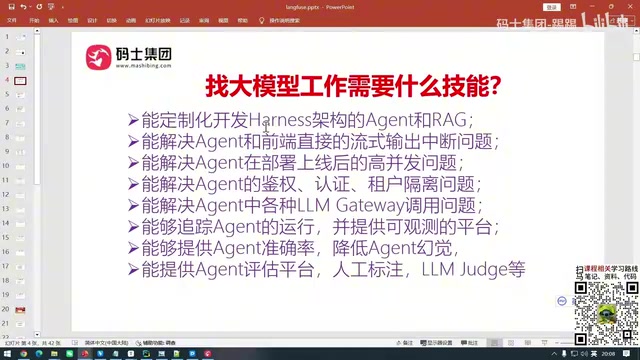
The New Bar for AI/LLM Roles: A Practical Guide to Agent Observability and Evaluation
Enterprise AI/LLM roles now demand engineering skills: streaming recovery, high concurrency, multi-tenancy, LLM gateways, Langfuse observability, and evaluation platforms. Master these 8 core competencies.
Read more →

·3 min
Pinterest Medic: Engineering an AI Agent for Automated Spark Failure Diagnosis
How Pinterest engineers built Medic for Apache Spark — a multi-agent auto-diagnosis tool — covering the evolution from a single ReAct agent, observability, log denoising, and end-to-end testing.
Read more →

·2 min
OfficeCLI Hands-On: AI Batch Read, Edit & Generate Word/Excel/PPT Without Installing Office
Hands-on test of open-source OfficeCLI: a single binary reads, edits, and generates Word/Excel/PPT. 1,000 cells rewritten in 0.37s, Chinese text supported. Covers XML internals, real failures, and AI Agent integration.
Read more →

·8 min
A Complete Guide to Agent Testing: Five Core Dimensions and Automation in Practice
In-depth analysis of the five core dimensions of AI Agent testing: command safety, tool-calling accuracy, task planning, output consistency, and error self-repair. Master automated testing and the transition path for test engineers.
Read more →

·6 min
The Three-Layer GTM Agent Architecture: Enabling AI to Truly Recognize Buyer Intent and Identity
An in-depth analysis of the three-layer GTM Agent architecture—the Signal, Buyer Intelligence, and Action layers—revealing how context graphs identify anonymous visitors and capture purchase intent.
Read more →
Intelligent Model Routing: The Core Te…
·3 min
Intelligent Model Routing: The Core Technology and Implementation Guide for AI Cost Reduction and Efficiency
Intelligent Model Routing is becoming key AI infrastructure. This article explores its principles, solution types, technical challenges, and implementation considerations to help developers balance cost, latency, and quality.
Read more →

·6 min
Making Money with AI Coding Gigs: A Sober Breakdown and Honest Assessment of the Four-Week Learning Path
Can beginners really earn over 10,000 yuan in their first month with AI coding gigs? This article breaks down the four-week AI coding learning path week by week and objectively assesses the real monetization barriers.
Read more →

·7 min
Getting Started with Claude Code: Five Dimensions That Show Why It Outperforms Ordinary AI
Claude Code isn't just a chat AI—it can directly read projects, modify code, and run commands. This article compares Claude Code with ordinary AI across five dimensions: interaction, context, execution, memory, and tool calling.
Read more →

·4 min
Spring AI 1.0 Practical Guide: A Java Developer's Fast Track to Building AI Applications
Spring AI 1.0 is here — Java developers can now build AI apps without switching to Python. This guide covers LLM integration, RAG, intelligent customer service, and Agent patterns for enterprise deployment.
Read more →

·5 min
From Vibe Coding to AI Engineering: A Complete Guide to Enterprise-Grade Development
In the AI programming era, Vibe Coding alone can only build toys. This article deeply analyzes the complete engineering path from Vibe Coding to SDD spec-driven development, covering Claude Code and Codex tool selection, the SuperPower plugin, and domestic LLM comparisons.
Read more →
Mindwalk: Replaying AI Coding Agent Be…
·4 min
Mindwalk: Replaying AI Coding Agent Behavior on a 3D Code Map
Mindwalk renders codebases as 3D maps, visually replaying the full operation trajectories of AI coding agents like Claude Code and Cursor. A deep dive into its core ideas, use cases, and the future of agent observability tools.
Read more →

·3 min
GPT-5.6 Released: How Multi-Agent Workflows Are Ending the Chat Box Era
OpenAI releases GPT-5.6 with Sol, Terra, and Luna models plus ChatGPT Work execution environment, shifting AI from chatbots to autonomous multi-agent workflows that directly operate local files and business systems.
Read more →

·7 min
Context Engineering: A Systematic Approach to Stop AI Agents from 'Talking Nonsense'
Context engineering is the core methodology for building efficient AI Agents, covering query enhancement, RAG retrieval, prompt design, memory management, and tool invocation. Master Write, Select, Compress, and Isolate to solve LLM hallucination at its root.
Read more →