#LLM-based agent
137 related articles

·8 min
GPT-5.6 Hands-On: Farm Automation, Mathematical Breakthroughs, and End-to-End AI Execution
GPT-5.6 (Sol, Terra, Luna) hands-on testing: a Hokkaido farmer controls a greenhouse with AI, a NYC small business builds custom software, and a Polish mathematician breaks a 3-year problem. A deep dive into end-to-end autonomous execution.
Read more →

·3 min
AI Compliance Auditing: How to Build an Adversarial Testing Evidence System That Withstands Scrutiny
AI compliance is shifting from document storage to generating credible adversarial testing evidence. Learn how TRAIGA, NIST RMF, and ISO 42001 shape audit-grade red team testing requirements.
Read more →

·4 min
AI Agent Learning Path for Beginners: From Theory to Real-World Practice
A complete AI Agent learning roadmap covering BDI theory, core components (Perception/Planning/Execution), AutoGen multi-agent frameworks, and DeepSeek RAG projects for beginners.
Read more →

·4 min
AI Agent Learning Roadmap: From Zero to Real-World Projects
A complete AI Agent learning roadmap covering agent principles, prompt engineering, RAG, multi-agent systems, and hands-on projects — from zero to real-world deployment.
Read more →

·3 min
AI Application Development Learning Roadmap: From Agents and RAG to Real-World Career Success
Want to break into AI application development? This guide covers the full learning path — from Agents and RAG to Prompt Engineering — helping you master LLM engineering skills and land the job.
Read more →

·4 min
9 Proven Methods to Make Hermes Agent Actually Work for You
9 battle-tested methods from hundreds of hours with Hermes Agent: model selection (Opus/ChatGPT/GLM), multi-agent failover, cross-device coordination via Tailscale, and reverse prompting workflows.
Read more →

·7 min
Tencent DiscoBench: The First Benchmark for Evaluating LLM Search Agents' Ambiguity Clarification Capabilities
Tencent Hunyuan and Tsinghua jointly release DiscoBench, the first benchmark evaluating search agents' dynamic ambiguity clarification. Covering 463 ambiguity instances across 11 domains, it reveals real weaknesses of mainstream LLMs.
Read more →

·7 min
Zero-Basis Learning Path for AI Agents: A Three-Stage Journey from Beginner to Deployment
A systematic zero-basis learning path for AI Agent development, covering Python and LLM fundamentals, five core capabilities like task planning and RAG, and LangChain hands-on practice.
Read more →

·4 min
AI Agent: A Complete 6-Week Learning Roadmap from Beginner to Production
A complete 6-week AI Agent learning roadmap covering core architecture (planning/memory/tool use), the ReAct paradigm, multi-agent collaboration, RAG integration, and production deployment.
Read more →

·6 min
Doubao and Qwen Retire AI Agents: How Compute Costs Are Reshaping AI's Commercial Boundaries
Doubao and Qwen have retired their AI Agent features. The real reason isn't regulation—it's that companion-chat users don't pay, making compute costs unrecoverable. A deep dive into AI's cost dilemma.
Read more →
·5 min
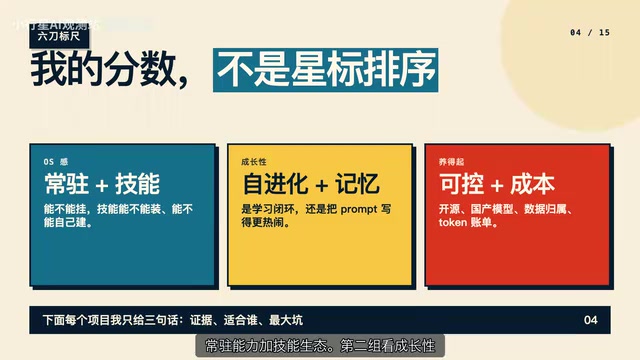
6 Self-Hosted AI Agents Compared: Which One Is a Truly Self-Evolving Digital Employee?
An open-source AI Agent with 380K stars ranks only third? This comparison of 6 self-hosted AI Agents scores them on persistence, self-evolution, and data control—revealing why Generic Agent won with just 3,000 lines of code.
Read more →

·4 min
The AI Story Bubble: Cutting Through the Hype to Find Real Value
When "AI-powered" becomes a magic phrase for valuation premiums, are companies paying for technology or for a story? A deep analysis of AI hype cycles, the gap between narrative and reality, and how to identify genuine AI value.
Read more →

·5 min
A Programmer's Guide to Large Language Models: The Complete Path from Prompts to Agents
A tailored large-model learning path for ordinary programmers: from prompt engineering, API calls, and LangChain, to RAG, Agents, fine-tuning, and enterprise deployment—six steps to build AI application skills fast.
Read more →

·7 min
Agentic AI Development in Practice: Evaluation and Error Analysis Are the Real Competitive Edge
Cut through the Agentic AI hype to see the real value of agentic applications. Based on Andrew Ng's course, learn why Evals and error analysis—not framework choice—separate top developers.
Read more →

·4 min
Claude Code Getting Started Guide: Core Advantages and Selection Recommendations for AI Coding Assistants
Claude Code is Anthropic's local AI coding assistant featuring full project context, auto error correction, and high-accuracy code generation. Compare it with Cursor, Trae, and Codex.
Read more →

·2 min
Building an AI Public Opinion Monitoring Platform with 7 Agents: A Full-Stack LangGraph Deep Dive
A deep-dive into an AI public opinion monitoring platform built with LangGraph and LangChain, featuring 7 collaborative agents, ES vector search, email alerts, and automated report generation.
Read more →

·6 min
5 Critical Engineering Pitfalls in Enterprise RAG Knowledge Base Deployment: The Real Barriers from Demo to Production
Why do enterprise RAG knowledge bases dazzle in demos but fail in production? This article dissects five critical engineering pitfalls with real-world case studies from million-doc platforms and ops agents.
Read more →

·7 min
Building an AI Agent from Scratch: Implementing Core Conversational Agent Features in Python
Learn AI Agent development from scratch. This tutorial covers LLMs and prompts, then builds a conversational agent in Python using the DeepSeek API with multi-turn dialogue and system prompts.
Read more →

·6 min
Getting Started with LangChain: A Deep Dive into Model and Agent Core Concepts
Deep dive into LangChain's core Model and Agent concepts, covering unified model interfaces, agent tool calling, middleware mechanisms, and key principles for building LLM applications.
Read more →
·8 min
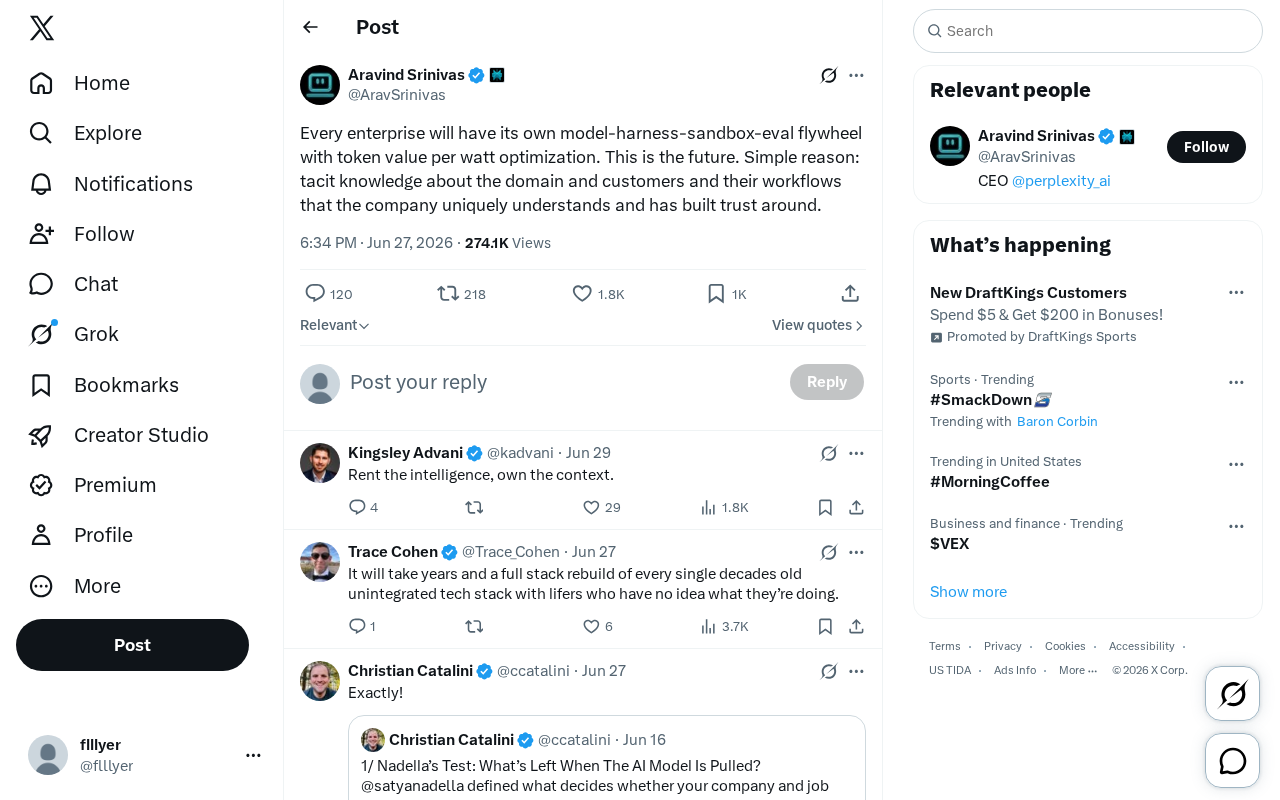
The Enterprise AI Flywheel: Building a Model-Eval Loop as a Competitive Moat
The core of enterprise AI isn't calling general models—it's building a self-reinforcing "model-harness-sandbox-eval" flywheel. This article analyzes the four components, tacit knowledge moats, and the "token value per watt" efficiency metric.
Read more →