#LLM-based agent
136 related articles

·4 min
Self-Healing Agent Loops: Using AI to Automatically Discover and Fix Programming Language Bugs
How Boundary built a self-healing AI Agent loop that automatically writes BAML code, discovers bugs, and generates fix PRs — a practical software factory with deduplication, human-in-the-loop leverage points, and extensible multi-loop design.
Read more →
·3 min
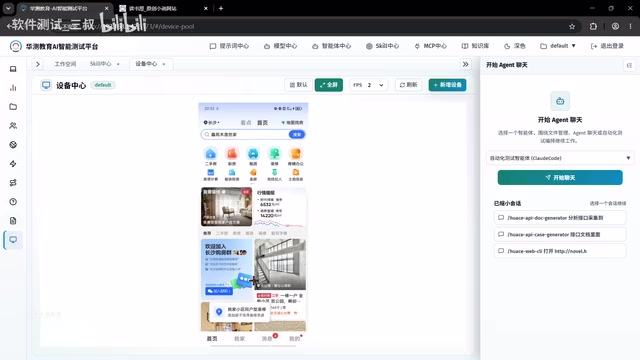
AI Testing in a Closed Loop: Full Pipeline from API Collection and Test Case Generation to Agent-Driven Execution
Full breakdown of a real AI testing pipeline: API collection, doc enrichment, AI test case generation, Agent-driven execution, and test reports — with Skills, RAG, and Harness engineering.
Read more →
PostHog Deep Dive: The Open-Source All…
·2 min
PostHog Deep Dive: The Open-Source All-in-One Platform for Product Analytics and AI Observability
PostHog is an open-source all-in-one platform combining product analytics, session replay, feature flags, A/B testing, and AI Observability. Supports self-hosting and MCP protocol.
Read more →

·3 min
Waku Agent Deep Dive: The Four Core Pillars of a Local-First AI Assistant
A deep dive into Waku Agent's four pillars: Loop Engineering, three-tier Memory system, Eval assessment, and the Harness scaffold. Full walkthrough of a local-first AI assistant from task execution to memory consolidation.
Read more →
Building RL-Powered Autonomous Researc…
·2 min
Building RL-Powered Autonomous Research Agents with NVIDIA NeMo
How NVIDIA NeMo combines reinforcement learning to train agent skills and build an Autoresearch workflow capable of autonomously running ML experiments end-to-end.
Read more →
Capn-hook: Breaking the Cycle of Repet…
·2 min
Capn-hook: Breaking the Cycle of Repetitive Exploration for Coding Agents
Capn-hook is an open-source hook-based tool that helps coding agents retain knowledge across sessions—eliminating redundant exploration and turning one-time discoveries into reusable engineering assets.
Read more →

·2 min
Android CLI: Command-Line-Driven Android Development with Doubled AI Efficiency
Android CLI, unveiled at Google I/O Connect, lets developers manage SDKs and query docs without launching Android Studio, while slashing AI Agent token usage.
Read more →

·3 min
Complete AI Agent Development Learning Path: From Core Principles to Enterprise Deployment
A structured AI Agent learning path covering core principles, prompt engineering, tool use, multi-agent systems, and frameworks like LangChain, CrewAI, and Dify for enterprise deployment.
Read more →
Latent Reasoning: The Next-Generation …
·3 min
Latent Reasoning: The Next-Generation AI Reasoning Paradigm Beyond Chain of Thought
Is CoT really AI 'thinking'? This deep dive covers latent reasoning's rise — Coconut, HRM, BDH — and the core trade-offs between interpretability, efficiency, and governance in high-stakes AI.
Read more →
AI Agents Playing Games: The Technical…
·2 min
AI Agents Playing Games: The Technical Value and Research Significance Behind the Fun
Why do AI agents play games? Explore how games serve as ideal AI training environments — from DeepMind's AlphaGo to LLM-driven agent experiments — and why game-playing benchmarks matter.
Read more →
·4 min
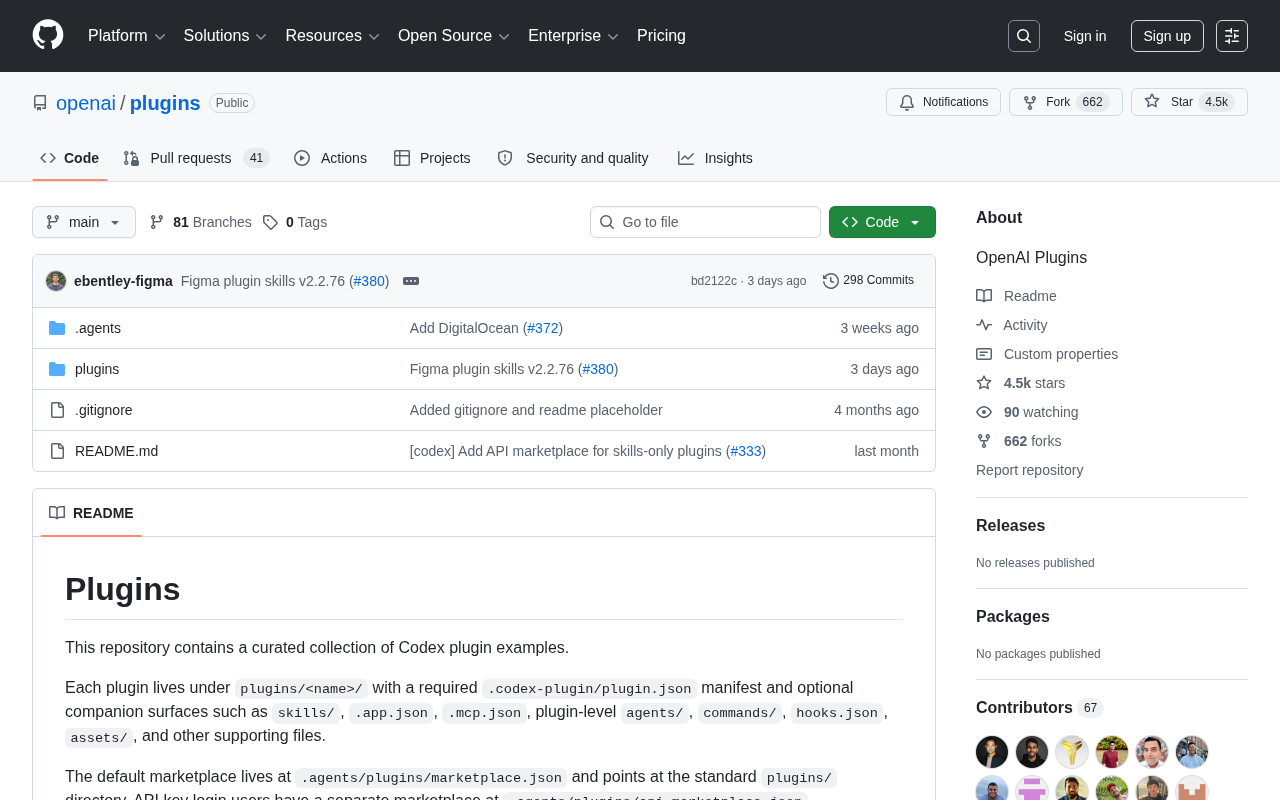
OpenAI Plugins Deep Dive: The Plugin System That Connects ChatGPT to the Real World
A deep dive into OpenAI Plugins: how the system works, its technical architecture, and why it matters. Learn how ChatGPT uses plugins to access real-time data, take real-world actions, and lay the groundwork for AI Agents and Tool Use.
Read more →

·3 min
Skill Pack-Driven AI Agents: An Efficient Alternative to Complex Workflows
Ditch complex workflow nodes. Use Agent Skill packs to dynamically load AI capabilities, build stable intelligent automation, and understand RAG, LLM limits, and Scale Agent plugin setup.
Read more →

·5 min
How Can Working IT Professionals Learn AI Efficiently? A Practical Learning Path from Zero to Real-World Projects
Limited time but want to learn AI systematically? This guide maps out a practical learning path for working IT pros—from AI application engineering and prompt engineering to RAG and Agents.
Read more →

·2 min
Databricks MLOps in Practice: What Actually Works with MLFlow, Agent Bricks, and Genie
An in-depth look at Databricks MLOps core features: MLFlow experiment tracking, Unity Catalog governance, Agent Bricks agent development, and Genie natural language queries—plus real deployment challenges and practical advice.
Read more →

·2 min
4-Step Roadmap to Becoming an AI Agent Engineer: From Zero to a $50K LLM Role
A proven 4-step roadmap to becoming an AI Agent engineer: stable LLM calls, tool use (RAG + Function Calling), production engineering, and resume optimization.
Read more →

·3 min
GPT-5.6 Three-Model Hands-On Test: A Complete Comparison of Sol, Terra, and Luna
An in-depth hands-on test of the GPT-5.6 series' three models—Sol, Terra, Luna—compared with Fable and Sonnet 5. Sol wins overall at nearly half the price. Full analysis of prototyping, code debugging, and browser use.
Read more →

·5 min
ChatGPT Work Officially Launches: How GPT-5.6 Is Reshaping the Way You Work
OpenAI launches the GPT-5.6 model family (Sol/Terra/Luna) and ChatGPT Work, enabling automated financial analysis, local file operations, Codex coding, and cross-app workflows—AI officially becomes a real work partner.
Read more →

·4 min
The Three Eras of AI Agents: The Capability Leap from Tool Calling to Autonomous Orchestration
An in-depth look at the three core eras of AI Agent development: reliable tool calling, coherent long-task execution, and autonomous orchestration with metacognition. Helps developers match tasks to model capabilities.
Read more →

·3 min
How to Choose a Practical LLM/RAG/AI Agent Course: Four Key Criteria
Learn how to pick the best LLM, RAG, and AI Agent courses. Discover 4 key criteria for hands-on AI learning and top resources for developers.
Read more →

·8 min
GPT-5.6 Hands-On: Farm Automation, Mathematical Breakthroughs, and End-to-End AI Execution
GPT-5.6 (Sol, Terra, Luna) hands-on testing: a Hokkaido farmer controls a greenhouse with AI, a NYC small business builds custom software, and a Polish mathematician breaks a 3-year problem. A deep dive into end-to-end autonomous execution.
Read more →