#Llama Guard alternative
32 related articles

·3 min
Open Source Wins: How China Is Using Open Source Strategy to Dominate the Second Half of AI
Chinese open-source AI models are rapidly rising with near-top performance at fraction of cost, dominating local deployment. As the gap shrinks to single digits and OpenAI cuts prices, open source is reshaping AI competition.
Read more →

·2 min
Tomte: A Free Local AI Runtime Framework Built Specifically for Gemma
Tomte is a free local AI framework optimized for Apple Silicon to run Gemma models. Learn about its features, performance advantages, and how it compares to ChatGPT for private, fast local AI deployment.
Read more →

·2 min
Deep Dive into Chatwoot: The Best Open-Source Alternative to Intercom
Deep dive into Chatwoot, a 34K-star open-source customer service platform on GitHub. Covers omni-channel support, self-hosted deployment, and AI integration as an alternative to Intercom and Zendesk.
Read more →

·3 min
The Open-Weight Model Alliance: The Dual Game of AI Safety and American Competitiveness
Analysis of how the open-weight model alliance serves both digital safety and U.S. competitiveness, exploring transparency, ecosystem building, and geopolitical AI competition.
Read more →

·3 min
The Trust Crisis Behind AI Slowdown Advocacy: Should Tech Giants Show Their Cards?
Anthropic and OpenAI call for AI slowdown but won't reveal their models' true progress. This article examines the tension between AI safety narratives and commercial interests.
Read more →

·2 min
Agenta: A Detailed Look at the Open-Source Self-Hosted Claude Cowork Alternative
Agenta is an open-source AI Agent collaboration platform supporting self-hosted models and any Agent framework, positioned as an open-source Claude Cowork alternative.
Read more →

·3 min
Why Anthropic Never Open-Sources Claude: Safety Concerns or Commercial Moat?
Anthropic has never open-sourced Claude's model weights. As OpenAI, Meta, and Google embrace open source, is Anthropic's AI safety stance genuine caution or a commercial moat? A deep dive into the debate.
Read more →

·2 min
Heap Code: The Open-Source VS Code AI Coding Assistant That Truly Supports Local Models
Heap Code is an open-source VS Code extension supporting local models via Ollama and LM Studio, plus OpenAI-compatible APIs. Features completions, chat, inline edit, and agent mode — zero telemetry, no account required.
Read more →

·4 min
How to Stop Meta AI from Training Its Models on Your Instagram Photos
Did you know Meta uses your public Instagram photos to train its AI by default? This guide explains the privacy risks of the opt-out mechanism and offers a 3-step guide to exit Meta AI data use.
Read more →

·6 min
Home Self-Hosting Server Setup Guide: Building a Private Cloud Ecosystem from Scratch
One 32GB server, 8 hours to build a complete home self-hosting ecosystem. This article details the selection logic behind core services like Jellyfin, Forgejo, Immich, and Ollama, plus infrastructure setup essentials for Nginx Proxy Manager and Podman Compose.
Read more →
·5 min
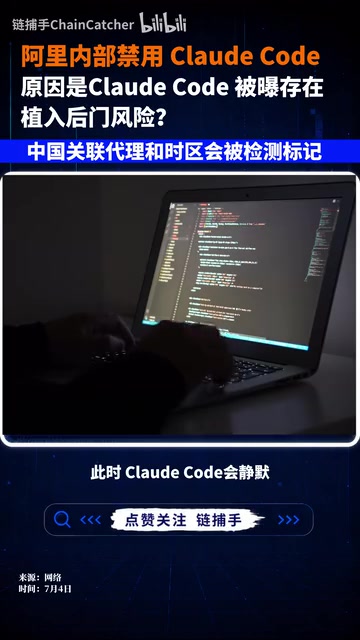
Alibaba Bans Claude Code: Invisible Fingerprints and the AI Tool Trust Crisis
Alibaba has banned Claude Code as high-risk software. Reverse engineering revealed a covert environment-identification mechanism hiding user fingerprints in punctuation via prompt steganography. A deep dive into the incident and AI tool trust.
Read more →

·6 min
AI Agent Development in Go: A Hands-On Guide to ByteDance's Eino Framework and Its Seven Core Capabilities
Build production-grade AI Agents with a pure Go stack using ByteDance's Eino framework. A deep dive into seven core capabilities: multi-Agent orchestration, long-task execution, command approval, RAG, MCP, Skills, and database reporting.
Read more →
·2 min
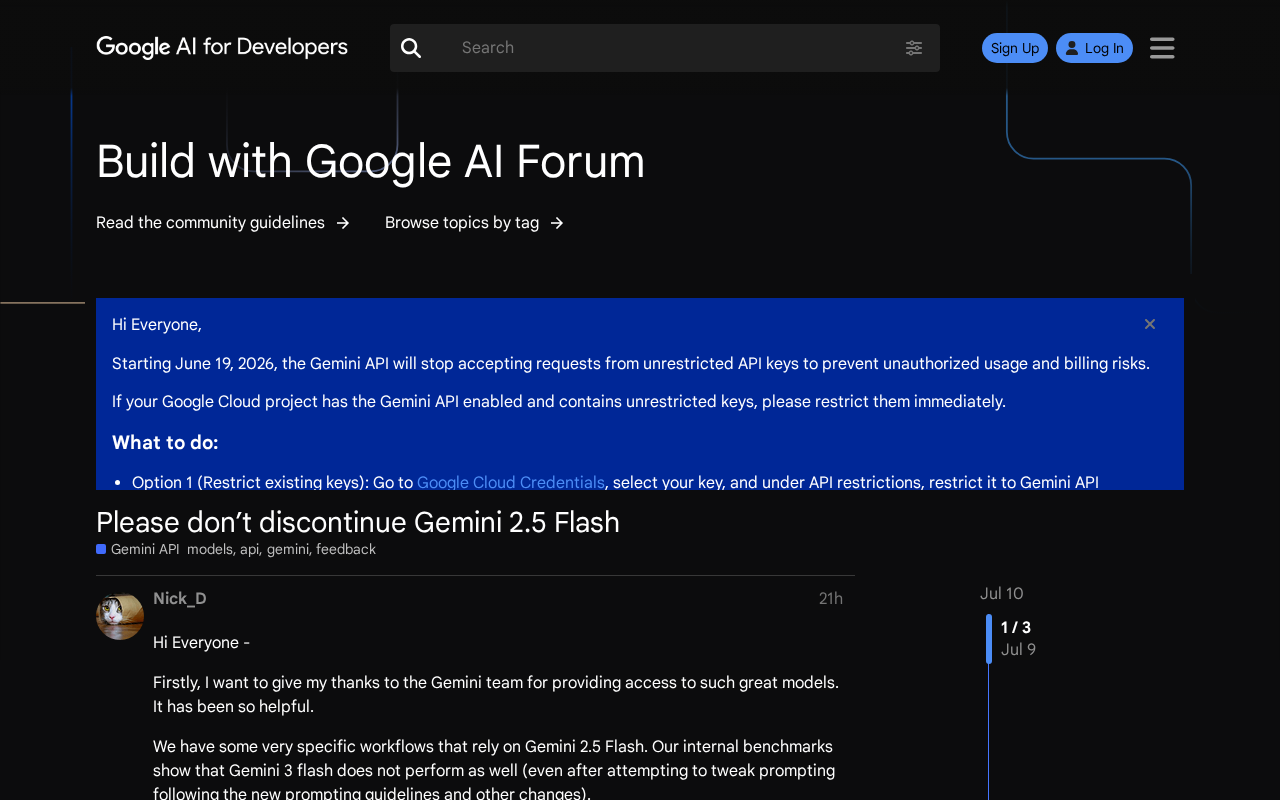
Developers Petition to Keep Gemini 2.5 Flash: The Production Crisis Behind Model Deprecations
Developers on Hacker News push back against Gemini 2.5 Flash's deprecation. We explore why stable, low-cost AI models are critical for production and how to build defensive strategies against cloud model churn.
Read more →
Boko Haram's Abuse of Frontier AI: How…
·3 min
Boko Haram's Abuse of Frontier AI: How Terror Groups Weaponize Technology and the Governance Crisis It Reveals
Boko Haram is systematically exploiting AI tools for propaganda automation, multilingual recruitment, and operational coordination. An in-depth analysis of generative AI abuse by terror groups, the open-source governance dilemma, and the AI safety arms race.
Read more →

·6 min
Tencent Hunyuan HY3 Official Version Open-Sourced: The Strongest Under 300B, at 1 Yuan per Million Tokens
Tencent Hunyuan HY3 official version is open-sourced under Apache 2.0, priced as low as 1 yuan per million input tokens, with major gains in agents, reasoning, coding, and long context. On the same day, Meituan open-sourced its trillion-parameter LongCat 2.0.
Read more →

·6 min
AI's Second Half: The Decisive Battle Shifts from Models to Infrastructure
Model capabilities are converging, making inference cost and scalability the new focus of AI competition. A deep analysis of AI infrastructure's core layers.
Read more →

·2 min
Unsloth v0.1.462-beta: Keyboard Navigation and Accessibility Improvements for Model Picker
Unsloth v0.1.462-beta adds full keyboard navigation to the Studio Model Picker, fixes Tab focus order, and improves accessibility for LLM fine-tuning workflows.
Read more →

·6 min
GPT-5.6 Three-Model Launch: Soul/Terra/Luna Tiered Strategy and the AI National Security Game
OpenAI previews the GPT-5.6 series — Soul, Terra, and Luna — with a massive 1.5M-token context. In-depth analysis of coding leaps, the Fable 5 national security game, the heating U.S.-China AI race, and workflow economics.
Read more →

·7 min
6 Core Standards of a High-Value Agent Project That Impress Interviewers
Most Agent projects lack competitiveness in interviews due to missing business value and engineering depth. This article breaks down the 6 core standards of high-value Agent projects.
Read more →

·6 min
The Transparency Crisis in AI Public Procurement: What the Palantir Controversy Means for Government AI Strategy
The Palantir procurement controversy reveals hidden risks in government AI strategy: opaque contracts, vendor lock-in, and oversight gaps. A deep analysis of AI public governance challenges.
Read more →