#Love Loop plugin
24 related articles

·4 min
Advice from the Creator of Claude Code: Automation Is an Engineer's True Moat
Claude Code creator Boris argues top engineers should embrace AI-era automation leverage. By encoding domain knowledge into infrastructure, preview environments, and lint rules, engineers multiply output—the core path to Staff Engineer.
Read more →

·3 min
Pi Agent Configuration Guide: Building Your Own AI Coding Assistant
A step-by-step Pi Agent configuration tutorial covering installation, LLM connection, extension ecosystem, MCP setup, and Token-saving tips. Learn to build a truly controllable AI coding assistant.
Read more →

·2 min
Claude Code From Zero to Production: Installation, Switching to Chinese LLMs, and Git Workflow Guide
A complete guide to Claude Code: Node.js setup, CLI install, switching to Chinese LLMs with CC Switch, core commands, and conversational Git workflows with automated bug fixing.
Read more →

·4 min
Beyond Vibe Coding: A Complete Guide to Enterprise-Grade AI Engineering
Hit the Vibe Coding ceiling? This guide covers the three-stage AI coding progression path, Claude Code vs. Codex, SuperPower SDD, and how to go from vibe coding to enterprise-grade AI engineering.
Read more →

·7 min
AI Daily: T-Head Open-Sources SAIL Software Stack at WAIC, Flurry of Large Model Releases
T-Head open-sources AI software stack T-Head SAIL at WAIC to lower the barrier for domestic chip development; Kimi K3 tops the WebDev leaderboard; Qwen 3.8 Max Preview cuts prices aggressively; Moonshot prepares a Hong Kong IPO; and Oracle switches its data center to a fuel cell microgrid.
Read more →
pi-web: An Open-Source Web UI Built fo…
·2 min
pi-web: An Open-Source Web UI Built for Coding Agents
pi-web is an open-source TypeScript Web UI for the pi coding agent, offering visual execution flows, interactive intervention, and session management. 1500+ stars on GitHub.
Read more →
·5 min
Advanced Claude Code in Practice: Building a Top-Tier AI Development Workflow
In-depth analysis of Claude Code customization methodology: from access, knowledge injection to tooling. Master context window management, zero-overhead Hooks, and MCP & Skills plugin primitives to build a scalable AI software engineering workflow.
Read more →

·4 min
The Death of Codex: How OpenAI Buried Developers' Favorite Coding Brand With Its Own Hands
OpenAI merged Codex into ChatGPT, killing a developer-beloved AI coding brand. A deep dive into the gains and losses of this brand consolidation.
Read more →
·7 min
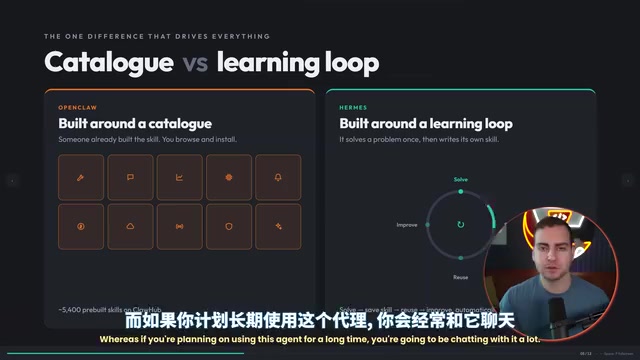
OpenClaw vs Hermes: An In-Depth Comparison and Selection Guide for AI Agent Tools
An in-depth comparison of OpenClaw and Hermes Agent, covering skill management, memory mechanisms, security, and gateway configuration to help you find the right AI agent solution.
Read more →

·5 min
Real-World Comparison of 6 Open-Source LLMs for On-Premise Deployment: A Selection Guide to Avoid Pitfalls
A hands-on comparison of 6 open-source LLMs (DeepSeek, Qwen3, Zhipu GLM, Kimi K2, MiniMax M3, Tencent Hunyuan 3) for on-premise deployment—covering hardware cost, inference efficiency, and deployment difficulty.
Read more →

·6 min
From Frontend Engineer to AI Agent Developer: A Complete High-Paying Skill Tree Breakdown
Pure frontend roles are shrinking; AI Agent development is the high-salary divide. This guide breaks down the full skill tree for frontend engineers pivoting to AI: TypeScript, frameworks, AI productivity, and Agent core concepts (MCP, Tool Calling, Skill).
Read more →

·6 min
Taiganet and the WS4000 Simulator: The Reverse-Engineered Rebirth of Industrial Control Systems
Taiganet.com is simulating the WS4000 industrial control system. This niche project preserves the engineering wisdom from before the PLC and SCADA era. A deep look at the challenges of ICS simulators, knowledge preservation, and reverse engineering in OT security research.
Read more →

·3 min
AI Agent Architecture Decoded: An Engineering Guide from Conversations to Automation
A deep dive into the four-layer engineering design of AI Agents: planning, memory, tool use, API cost optimization, MCP protocol integration, and Skill encapsulation.
Read more →

·4 min
Complete Guide to Connecting External Models in Codex: Two Methods to Unlock Full Capabilities
Two methods for connecting external models to Codex: manually configure keys via relay services, or use the CC Tool to auto-bridge GPT, DeepSeek, and more. Covers auth/config files, CC Tool usage, and multi-model switching.
Read more →

·3 min
Herdr: A Terminal AI Agent Multiplexer Built with Rust
Herdr is an open-source Rust-written terminal tool positioning itself as an AI Agent multiplexer, unifying Claude Code, Cursor, and more in one CLI interface.
Read more →

·4 min
From Vibe Coding to AI-Engineered Programming: A Practical Guide to Three Levels of Mastery
A deep dive into three levels of AI programming: Vibe Coding for rapid prototyping, Plan Mode for structured development, and AI-engineered programming for enterprise-grade projects with SDD and Claude Code SuperPower.
Read more →

·3 min
Codex and Claude Code Dual-Engine: A Practical Guide to AI-Powered Engineering
A deep dive into AI engineering with Codex and Claude Code: Vibe Coding limitations, Chinese LLM rankings, Skill-driven development, and enterprise project practices.
Read more →

·3 min
AI Engineering in Practice: The Progression Path from Vibe Coding to Enterprise-Level Development
Deep dive into AI engineering methodology, comparing Vibe Coding vs enterprise development, covering Claude Code, Codex tool selection, SuperPower plugin practices, and the path from prototype to production.
Read more →

·3 min
Codex++ with Free API: A Complete Guide to Using Codex at Zero Cost
Learn how to use Codex for free with Codex++ and free APIs. Complete setup guide covering text, image, and video generation with a real-world creative workflow example.
Read more →

·3 min
Google CEO Admits Gemini Lags in Coding: Lacking an Entry Point Is Just the Surface — What's the Real Problem?
Google CEO Pichai admits Gemini lags behind Cursor and Claude Code in AI coding, blaming lack of product entry points. But the real issues are failed product experience, lost developer trust, and ecosystem advantages that haven't converted to competitiveness.
Read more →