#MOE model VRAM
116 related articles

·3 min
MI355X Running Kimi K3 Benchmark: The Logic Behind Outperforming B300 in Performance per Dollar
Deep analysis of AMD MI355X running Kimi K3 with superior cost-efficiency vs NVIDIA B300, and its implications for the AI inference hardware market.
Read more →

·3 min
DeepSeek-V4-Flash Local Deployment Test: $8,000 Hardware Approaches Frontier Model Performance
DeepSeek-V4-Flash-0731 scores 50 on the Intelligence Index, nearly matching the frontier model score of 51 from five months prior. We analyze local deployment, hardware requirements, and implications.
Read more →

·2 min
DeepSeek V4 Flash Weights Open-Sourced: A New Option for Lightweight LLM Deployment
DeepSeek V4 Flash model weights reportedly open-sourced. This article analyzes its lightweight positioning, open-weight value, comparisons with closed-source models, and deployment guidance.
Read more →

·2 min
Running Kimi K3 with 29GB of RAM: The Trade-offs and Costs of Extreme Quantization
Running Kimi K3 with 29GB RAM at just 0.5 tok/s. An in-depth analysis of extreme quantization techniques, performance trade-offs, and the impossible triangle of local LLM deployment.
Read more →

·2 min
Running Kimi K3 in 29GB of RAM: The Trade-offs and Costs of Extreme Quantization
Running Kimi K3 with 29GB RAM at just 0.5 tok/s. A deep analysis of extreme quantization techniques, performance trade-offs, and the impossible triangle of local LLM deployment.
Read more →

·3 min
LLM Inference Speed Formula: Memory Bandwidth Determines Your tokens/sec
Why memory bandwidth (GB/s), not VRAM size, determines local LLM inference speed. Includes tokens/sec formula, GPU bandwidth comparison, and a practical card selection framework.
Read more →

·3 min
LLM Inference Speed Formula: Memory Bandwidth Determines Your tokens/sec
Learn why memory bandwidth (GB/s)—not VRAM size—determines local LLM inference speed. Get the tokens/sec formula, GPU bandwidth comparisons, and a practical card selection hierarchy.
Read more →

·2 min
SenseNova-Vision Training Data Pipeline Explained: A Guide to Fine-Tuning Unified Vision Models
SenseNova-Vision adds a complete training data pipeline with dataset registration, format converters, and end-to-end docs, making unified vision model fine-tuning for segmentation, OCR, and editing far more accessible.
Read more →

·2 min
Behind the Open-Source Model Frenzy: Who Will Provide Cheap Inference Services?
Open-source LLM weights don't equal low-cost access for developers. This article analyzes the inference service gap in open-source AI and how providers like Together AI and Groq are addressing it.
Read more →

·3 min
What Are AI Model Weights, Really? The Deep Learning Truth Revealed by a Meme
Starting from a viral Reddit meme, we dive deep into AI neural network weights — what they are, why they can't be read visually, and how open weights drive technological democratization.
Read more →
·3 min
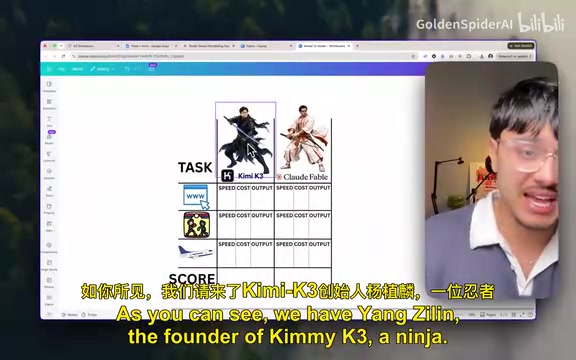
Kimi K3 vs Claude Real-World Test: Near-Equal Performance at 1/8 the Price
Real-world comparison of Kimi K3 vs Claude flagship across e-commerce pages, 3D fighting games, and flight simulators. Kimi K3 delivers 90% output quality at 1/8 the price with faster speeds and local deployment support.
Read more →

·3 min
Kimi K3 Hands-On Review: 2.5 Trillion Parameter Open-Source Model Challenges Claude
Kimi K3 hands-on review: Moonshot AI's 2.5T parameter MoE model matches Claude in coding, surpasses it in 3D game development, with API pricing at one-tenth the cost of competitors.
Read more →

·3 min
Kimi K3 Hands-On Review: 2.5 Trillion Parameter Open-Source Model Takes on Claude
Hands-on review of Kimi K3, Moonshot AI's latest 2.5T parameter MoE model. Coding ability ties with Claude, surpasses it in 3D game dev, with API pricing at one-tenth of competitors.
Read more →
·3 min
Kimi K3 Deep Dive: How a 3 Trillion Parameter Open-Weight Model Reaches the Frontier
Deep dive into Kimi K3: the largest open-weight model at 3 trillion parameters, surpassing Opus-level models in Agentic coding with 896-expert MoE architecture, 1M token context, at Sonnet pricing.
Read more →

·4 min
Colibri: Running a 744-Billion-Parameter LLM on an Ordinary Laptop
Colibri uses MoE hot-cold separation and 4-bit quantization to run 744B-parameter models like GLM 5.2 on consumer hardware. Learn about its three-tier memory architecture and speculative decoding.
Read more →

·4 min
Laguna S 2.1 Deep Dive: Hands-On Local Deployment of a 118B Parameter Coding Model
In-depth review of Poolside's Laguna S 2.1 open-source coding model: MoE architecture, RL training, DGX Spark local deployment, and real-world agentic coding tests with 8B active parameters.
Read more →

·4 min
Kimi K2/K3 Technical Speculation: Deep Dive into RL Hyperparameters and Multi-Teacher Distillation
Deep analysis of RL hyperparameter tuning challenges and 9-policy multi-teacher distillation in Kimi K2/K3 training, exploring the shift from scale to training craft.
Read more →

·3 min
Kimi K3 Launch: Performance Rivaling Claude at One-Third the Price, US-China AI Gap Narrows to 3 Months
Moonshot AI launches Kimi K3 reasoning model with performance rivaling Claude and OpenAI's top models at one-third the price. The US-China AI gap narrows from 6-12 months to just 3 months.
Read more →
·3 min
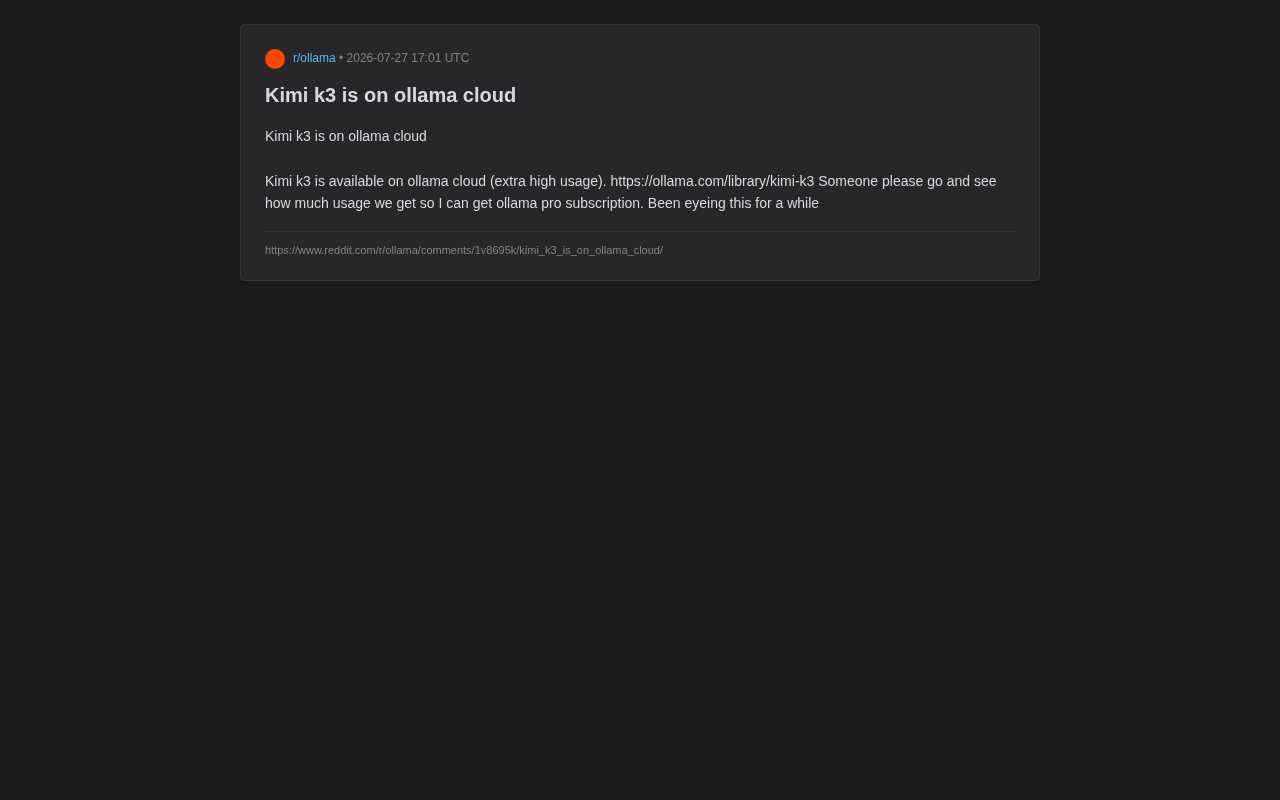
Kimi K3 Launches on Ollama Cloud: Free Tier, User Experience, and Developer Guide
Kimi K3 officially launches on Ollama Cloud as an "extra high usage" model. This guide covers free tier quotas, cloud inference experience, technical advantages, and how developers can seamlessly call this high-performance LLM.
Read more →

·3 min
Deep Dive into the Kimi-K3 Technical Report: A Comprehensive Analysis of Architecture, Long-Context Processing, and Reasoning Capabilities
Deep dive into Moonshot AI's Kimi-K3 technical report, analyzing its long-context processing, MoE architecture, reasoning improvements, and its position in global AI competition.
Read more →