#Make
5358 related articles

·2 min
Can AI Make Fruit-Picking Robots Practical? Four Core Challenges Explained
Why can't fruit-picking robots scale up? This article breaks down the four core challenges — visual perception, motion planning, end-effectors, and cost — and how AI is helping.
Read more →
How DSLs Make LLM Outputs More Reliabl…
·3 min
How DSLs Make LLM Outputs More Reliable: Principles and Practice
LLM output instability is a core production challenge. This article analyzes how DSLs improve LLM reliability through verifiability, semantic convergence, and structural constraints.
Read more →

·3 min
OpenAI Removes the 5-Hour Limit: Intensifying AI Subscription Competition Makes Users the Biggest Winners
OpenAI removes the controversial 5-hour usage limit and raises subscription quotas. As competition with Anthropic, Google, and others intensifies, users are winning big in the AI arms race.
Read more →
Learning AI Without Math: 7 Mindset Sh…
·3 min
Learning AI Without Math: 7 Mindset Shifts That Make It Easier
Scared off by math? Learn 7 mindset shifts to understand AI without it — concepts first, analogies, hands-on practice, and layered understanding.
Read more →

·2 min
Graph Theory Algorithm Visualizer: Free Interactive Animations That Make BFS/DFS/Dijkstra Click
LearnGraphTheory.org is a free, ad-free graph theory visualization site with interactive animations for BFS, DFS, Dijkstra, and more. Perfect for beginners.
Read more →

·2 min
Does Yelling at AI Make It Smarter? Breaking Down LLM Behavior and Prompting Techniques
Why does yelling at AI sometimes seem to work? This article breaks down LLM behavior using technical principles and offers actionable prompt engineering tips.
Read more →

·3 min
Vibecoding in Practice: Task Concurrency Splitting Makes AI Inference 3x Faster
Learn how to split AI reasoning tasks by act and character, run 14 concurrent streams, and cut processing time from 100s to 30s — a reusable schedule-concurrency-aggregate methodology.
Read more →

·2 min
After Investing in 500+ Startups: The Most Common Fundraising Mistakes Early-Stage Founders Make
Precursor Ventures' Charles Hudson has invested in 500+ startups. Here are the most common early-stage fundraising mistakes: unclear narratives, flawed market thinking, and poor timing.
Read more →
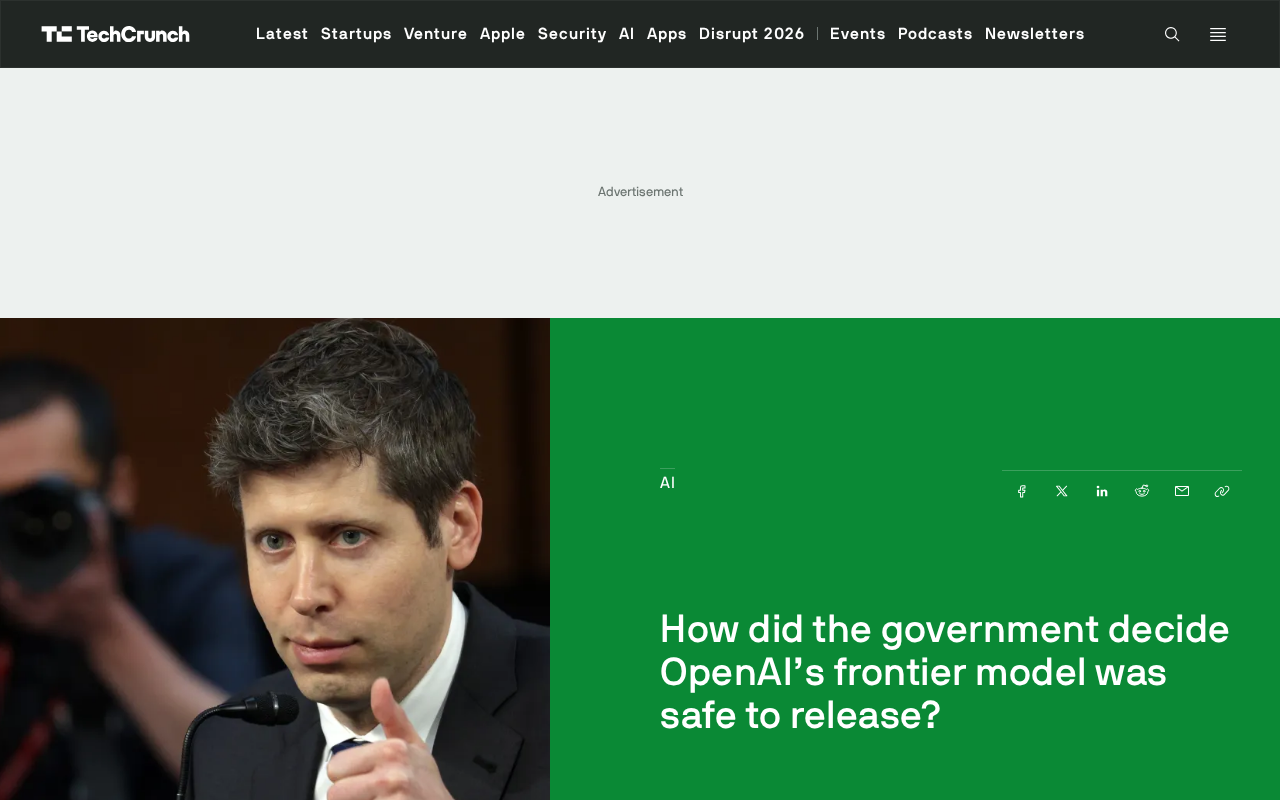
·2 min
Frontier AI Model Safety Evaluation: How Do Governments Make These Decisions?
How do governments evaluate frontier AI model safety? This deep dive examines opacity in AI safety governance, missing standards, regulatory capacity gaps, and paths toward transparent oversight.
Read more →

·4 min
9 Proven Methods to Make Hermes Agent Actually Work for You
9 battle-tested methods from hundreds of hours with Hermes Agent: model selection (Opus/ChatGPT/GLM), multi-agent failover, cross-device coordination via Tailscale, and reverse prompting workflows.
Read more →

·5 min
Advanced Vibe Coding: How SuperPowers and GStack Make AI Coding Truly Converge
In the age of AI-assisted programming, how do you make tools like Codex and Claude Code output more stably? This article deeply analyzes SuperPowers and GStack, covering project-level orchestration and module-level code layering to help developers master AI coding.
Read more →

·6 min
A Practical Guide to Removing the AI Flavor from Fiction: Three Techniques to Make Your Writing More Human
Why does AI-written fiction always have an "AI flavor"? This article breaks down its two root causes and offers three practical techniques—reduce atmospheric padding, drive emotion through events, and control action steps—to write more natural, human fiction.
Read more →

·2 min
Snapmaker U1 Review: An In-Depth Look at the Independent 4-Nozzle Color Multi-Material 3D Printer
Snapmaker U1 features independent 4-nozzle design, color multi-material printing, and AI monitoring. With subsidies, price drops to ¥4,572. Full review inside.
Read more →

·2 min
Anti-Surveillance Fashion: How Adversarial Examples Can Make Cameras Fail to Recognize You
Anti-surveillance fashion uses adversarial examples to fool facial recognition and person Re-ID systems. We break down the tech, real-world limits, and what it means for privacy in a surveillance society.
Read more →

·2 min
Two Prompting Techniques That Make AI Coding 10x More Reliable: First Principles & Adversarial Review
AI code that looks right but breaks at runtime? Two prompting techniques fix this: First Principles forces AI back to requirements, Adversarial Review hunts for vulnerabilities — forming a complete quality loop for Cursor, Copilot, and more.
Read more →
The Anti-Slop Fiction Contest: How to …
·2 min
The Anti-Slop Fiction Contest: How to Make AI Write Like It Isn't AI
A fiction contest challenging AI writing 'slop' sparks industry reflection. Learn what AI slop is, why it happens, and how prompt engineering can help AI write with genuine soul.
Read more →

·3 min
Claude Sonnet 5 Hands-On Review: The Hidden Token Trap That Makes 'Low Cost' an Illusion
Claude Sonnet 5 promises near-Opus 4.8 performance at lower cost, but hands-on tests reveal a critical trap: a new tokenizer inflates token consumption, making real costs far higher than expected.
Read more →

·3 min
AI-Generated Code + Modular Design: The ESP32 Kit That Makes Hardware Development Accessible to Everyone
Axiometa Genesis Mini is a modular ESP32 kit with a built-in AI development environment. Generate code with natural language, plug-and-play 50+ modules, starting at $35.
Read more →

·3 min
Vibe Coding in Practice: How Four Tools Work Together to Make AI Programming More Convergent and Controllable
Explore the four-layer AI programming architecture: SuperPrompt for project-level decomposition, Gstack for module-level code layering, and Cursor/Claude Code for execution. Master this workflow to make Vibe Coding truly engineering-grade.
Read more →

·2 min
Kimi K2.7 Code Hands-On Review: What Makes This Trillion-Parameter Open-Source Coding Model Stand Out?
In-depth hands-on review of Kimi K2.7 Code open-source coding model across 6 scenarios including 3D games, frontend design, and STL parsing. Trillion-parameter MoE with 30% token efficiency gains at 1/12.5 the price of closed-source models.
Read more →