#MiniMax M2
232 related articles

·3 min
AI Teams in Action: How MiniMax M3 Uses Multi-Agent Collaboration to Reinvent Content Creation
MiniMax M3-powered AR assistant M-Code automates the full content creation pipeline through four specialized agents: planning, recording, drafting, and review.
Read more →
·3 min
DeepSeek V4 Coming Soon: Flash Version May Surpass HY3, GPT-5.6 Reasoning Budget Quietly Cut
DeepSeek V4 drops this month with native vision; OpenAI quietly cut GPT-5.6 reasoning budget; Anthropic extends Fable 5 access ahead of GPT-6; Seedance 2.5 hits 180s 4K video generation.
Read more →

·3 min
AI Tool Selection Guide for Test Engineers: A Hybrid Approach to Avoid Three Common Pitfalls
How should test engineers choose AI tools? This guide breaks down the pitfalls of pure AI solutions and recommends a hybrid strategy using tools like DeepSeek, TRAE, Claude Code, and Skill encapsulation.
Read more →

·2 min
Coze No-Code AI Agent Development: A Complete Guide from Getting Started to Deployment
Build AI agents without coding! This guide covers Coze's visual workflows, 60+ plugins, RAG knowledge bases, and persistent memory — plus version selection tips for beginners.
Read more →

·4 min
Claude Code in China: Model Selection & Cost-Saving Configuration Guide
How can Chinese developers access Claude Code affordably? This guide covers model selection (DeepSeek V4 Pro top pick), proxy vs. direct connection risks, environment variable setup, and Coding Plan cost-saving strategies.
Read more →

·3 min
Can MiniMax Serve as a Hermes Agent's Brain? A Complete V0.18 Evaluation
A hands-on test of MiniMax as an AI Agent brain using the Hermes V0.18 framework: fast inference, low cost, stable long tasks—but clear flaws in complex reasoning and tool calling. Learn its three strengths, three weaknesses, and best-fit workflows.
Read more →

·5 min
How Does AI Conquer Imperfect Information Games? A Deep Dive into Tactico
Chess and Go have been conquered by AI, but imperfect information games with hidden data are the true frontier. This article dives deep into Tactico: how imitation learning + self-play RL train AI toward Nash equilibrium.
Read more →
·6 min
The Eight-Step Method for Agent Development: A Practical Path from Pitfalls to Production
Many enterprises fail at AI Agents due to choosing the wrong tools and lacking methodology. This article outlines an eight-step Agent development method—from cognitive foundations, scenario selection, hand-writing ReAct, and structured output to Tool Use, RAG, evaluation sets, and production fallback.
Read more →

·7 min
AI Agent Runs a Fully Automated Chess Channel: A Real-World Practice of Combining LLMs with Engines
A German engineer built a fully automated chess YouTube channel with an AI Agent, combining LLMs and chess engines to auto-generate explainer videos nightly, reaching 500K views. Here's the tech architecture, tool design, and real costs.
Read more →

·5 min
Alibaba Bans Claude Code: Invisible Fingerprints and the AI Tool Trust Crisis
Alibaba has banned Claude Code as high-risk software. Reverse engineering revealed a covert environment-identification mechanism hiding user fingerprints in punctuation via prompt steganography. A deep dive into the incident and AI tool trust.
Read more →

·7 min
Complete Guide to Installing and Deploying Claude Code: Configure Your AI Coding Tool from Scratch
A detailed walkthrough of the full Claude Code installation process: environment setup, npm installation, proxy configuration for networks in China, API integration, and CC Switch provider management—helping beginners quickly get started with this AI coding tool.
Read more →

·5 min
Real-World Comparison of 6 Open-Source LLMs for On-Premise Deployment: A Selection Guide to Avoid Pitfalls
A hands-on comparison of 6 open-source LLMs (DeepSeek, Qwen3, Zhipu GLM, Kimi K2, MiniMax M3, Tencent Hunyuan 3) for on-premise deployment—covering hardware cost, inference efficiency, and deployment difficulty.
Read more →

·3 min
Real-World Test: GPT-4.1 mini Solved a Crash Bug That Stumped Every Chinese LLM
Real debugging case: when 400MB of source code and 40K files caused an infinite crash loop, MiniMax M3, DeepSeek, and Hunyuan all gave wrong answers. GPT-4.1 mini found the root cause after an hour of deep reasoning.
Read more →

·4 min
8-Step AI Agent Development Guide: From Zero to Production
Demo works but production fails? This guide covers the full AI Agent development path: when to use Agents, hand-writing ReAct loops, tool schemas, RAG, eval sets, and production fallback strategies.
Read more →

·3 min
Huawei Pangu 2.0-Flash Benchmark Review: #1 in Instruction Following, Last in Engineering Code
Huawei OpenPangu 2.0 Flash review: 92B MoE open-source model tops instruction following at 95.9, excels in math & Agent tasks, but scores last on SWE-Bench engineering code at 63.1.
Read more →

·2 min
Claude Sonnet 5 Leaked, Zhipu Hits HK$1 Trillion Market Cap: AI Industry Roundup for June 23
June 23 AI roundup: Claude Sonnet 5 leaked with 1M context window, Zhipu hits HK$1T market cap, Alibaba releases Happy Horse 1.1, and Sakana AI launches a multi-model orchestration system.
Read more →
·6 min
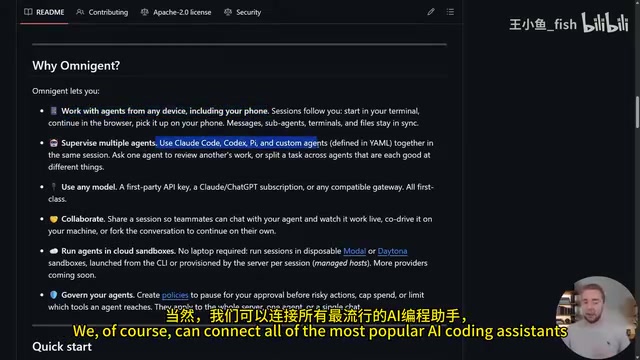
Omnigent Open-Sourced: A Meta-Harness for AI Coding Agents Built by Databricks
Databricks open-sources Omnigent, a Meta-Harness for orchestrating Claude Code, Codex, and more AI coding assistants together—with built-in guardrails, cross-model workflows, and real-time collaboration. Get started in 10 minutes.
Read more →

·3 min
Alibaba's Claude Ban Explained: The Truth Behind Three Converging Timelines
Alibaba banned Claude company-wide, flagging Claude Code as high-risk. Three converging timelines — Anthropic's distillation attack allegations, the 1260H list, and Claude Code's hidden detection system — reveal the geopolitical logic behind the ban.
Read more →

·7 min
Tencent DiscoBench: The First Benchmark for Evaluating LLM Search Agents' Ambiguity Clarification Capabilities
Tencent Hunyuan and Tsinghua jointly release DiscoBench, the first benchmark evaluating search agents' dynamic ambiguity clarification. Covering 463 ambiguity instances across 11 domains, it reveals real weaknesses of mainstream LLMs.
Read more →

·7 min
Sakana Fugu vs GLM 5.2 Hands-On Test: Who Can Truly Challenge Top-Tier AI Models?
A head-to-head hands-on test of Sakana Fugu vs GLM 5.2 based on real Hermes agent workflows. Covering tool calling, frontend generation, and code improvement to reveal each model's true performance, speed, and value.
Read more →