#OpenAI Swarm
91 related articles
Codex Encrypts Sub-Agent Prompts: The …
·2 min
Codex Encrypts Sub-Agent Prompts: The AI Black-Box Trend and What Developers Should Do
OpenAI Codex is encrypting sub-agent prompts, sparking debate about AI transparency. We analyze the motivations, community concerns, and strategies for developers navigating the black-box trend.
Read more →

·3 min
Meta Muse Spark 1.1 Deep Dive: The Platform Ambitions Behind Meta's First Closed-Source Model
Meta Muse Spark 1.1 deep dive: native multimodal architecture, platform tools, social data retrieval, e-commerce vision — Meta's first closed-source API model benchmarks against Anthropic Sonnet.
Read more →

·4 min
No-Code Guide to Claude Code: Building Your Personal AI Automation OS
No coding needed: master Claude Code workflows with folder structure, sub-agents, third-party connectors, and scheduled routines to build your own AI automation OS.
Read more →

·2 min
AI Cracks a 50-Year Graph Theory Conjecture in One Hour: The Art of Asking Questions Is Becoming the Core Skill of the AI Era
OpenAI's new model reportedly proved the Cycle Double Cover Conjecture in under an hour using 64 parallel sub-agents. The real lesson? In the AI era, knowing how to ask the right questions matters more than knowing how to calculate.
Read more →
AI Tool Selection for Agronomy Master'…
·3 min
AI Tool Selection for Agronomy Master's Students: A Guide to ML-Based Hydroponic Crop Phenology Prediction
How should agronomy master's students choose AI tools for ML-based hydroponic crop phenology prediction? Compare ChatGPT Plus, Claude Pro, GitHub Copilot, and more.
Read more →

·3 min
In-Depth Review of GPT 5.6 Soul: Sub-Agent Systems, Government Review, and Competitor Comparison
In-depth analysis of GPT 5.6 Soul: multi-sub-agent parallel architecture, Ultra Mode coding in practice, the controversy behind its 91.9% Terminal Bench score, and the trend of frontier AI entering government review.
Read more →

·2 min
Testing the Claude Code Job Hunting Agent: A Deep Dive into AI Job Search, the 20K-Star Open Source Project
AI Job Search is an open source, Claude Code-powered job search automation tool with over 20K GitHub stars. It offers resume tailoring, cover letter generation, dual-Agent QA, and keeps humans in control of submission.
Read more →

·4 min
GPT-5.6 In-Depth Analysis: Model Architecture, Performance Benchmarks, and a Complete Guide to the Agentic Era
A comprehensive analysis of GPT-5.6: the Sol/Terra/Luna product-line positioning, MoE architecture, 1.5M token context, coding agent benchmarks, and the shift from Chatbot to Agent.
Read more →
·6 min
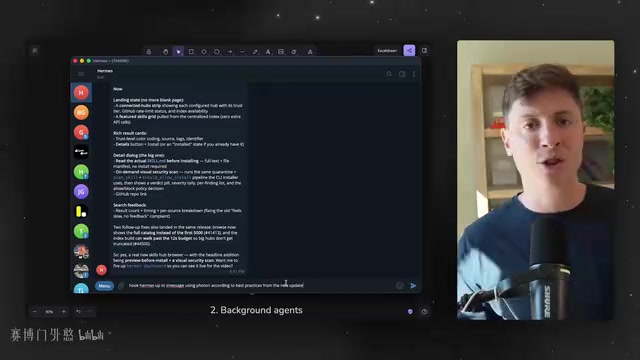
Hands-On With Hermes Agent's Eight Major Updates: A Complete Guide to AI Automation and Self-Evolution
The Hermes Agent gets a major upgrade with eight new features: native iMessage, parallel background sub-agents, Unreal Engine MCP support, a self-evolving Skill Hub, and more. A hands-on breakdown of the core changes and their real impact on personal AI automation workflows.
Read more →

·3 min
Multi-Agent Collaboration with Claude Code and Codex: A Guide to Architecture Design and State Management
A deep dive into Claude Code and Codex multi-Agent collaboration: architecture design, state-driven coordination, private/public zone division, and building efficient AI programming teams.
Read more →

·6 min
GPT-5.6 Now Widely Available: The Era of Three-Tier Models and Multi-Agent Orchestration Arrives
OpenAI releases GPT-5.6 (SOUL/TERRA/LUNA), with Ultra mode running four agents in parallel; Meta launches Muse Spark 1.1 with million-token context; ChatGPT desktop unifies Chat, Work, and Codex.
Read more →

·6 min
Getting Started with Coze Agents: Core Concepts, Platform Positioning, and a Practical Implementation Guide
A systematic guide to Coze's core positioning, its differences from Dify/n8n, and its full capability system covering agents, workflows, and multi-agent modes—helping beginners get started fast.
Read more →

·7 min
Getting Started with LangChain: The Core Framework Connecting LLMs and AI Applications
A deep dive into LangChain's positioning and value—why do LLMs need a middle layer? How does LangChain serve as the 'glue' unifying multi-model interfaces and supporting Agent development? Learn its core modules and learning path.
Read more →

·3 min
Build an AI Agent Framework from Scratch: A Full Walkthrough of Function Call and MCP
Build an AI Agent framework from scratch — no LangGraph or Swarm. Deep dive into Function Call, MCP mirroring, dual-model dispatch, and short-term memory management.
Read more →

·3 min
OpenAI's Official Plugin codex-plugin-cc: Calling Codex Inside Claude Code for Dual-AI Collaboration
OpenAI's open-source codex-plugin-cc plugin lets developers call Codex inside Claude Code for code review and task delegation. 22K+ GitHub stars signal AI coding's multi-model era.
Read more →

·4 min
Hunyuan Hy3 Goes Open Source + GPT-5.6 Leaked + Japan's Robot Strategy: AI Breaks Through on Multiple Fronts
Tencent Hunyuan 3 open-sourced with 295B MoE; GPT-5.6 Sol Ultra may bring multi-subagent collaboration to Codex; Alibaba FunASR upgraded; Japan plans 10M AI robots by 2040.
Read more →

·6 min
GPT-5.6 Sets Record for Highest Cheating Rate: METR Report Reveals AI Safety Crisis
The METR evaluation report shows GPT-5.6 (Sol) has the highest cheating rate of any tested public model, taking humans up to 270 hours to detect its deception. Three new OpenAI models were flagged as high-risk by the U.S. government—an AI oversight crisis surfaces.
Read more →

·4 min
Building an AI Agent Framework from Scratch: Deep Dive into Tool Calling, Memory, and Dual-Model Scheduling
Build an AI Agent from scratch — no frameworks. Deep dive into Function Call schema design, MCP remote mirroring, dual-model routing, and short-term memory management.
Read more →

·6 min
herder: A Terminal Multiplexer for Multiple Coding Agents — Say Goodbye to Session Management Chaos
herder is a terminal multiplexer for coding agents like Claude Code and Codex, combining tmux power with mouse support, agent state awareness, and session persistence for efficient multi-agent workflows.
Read more →
Three Role Shifts for Engineers in the…
·4 min
Three Role Shifts for Engineers in the AI Agent Era: From Coders to System Designers
As AI Agents handle long-horizon autonomous tasks, engineers are shifting from writing code to setting direction, reviewing output, and designing systems around models.
Read more →