#Opus comparison
330 related articles

·2 min
The AI Model Race Heats Up: Reasoning Becomes the New Battleground — A Deep Dive into Flagship Model Showdowns
Deep analysis of the AI model race: from parameter competition to reasoning competition, examining tiered reasoning mechanisms, benchmark limitations, and how to rationally interpret model rankings.
Read more →

·4 min
Gemini 3.5 Checkpoint Leaked: Intermediate Version Reportedly Outperforms Opus 5 in Testing
Reddit leaks suggest a Google Gemini 3.5 intermediate checkpoint outperformed Claude Opus 5 max thinking in testing. We analyze what checkpoints mean, benchmark credibility, and the LLM competition landscape.
Read more →

·3 min
Kimi K3 Released: How a 2.8 Trillion Parameter Open Model Reshapes AI Cost-Effectiveness
Moonshot AI unveils Kimi K3: a 2.8 trillion parameter, 1M context, natively multimodal open model. With KDA architecture and ultra-low cost, it rivals GPT-5.6 and Fable 5, redefining AI cost-effectiveness.
Read more →

·3 min
GLM 5.2 Hands-On: An Open-Source, Low-Cost Model That Rivals Opus
In-depth hands-on review of GLM 5.2: a 753B-parameter open-source model with a 1M-token context, rivaling Opus 4.8 at about one-tenth the price. Full setup guide for Claude Code and Cursor.
Read more →

·4 min
The Cursor Swarm Experiment: What AI Rebuilding SQLite from Scratch in Rust Reveals About Cost
Cursor's swarm experiment had AI teams implement a SQLite engine in Rust from scratch using only 835 pages of docs. All-frontier models cost $10K+, hybrid role division just $1.3K—a 7.9x gap.
Read more →

·1 min
Codex vs Claude Code: A Deep Cost Comparison — Which AI Coding Assistant Saves You More Money?
Which is more cost-effective, OpenAI Codex or Claude Code? Starting from real bills, this article breaks down the billing structure, multiplier traps, and subscription limits of AI coding assistants.
Read more →

·2 min
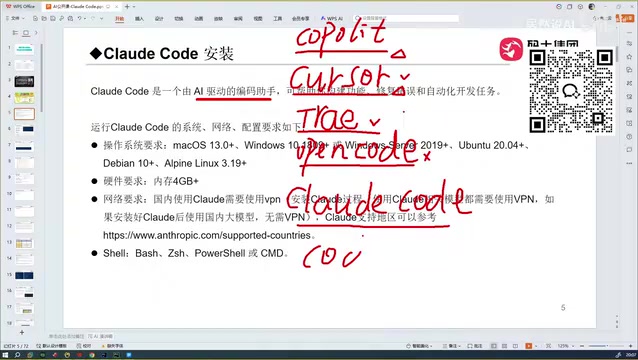
Getting Started with Claude Code: A Beginner's Guide to Installation, Configuration, and Model Selection
A detailed walkthrough of the full Claude Code setup process, comparing AI coding tools like Cursor and Trae, and analyzing the cost and performance of models like Sonnet and DeepSeek V4 Pro.
Read more →
·2 min
Getting Started with Claude Code: A Beginner's Guide to Installation, Configuration, and Model Selection
A complete guide to installing and configuring Claude Code, comparing tools like Cursor and Trae, and analyzing the cost and performance of models like Sonnet and DeepSeek V4 Pro.
Read more →

·2 min
GPT-5.6 Three-Model Showdown: Sol vs Terra vs Luna — Which One Should You Pick?
OpenAI GPT-5.6 launches Sol, Terra, and Luna simultaneously. We compare benchmarks and real-world coding tests to help you choose the right model for your needs.
Read more →

·6 min
The Complete Guide to Using Claude in China: In-Depth Comparison of 4 Solutions and How to Choose
How can users in China use Claude? This article deeply compares four solutions: official subscription, proxy subscription (WildCard), relay platforms (2233/0011.ai), and API aggregation (OpenRouter).
Read more →

·6 min
Hands-On with Qwen 3.8 Max: How an Open-Source Model Closes In on Top-Tier Closed Models
Qwen 3.8 Max has 2.4 trillion parameters and will be open-sourced. In KingBench testing it scored 81.25%, ranking second, beating Claude Opus 4.8 and trailing only Fable 5. A deep dive into its performance across 8 tests.
Read more →

·2 min
Qwen3 Max Benchmarked, Seed Audio 1.0, and Matrix-3.5: A Deep Dive into Three Major Chinese AI Releases
Alibaba's Qwen3 Max (2.4T MoE), ByteDance's Seed Audio 1.0 with precise timestamp control, and Kunlun Wanwei's Matrix-3.5 open-source world model — a deep dive into three major Chinese AI releases.
Read more →

·4 min
Was Claude Nerfed After Coming Back Online? The Truth Behind Safety Classifier Routing
Did Claude drop ~10 benchmark points after redeployment? We dig into the safety classifier routing mechanism, Arena voting data, and developer feedback to reveal the truth.
Read more →

·4 min
5 Tips to Cut Claude Opus 5 Costs by Up to 80%
Opus 5 moving to API billing? 5 proven tips to cut token costs by up to 80%: lower Effort Level, architect-executor split, Ponytail compression, Deep Research, and Advisor Mode — while outperforming Opus 4.8.
Read more →

·6 min
Claude Sonnet 5 In-Depth Testing: 8 Real-World Tasks Reveal Its True Capability Boundaries
Bilibili creator KaterSony tests Claude Sonnet 5 across 8 real-world tasks—image recognition, 3D modeling, web generation—comparing it against GPT-5.5, Gemini 3.1 Pro, and revealing its true capability limits and cost traps.
Read more →

·5 min
DeepSeek V4 Enters Grayscale Testing, Grok 5.0 Ready to Launch | Latest AI Model Developments
This AI Daily covers five sectors: DeepSeek V4 reportedly enters grayscale testing with improved chain-of-thought; Musk previews Grok 4.6 and 5.0 with 2T parameters; Intern-S2 open-source model beats Claude Opus 4.8; xAI builds 2000MW Colossus cluster; NVIDIA RoboTTT breaks long-horizon robotics barriers.
Read more →

·3 min
Kimi K3 Hands-On: How a 2.8-Trillion-Parameter Open-Source Model Beat Fable5
A US engineer's live test of Kimi K3: 2.8T parameters, 1M token context, 87% audience vote over Fable5 in game generation. Full report covering benchmarks, speed, and code debugging.
Read more →

·2 min
GPT-5.6 Codex Three-Model Showdown: Sol/Terra/Luna Tested on Classic Candy Logic Puzzle
We tested GPT-5.6 Codex models Sol, Terra, and Luna on a classic candy logic puzzle. Sol scored near-perfect across HIGH and XH modes; Terra and Luna nearly failed. Here's what it means for developers.
Read more →

·2 min
Claude Sonnet 5 Deep Dive: Near-Opus Performance but Higher Costs — Is It Worth the Upgrade?
Claude Sonnet 5 benchmarked: near-Opus 4.8 performance but poor token efficiency makes it pricier than the flagship. Full analysis of pricing, safety tradeoffs, and real-world results.
Read more →

·3 min
Zero-Cost VibeCoding: Complete Guide to Connecting Local Ollama Models to Codex
Step-by-step guide to running local open-source models (Qwen3/Gemma) with Ollama, connecting to Codex via CC Switch for zero-token AI coding. Works on a 6GB VRAM laptop.
Read more →