#PyTorch Foundation
327 related articles

·3 min
AMD CDNA5 Architecture Deep Dive: Technical Evolution and the AI Computing Competition Landscape
Deep analysis of AMD's CDNA5 architecture covering Chiplet packaging upgrades, HBM memory evolution, and low-precision compute optimization, examining how AMD challenges NVIDIA's AI chip dominance.
Read more →

·3 min
Open Source vs. Closed Source: Who Will Win the US-China AI Battle?
Chinese open-source models DeepSeek and Kimi K3 are challenging OpenAI's closed-source dominance. Analyzing the business logic, chip ecosystems, and US-China strategic dynamics behind the open vs. closed AI debate.
Read more →

·3 min
Jensen Huang's First Tweet Backs AI Open Source — But It's Really About NVIDIA's Ecosystem Anxiety
Jensen Huang's first tweet backs AI open source, but behind it lies NVIDIA's deep anxiety over CUDA ecosystem displacement. We analyze why open-source models matter and what's really at stake.
Read more →
·3 min
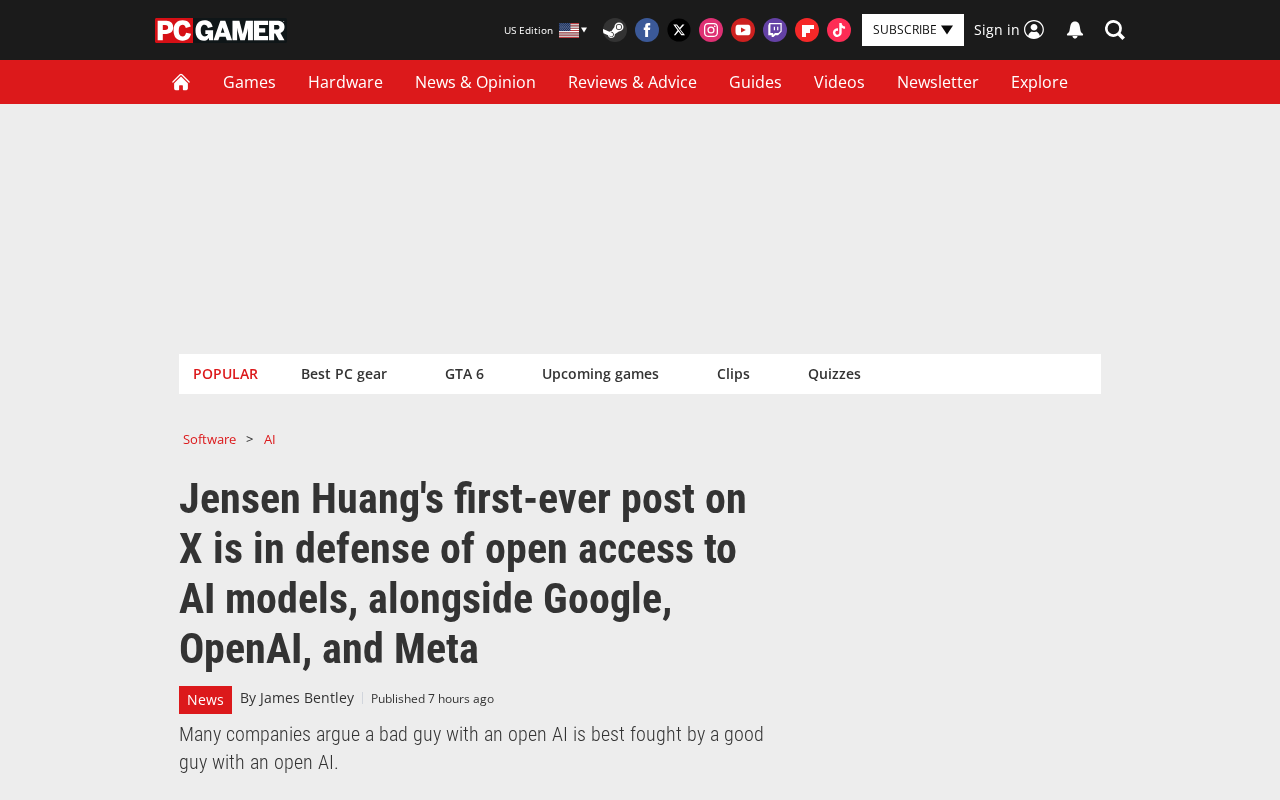
Jensen Huang's First X Post Backs Open AI: Why the Computing Power King Sides with Open Source
NVIDIA CEO Jensen Huang's first X post champions open AI access. We analyze the business logic, policy dynamics, and the open vs. closed AI debate shaping the industry.
Read more →
·3 min
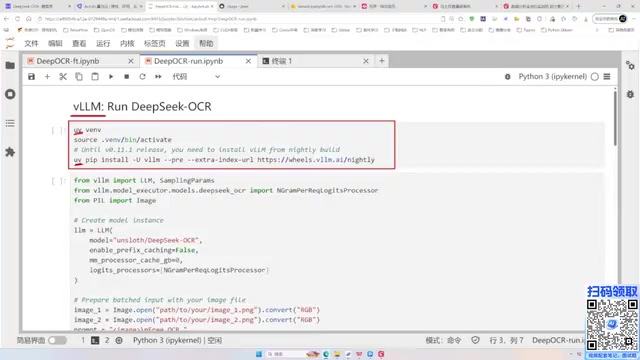
DeepSeek-OCR Deployment & Fine-Tuning in Practice: From vLLM Inference to Unsloth Fine-Tuning
Complete guide to DeepSeek-OCR from vLLM inference deployment and Unsloth model loading to fine-tuning, covering cloud server setup, GPU selection, and code examples — all on a single 4090 GPU.
Read more →

·3 min
Open Source vs. Closed Source: Who Will Win the US-China AI Battle?
Chinese open-source models DeepSeek and Kimi K3 challenge OpenAI's closed-source dominance. Analysis of open vs. closed AI strategies, CUDA moat erosion, and the US-China strategic battle for AI supremacy.
Read more →

·3 min
Mathematical Foundations for Machine Learning: A Complete Learning Path from Linear Algebra to Probability Theory
A systematic guide to the three core math areas for ML—linear algebra, calculus, and probability—with verified free resources like Mathematics for Machine Learning, 3Blue1Brown, and practical learning strategies.
Read more →

·2 min
Behind NVIDIA's Investment in SSI: The GPU Demand Self-Reinforcing Loop and the Superintelligence Gamble
NVIDIA's investment in Ilya Sutskever's SSI reveals a GPU demand self-reinforcing loop, a secretive superintelligence strategy, and the deep entanglement of AI capital and technology.
Read more →

·2 min
The AI Compute Arms Race: Why Tech Giants Are Betting Everything on Data Centers
Tech giants are frantically investing in AI compute infrastructure driven by FOMO. This deep dive analyzes the logic, capital scale, energy challenges, and industry reshaping of the compute arms race.
Read more →

·3 min
Open Source Sponsorship Surpasses $100 Million: From Passion Projects to Sustainable Development
GitHub Sponsors has cumulatively funded open source maintainers over $100M, marking a shift from passion-driven to sustainable development. Explore what this milestone means for open source.
Read more →
·2 min
The AI Computing Arms Race: Why Tech Giants Are Betting Everything on Data Centers
Tech giants are pouring billions into AI computing infrastructure driven by FOMO. This deep dive analyzes the arms race logic, capital scale, energy challenges, and industry reshaping.
Read more →

·3 min
Rust and Mojo Are Quietly Replacing Python's Low-Level Engine
Python tops the language rankings again, but AI teams are quietly swapping its internals for Rust and Mojo. A look at Python's speed and GIL pains, the two-language problem, and the rise of Rust tooling and Mojo on GPUs.
Read more →

·2 min
From Zero to AI Career: A Complete Breakdown of a 3-Month Self-Study Roadmap
Want to break into AI from scratch? This article breaks down an efficient self-study roadmap: from Python, math, and machine learning basics to PyTorch, then to CV, NLP, and data mining—reaching entry-level career-switching intensity in 3 months.
Read more →

·2 min
6 High-Paying AI Career Paths: A Beginner's Shortcut and Salary Guide
A breakdown of the 6 best high-paying AI career paths for beginners: LLM application development, AI agents, computer vision, AI infrastructure, AIGC, and embodied AI—with salary ranges, core skills, and who they suit.
Read more →

·5 min
DeepSeek's Five-Step Ladder to AGI: A Restrained Roadmap Built on Twenty Thousand GPUs
DeepSeek founder Liang Wenfeng reveals a five-step AGI roadmap from chain-of-thought to embodied intelligence. How does TileLang crack domestic GPU substitution under a 20,000-card constraint?
Read more →

·5 min
DeepSeek's Five-Step Ladder to AGI: A Restrained Roadmap Built on 20,000 GPUs
DeepSeek founder Liang Wenfeng reveals a five-step AGI roadmap—from chain-of-thought to embodied intelligence—under a 20,000-GPU constraint, using the TileLang compiler to break domestic substitution challenges while API cash flow backs AGI exploration.
Read more →

·5 min
Liang Wenfeng's 4-Hour Internal Talk: DeepSeek's Philosophy of Restraint and Its Path to AGI
DeepSeek founder Liang Wenfeng shares his views on open source, pricing, computing power, and the five-stage roadmap to AGI in a 4-hour internal investor talk.
Read more →

·4 min
jlens-gguf: Bringing Jacobian Lens Visualization and Steering to llama.cpp Local LLMs
jlens-gguf is an open-source tool bringing Anthropic's Jacobian Lens interpretability method to GGUF and llama.cpp, enabling internal observation, real-time steering, and abliteration for both dense and MoE models.
Read more →
·6 min
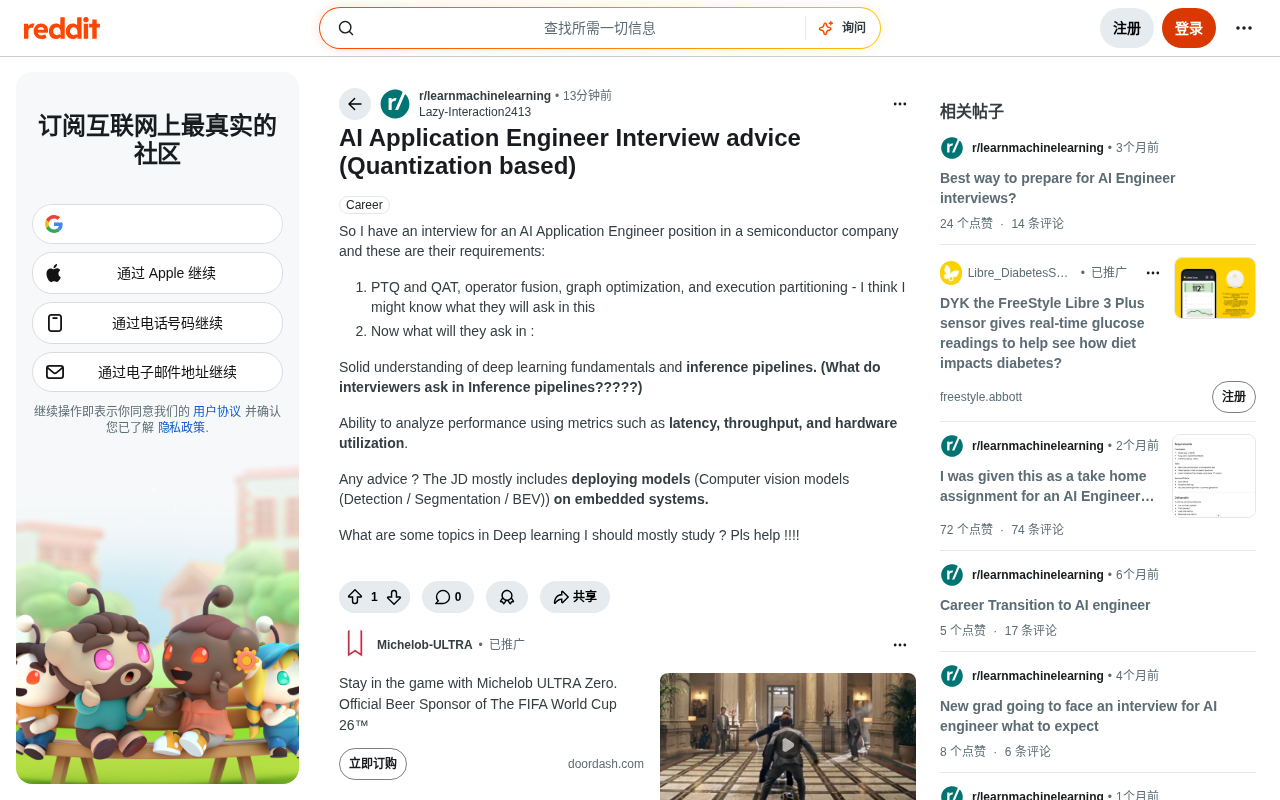
AI Application Engineer Interview Guide: Core Topics on Model Quantization and Inference Deployment
A systematic guide to must-know AI application engineer interview topics: PTQ/QAT quantization, operator fusion, inference pipelines, latency/throughput analysis, and edge deployment of detection/segmentation/BEV models.
Read more →
·6 min
AI Application Engineer Interview Guide: Core Topics in Model Quantization and Inference Deployment
A systematic review of must-know topics for AI Application Engineer interviews: PTQ/QAT quantization, operator fusion, inference pipelines, latency/throughput analysis, and edge deployment of detection/segmentation/BEV models.
Read more →