#Routines
89 related articles

·2 min
How to Choose a Programming Language? A Rational Look at the Truth Behind Language Selection
Java, Python, Go, or a niche language? This article rationally analyzes programming language selection across three dimensions — probability, difficulty, and growth potential — to help you escape language-choice anxiety.
Read more →

·8 min
LangChain Crash Course: A Complete Roadmap from Zero to Agent Development
A systematic roadmap from LangChain and LangGraph to multi-agent development, covering RAG, Tool Calling, MCP, and more, helping developers break into AI app development.
Read more →
Agentty: An 11MB Lightweight Claude Co…
·2 min
Agentty: An 11MB Lightweight Claude Code Alternative Built with C++26
Agentty is an open-source AI coding assistant written in C++26, compiling to just 11MB. Positioned as a drop-in alternative to Claude Code, it explores lightweight, native-first AI tooling.
Read more →

·3 min
AI Second Brain Tech Stack: Building a Proactive Intelligent Assistant for ADHD Users
How to build a true AI second brain for ADHD users: LangGraph, n8n, RAG, vector databases, and layered architecture for a proactive personal assistant.
Read more →

·4 min
No-Code Guide to Claude Code: Building Your Personal AI Automation OS
No coding needed: master Claude Code workflows with folder structure, sub-agents, third-party connectors, and scheduled routines to build your own AI automation OS.
Read more →

·3 min
YOLO-Pose Real-Time Yoga Pose Recognition and Correction System Explained
A deep dive into a real-time yoga pose recognition system built with YOLO-Pose: 33 keypoints, deterministic logic engine, and geometric angle thresholds for explainable AI coaching.
Read more →

·2 min
Gemini Button Missing After Android 16 Upgrade? Three Ways to Get It Back
After upgrading to Android 16, was your Gemini shortcut replaced by Google Search? Learn why and three ways to restore it: reset the digital assistant, reactivate the Gemini app, or access it manually.
Read more →

·4 min
Home Assistant: The Local-First Open Source Smart Home Platform That Puts Privacy and Freedom First
Home Assistant is the most mature open source smart home hub, prioritizing local control and privacy, supporting thousands of devices across ecosystems with 88,000+ GitHub stars.
Read more →
OpenAI Targets the Home Market: How Ch…
·5 min
OpenAI Targets the Home Market: How ChatGPT Aims to Become the Whole Family's AI Assistant
OpenAI is recruiting a family product manager, targeting older adults and caregiver scenarios. An in-depth analysis of ChatGPT's shift from productivity tool to home digital assistant.
Read more →

·7 min
Building AI Agents in Rust: The GAIA Benchmark Reveals the Capability Ceiling of Large Models
A Rust-based AI Agent evaluation framework uses the GAIA benchmark to compare GPT, Claude, DeepSeek and other models with no tools. Results show pure LLMs cap at ~25% accuracy, revealing why tool use is decisive for Agents.
Read more →

·6 min
AI Agent Development in Go: A Hands-On Guide to ByteDance's Eino Framework and Its Seven Core Capabilities
Build production-grade AI Agents with a pure Go stack using ByteDance's Eino framework. A deep dive into seven core capabilities: multi-Agent orchestration, long-task execution, command approval, RAG, MCP, Skills, and database reporting.
Read more →
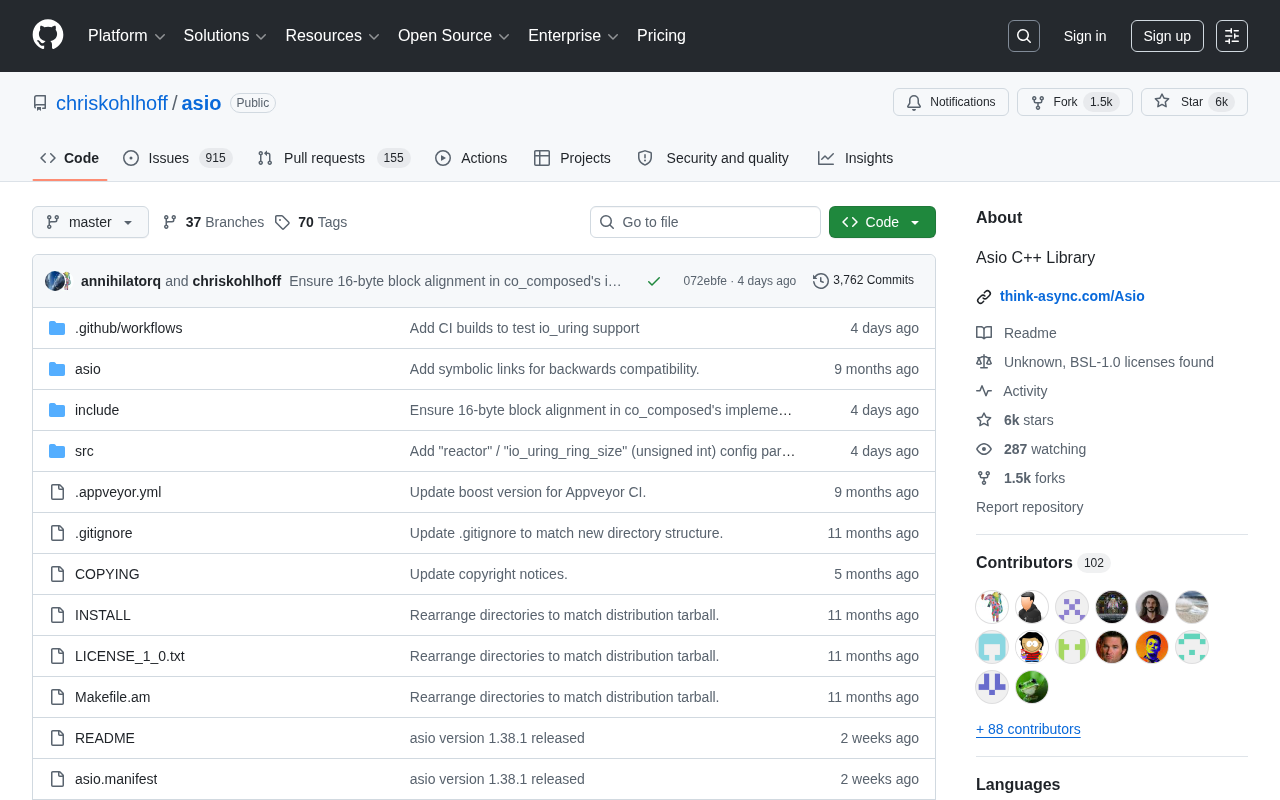
·4 min
Deep Dive into Asio: The De Facto Standard and Core Design of C++ Asynchronous Network Programming
A comprehensive analysis of Asio (Boost.Asio) covering its Proactor async model, completion token mechanism, C++20 coroutine support, and cross-platform I/O abstraction for high-performance C++ networking.
Read more →

·6 min
GPT-5.6 Now Widely Available: The Era of Three-Tier Models and Multi-Agent Orchestration Arrives
OpenAI releases GPT-5.6 (SOUL/TERRA/LUNA), with Ultra mode running four agents in parallel; Meta launches Muse Spark 1.1 with million-token context; ChatGPT desktop unifies Chat, Work, and Codex.
Read more →

·2 min
EVE Online's Core Engine Carbon Goes Open Source: Two Decades of MMO Technology Stack Opens Up
EVE Online's Carbon engine goes open source under Fenris Creations. Explore the engineering legacy behind two decades of single-shard MMO architecture, TiDi, and Stackless Python.
Read more →

·3 min
Smart Doorbell Cameras: Protecting Communities or Eroding Neighborhood Trust?
Smart security cameras like Ring are becoming neighborhood staples, but research shows "snooping" is their most common use. How surveillance tech replaces community trust — and how to rebuild it.
Read more →

·7 min
A Complete Guide to LangGraph's Core Concepts: The Framework of Choice for Enterprise Agent Development
An in-depth analysis of LangGraph's core concepts: short-term and long-term storage mechanisms, its differences from LangChain, the MIT open-source license, and private deployment solutions for enterprise Agent development.
Read more →

·6 min
Inside the AI Workday of Thomson Reuters' CEO: How Leaders Drive Enterprise Transformation by Example
Thomson Reuters CEO Steve Hasker shares his personal AI routine: analyzing documents, managing his calendar, and gaining insights every Monday. A look at how leaders drive real enterprise AI transformation through practice and continuous learning.
Read more →

·2 min
Grace Hopper: How the Mother of Compilers Changed the History of Software Development
Grace Hopper pioneered the compiler concept, co-created COBOL, and served as a U.S. Navy Rear Admiral. Her work transformed software development from machine code to human language.
Read more →

·6 min
Gas Town: A Multi-Agent Workspace Manager Built in Go
Gas Town is an open-source multi-agent workspace manager built in Go with 16,000+ GitHub Stars. This article analyzes its architecture, Go language advantages, and typical multi-agent collaboration scenarios.
Read more →

·4 min
Why Is Skill Breaking Out of Software Development? Uncovering the Underlying Structure of Knowledge Work
Skill isn't just for programmers — it's crossing industry lines to become the operational foundation for entire organizations. This article unpacks the three cores of knowledge work, explores legal, research, and finance use cases, and examines how a Skill Library becomes a core enterprise AI asset.
Read more →