#Slack AI integration
333 related articles

·3 min
SeaTicket: An AI Agent That Automatically Resolves GitHub and Discord Issues
SeaTicket is an AI Agent that automatically resolves GitHub Issues and Discord questions. This article analyzes its architecture, use cases, challenges, and value for open-source maintenance.
Read more →

·3 min
Getting Started with Codex: A Complete Guide to AI Agent Programming Tools
Compare Codex and Claude Code AI agent programming tools. Learn AI Agent concepts, tool selection, cost analysis, and GPT account setup in this complete beginner's guide.
Read more →

·3 min
Jenkins Deep Dive: The Evergreen King of CI/CD Automation
An in-depth analysis of Jenkins' technical architecture, plugin ecosystem, distributed builds, and use cases — explaining why it remains the CI/CD leader.
Read more →

·3 min
GitHub Agentic Workflows in Practice: Automating Cross-Repository Documentation Updates
Learn how GitHub Agentic Workflows automate cross-repo documentation updates. See the Aspire team's AI-driven approach: event triggers, smart drafting, and SME review to keep docs in sync with code.
Read more →

·5 min
From Chat to Agent: Automating Your Entire Business Workflow with AI Agents
Veteran AI practitioner Remy breaks down the leap from chat models to AI agents: how agents work, the three pillars of context, tools, and skills, MCP connections, and hands-on architecture to make you a 100x employee.
Read more →

·3 min
GLM 5.2 Hands-On: An Open-Source, Low-Cost Model That Rivals Opus
In-depth hands-on review of GLM 5.2: a 753B-parameter open-source model with a 1M-token context, rivaling Opus 4.8 at about one-tenth the price. Full setup guide for Claude Code and Cursor.
Read more →

·4 min
Getting Started with PiDeck: A Complete Guide to the Local AI Coding Workbench
PiDeck is a free, open-source local AI coding workbench that provides graphical management for CLI tools like Claude Code and Cursor. This guide covers installation, model authentication, project management, and advanced conversation tips.
Read more →
·4 min
Getting Started with PiDeck: A Complete Guide to the Local AI Coding Workbench
PiDeck is a free, open-source local AI coding workbench that provides graphical management for CLI tools like Claude Code and Cursor. This guide covers PiDeck installation, model auth, project management, and advanced conversation tips.
Read more →

·4 min
Notion Co-founder: From Note-Taking Tool to AI Agent Workspace
Notion co-founder Simon Last shares Notion's journey from note-taking tool to AI agent workspace: from first tasting GPT-4 to personal and custom agents.
Read more →

·3 min
Pinterest Medic: Engineering an AI Agent for Automated Spark Failure Diagnosis
How Pinterest engineers built Medic for Apache Spark — a multi-agent auto-diagnosis tool — covering the evolution from a single ReAct agent, observability, log denoising, and end-to-end testing.
Read more →

·3 min
OpenAI Releases GPT-5.6 and ChatGPT Work: The Era of Autonomous AI Has Arrived
OpenAI launches GPT-5.6 (Sol, Terra, Luna), ChatGPT Work, a new desktop app, and Sites hosting. AI evolves from a Q&A tool into an autonomous work partner for finance, file management, and more.
Read more →

·7 min
Enterprise AI Agent Security Isolation and Memory Design: NanoClaw Founder Breaks Down Real-World Lessons
NanoClaw founder David Boyd breaks down the core engineering of enterprise autonomous Agents: a triple security isolation model, LLM Wiki memory design, and the real-world path from personal Agents to team-scale deployment.
Read more →

·6 min
The Three-Layer GTM Agent Architecture: Enabling AI to Truly Recognize Buyer Intent and Identity
An in-depth analysis of the three-layer GTM Agent architecture—the Signal, Buyer Intelligence, and Action layers—revealing how context graphs identify anonymous visitors and capture purchase intent.
Read more →

·7 min
Getting Started with Claude Code: Five Dimensions That Show Why It Outperforms Ordinary AI
Claude Code isn't just a chat AI—it can directly read projects, modify code, and run commands. This article compares Claude Code with ordinary AI across five dimensions: interaction, context, execution, memory, and tool calling.
Read more →

·7 min
Getting Started with Claude Code: Five Dimensions to Understand Why It Outperforms Regular AI
Claude Code isn't just a chat AI—it can directly read projects, modify code, and run commands. This article compares Claude Code with regular AI across five dimensions to help you decide if it's worth trying.
Read more →

·6 min
The AI Builder's Handbook: A Complete Guide to LLM Principles, RAG Architecture, and Agent Design
From the autocomplete nature of LLMs, tokens, and context windows to RAG vector databases, the MCP protocol, and AI agent loop design — this article uses vivid analogies to unpack the reality of AI engineering.
Read more →

·7 min
Harness Engineering: Why a Powerful Model Isn't Enough — Here's What Really Matters
A data-deletion disaster reveals the biggest AI Agent risk: the problem isn't the model, it's Harness design. Learn context management, process standards, and permission isolation.
Read more →

·6 min
The Evolution of Claude Code: From Manual Review to 65% Fully-Automated PRs
Anthropic engineers reveal Claude Code's 18-month evolution: system prompt cut by 80%, 65% of PRs shipped automatically by AI, Claude Tag collaboration, and the safety logic behind auto mode.
Read more →
·5 min
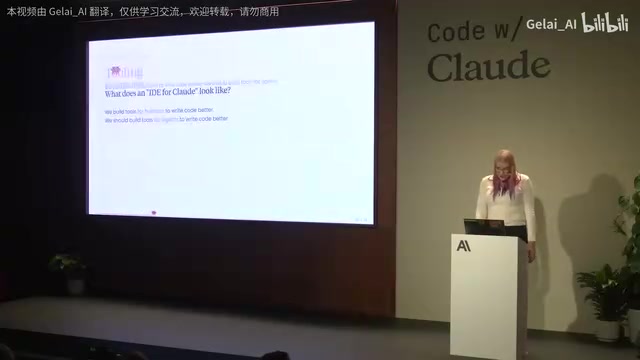
Advanced Claude Code in Practice: Building a Top-Tier AI Development Workflow
In-depth analysis of Claude Code customization methodology: from access, knowledge injection to tooling. Master context window management, zero-overhead Hooks, and MCP & Skills plugin primitives to build a scalable AI software engineering workflow.
Read more →

·3 min
The Complete Guide to AI-Native Architecture: RAG, Agents, and MCP
A comprehensive guide to AI-native application architecture: LLM inference, RAG retrieval (vector DB/knowledge graph/BM25), Agents, MCP tool calling, AI gateways, and observability — end-to-end.
Read more →