#SpaceX
65 related articles

·3 min
Chinese Open-Source AI Conquers Silicon Valley: The Industry Upheaval Behind a 58% Compute Share
Chinese open-source AI models surged from under 10% to 58% of U.S. AI consumption. Kimi K3, DeepSeek, and Qwen are reshaping AI cost structures as DoorDash, Airbnb, and other Silicon Valley giants adopt them at scale.
Read more →
·3 min
Chinese Open-Source AI Conquers Silicon Valley: The Industry Upheaval Behind a 58% Compute Share
Chinese open-source AI models surged from under 10% to 58% of U.S. market share. Kimi K3, DeepSeek, and Qwen are being adopted by DoorDash, Airbnb, and other Silicon Valley giants, reshaping AI costs and competition.
Read more →

·4 min
Chinese AI Accounts for 58% of US Compute Consumption: How Open-Source LLMs Are Disrupting Silicon Valley
OpenRouter data shows Chinese AI models now account for 58% of US AI consumption. Silicon Valley giants like DoorDash and Airbnb adopt Kimi, DeepSeek, and Qwen, leveraging low cost, high performance, and open weights.
Read more →
·4 min
Chinese AI Accounts for 58% of US Compute Consumption: How Open-Source LLMs Are Disrupting Silicon Valley
OpenRouter data shows Chinese AI models now account for 58% of US AI consumption. Silicon Valley giants like DoorDash and Airbnb adopt Kimi, DeepSeek, and Qwen for their low cost and open-weight advantages.
Read more →

·5 min
Inside Cursor: How Recursive Model Improvement Enables AI to Self-Evolve
A Cursor ML engineer breaks down AI training methodology: outer/inner loop acceleration, preventing reward hacking, textual feedback, and recursive self-improvement (RSI) where models train the next generation.
Read more →

·3 min
27B Parameter LLM on an iPhone? A Deep Dive into On-Device Full-Parameter AI
Startup Prismo claims to compress a 27B-parameter model to 4GB for full local inference on iPhone 17 Pro. We break down the compression tech, compare it to Apple's MoE approach, and assess real-world limits.
Read more →

·6 min
OpenAI vs Anthropic IPO Race: Who's Really Burning Cash? A Deep Dive Into AI Giants' Finances
OpenAI's adjusted operating margin hits -122%, Anthropic's profitability remains murky, and SpaceX claims a $22.7T AI market. A deep dive into three AI giants' real financials and the capital game behind the IPO race.
Read more →

·4 min
Cursor's Recursive Self-Improvement: A Complete Path to Models Training the Next Generation
Cursor ML engineer reveals Recursive Self-Improvement (RSI) in practice: dual-loop flywheels, agent-driven data, anti-cheating evals, SpaceX compute, and how models are training the next generation.
Read more →

·3 min
Africa's AI Governance Landscape: A Deep Dive into the AFTEC Policy Tracker
Carnegie's AFTEC database covers 1,034+ policy records across 54 African nations, revealing AI strategies, data sovereignty debates, and legislative gaps shaping Africa's algorithmic governance.
Read more →
·3 min
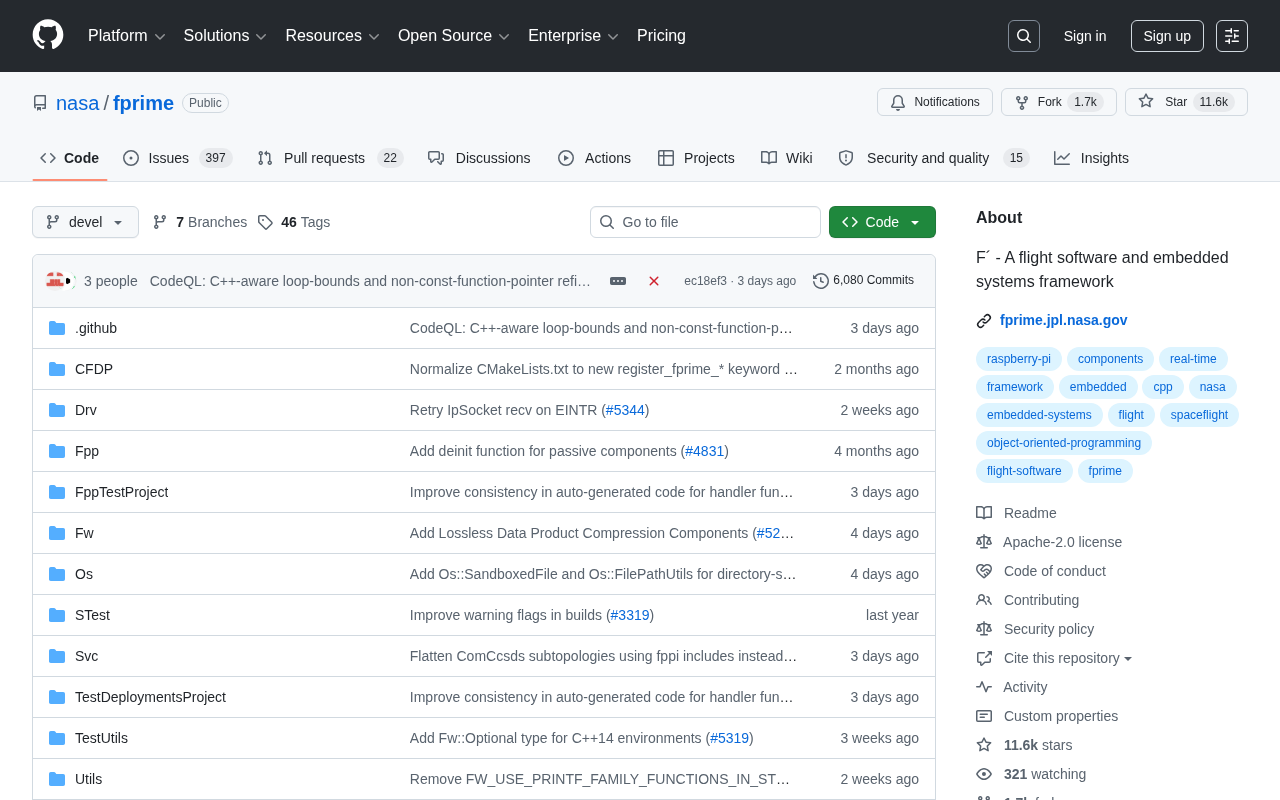
NASA Open-Sources the F´ Framework: A Space-Grade Toolkit for Flight Software and Embedded Systems Development
NASA's JPL open-sourced the F´ (F Prime) flight software framework: C++-based, component-driven, and validated in real space missions. Ideal for CubeSats, drones, and embedded systems, it has over 11,000 GitHub Stars.
Read more →

·3 min
Long March 10B's Sea-Based Net Capture: A New Breakthrough in China's Reusable Rocket Technology
China's Long March 10B booster completes its first sea-based "net-and-cable capture" recovery, enabling rocket recovery without landing legs. An in-depth analysis of the tech.
Read more →

·5 min
The ETF That Excludes Musk: How Values-Based Investing Is Reshaping Capital Flows
Two new ETFs explicitly exclude Musk's companies like Tesla and SpaceX, setting a precedent for excluding a specific entrepreneur. A deep dive into values-based investing, portfolio challenges, and market personalization.
Read more →

·3 min
AI's Three Giants Are Valued at More Than 25 Years of Total Tech Exits — New Era or Bubble?
Anthropic, OpenAI, and SpaceX's combined valuations are approaching the total U.S. VC-backed exit value since 2000. A deep analysis of the drivers, bubble risks, and broader implications.
Read more →

·6 min
Fi Ultra Review: The First Starlink-Connected Pet Tracker and How Satellite Connectivity Finds Lost Pets
The Fi Ultra is the first pet tracker to connect to Starlink satellites, with automatic failover across GPS, LTE, and T-Satellite for nationwide tracking even in dead zones. This in-depth review covers its technology, battery limits, and subscription costs.
Read more →

·6 min
GPT-5.6 Three-Model Launch: Soul/Terra/Luna Tiered Strategy and the AI National Security Game
OpenAI previews the GPT-5.6 series — Soul, Terra, and Luna — with a massive 1.5M-token context. In-depth analysis of coding leaps, the Fable 5 national security game, the heating U.S.-China AI race, and workflow economics.
Read more →

·7 min
GPT-5.6 Hands-On: A Complete Breakdown of the Three New Models — Soul, Terra, and Luna
OpenAI unveils the GPT-5.6 family — Soul, Terra, and Luna. Flagship Soul offers a 500K-token context and built a Pokémon RPG in 31 minutes. Plus Fable 5, GLM 5.5, and Grok 4.5 updates.
Read more →

·2 min
Two Prompting Techniques That Make AI Coding 10x More Reliable: First Principles & Adversarial Review
AI code that looks right but breaks at runtime? Two prompting techniques fix this: First Principles forces AI back to requirements, Adversarial Review hunts for vulnerabilities — forming a complete quality loop for Cursor, Copilot, and more.
Read more →

·5 min
Cursor Reshapes AI Programming: Cloud Agents, the Origin Platform, and a Custom-Built Foundation Model
Cursor launches three major products: cloud agents on mobile, Origin — an agent-native Git platform challenging GitHub, and a custom foundation model with 10-20x compute. AI coding enters the Agent-First era.
Read more →
TAT Cross-America Trail Complete Guide…
·2 min
TAT Cross-America Trail Complete Guide: How Digital Technology Is Transforming Long-Distance Adventure
How GPS offline navigation, crowdsourced trail data, and satellite communication are transforming the Trans-America Trail (TAT) experience — a guide for adventurers and tech enthusiasts alike.
Read more →
The 100,000-Satellite Limit: Why Astro…
·3 min
The 100,000-Satellite Limit: Why Astronomers Are Drawing a Line in Earth's Orbit
Astronomers warn that no more than 100,000 faint satellites should orbit Earth. Learn why this limit matters for astronomy, Kessler Syndrome risk, and space governance.
Read more →