#Steer function
119 related articles

·5 min
GPT-5.6 In-Depth Field Test: A Real-World Log After Burning Through $200K
A developer stress-tested GPT-5.6 for six weeks across 67 projects, burning $180K-$240K in inference. Real cases of task persistence, Rust rewrites, autonomous browser control — plus honest frontend and 3D shortfalls.
Read more →

·6 min
A Deep Dive into AI Agent Harnesses: The Core Engineering Behind Agent Frameworks
What is an AI Agent's harness? This article systematically dissects the core components of agent frameworks: context management, tool use, control loops, and caching strategies—revealing why the same model performs so differently across harnesses.
Read more →
·5 min
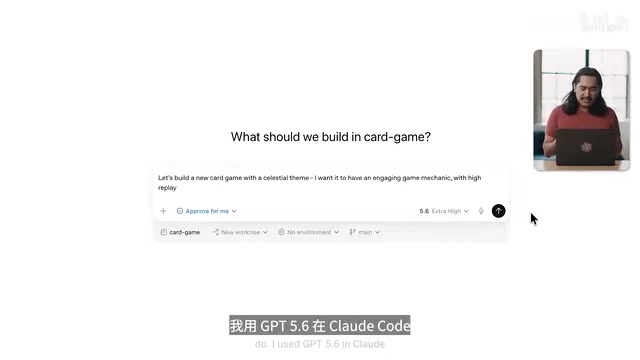
GPT-5.6 Released: Hands-On Analysis of Programmatic Tool Calling and Autonomous Agents
GPT-5.6 is officially released with core upgrades including programmatic tool calling, autonomous subagent delegation, and higher token information density. A hands-on card game build reveals its Agentic power.
Read more →

·3 min
GPT-5.6 Launches: Three New Models and Codex Officially Merges into ChatGPT
OpenAI launches GPT-5.6 with three models — Soul, Tola, and Luna — delivering benchmark scores 13 points ahead of Anthropic at 1/16th the cost, while merging Codex into ChatGPT to shift from ChatBot to Agent.
Read more →

·7 min
Google's $250K Bounty: Linux VM Escape Vulnerability Sets a Historic Record
Google paid a security researcher $250K for a Linux kernel VM escape vulnerability, setting a VRP record. An in-depth analysis of VM escape principles, kCTF incentives, and cloud security impact.
Read more →

·7 min
AI Coding in Practice: Generating a Minecraft Clone in 90 Minutes as LLMs Enter Project-Level Development
A major breakthrough in AI coding! Hands-on tests show new LLMs generating a Minecraft clone in 90 minutes and a TMNT game in 30 minutes, building 3D scenes, animation, and game logic in one shot.
Read more →

·4 min
The OpenAI Codex Product Philosophy: How AI Engineers Are Shifting from Writing Code to Managing Agents
OpenAI Codex isn't about replacing engineers—it's about empowering them. A deep dive into the AI Engineer conference talk: from code completion to long-horizon agents, Value Maxing, and managing agent teams.
Read more →

·2 min
Behavior Cloning Training Failing? A Systematic Guide to Data Quality and Tuning
Behavior cloning model barely moves after training? This guide systematically covers data alignment, class imbalance, learning rate, and epoch count — with a step-by-step debugging checklist and advanced alternatives like DAgger.
Read more →
·6 min
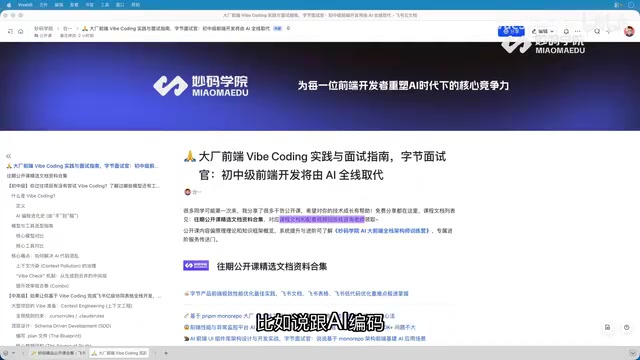
Vibe Coding in Practice at Big Tech: How Frontend Engineers Can Avoid Being Replaced in the AI Era
A big-tech interviewer reveals: junior/mid frontend dev is being replaced by AI. This article breaks down 3 core Vibe Coding interview questions to help you master key skills for the AI-assisted coding era.
Read more →

·6 min
7 Anima Model Combinations Tested: The Optimal Config Guide for Anime Image Generation
A Reddit user's rigorous controlled experiment testing all 7 Anima combos—base, aesthetic, turbo LoRA, and turbo baked. Key takeaway: choose aesthetic first, add Turbo LoRA for anime-girl style. Includes prompt structures and ComfyUI configs.
Read more →

·7 min
DIY Four-Wheel Skid-Steer Off-Road Robot: A Full Hands-On Log of a Hoverboard Motor Build
A Reddit hobbyist builds a four-wheel skid-steer off-road robot using hoverboard hub motors, ODrive boards, and a Raspberry Pi 5. A deep dive into hardware, 4G teleop, ground friction challenges, and the road to ROS2 autonomous navigation.
Read more →

·3 min
Claude's Overzealous Safety Filters: How Anthropic's Classifiers Are Stifling Creative Writing
Anthropic's safety classifiers for Claude are generating too many false positives, blocking legitimate content on creative apps like Fable. A deep dive into classifier mechanics and the safety-usability tradeoff.
Read more →

·6 min
iRobot Launches Its First Manual Floor Washer, the Roomba Electro Plus: Brand Transformation or Category Expansion?
iRobot releases its first non-robotic product, the Roomba Electro Plus—a $399 5-in-1 hard floor washer combining vacuuming, mopping, and disinfecting. A deep analysis of iRobot's strategic intent and market impact.
Read more →

·7 min
The Birth of Claude Code: Design Philosophy from Internal Tool to AI Programming Assistant
An in-depth look at Claude Code's development and design philosophy: why the CLI form, how the "minimal scaffolding" architecture works, and how it balances safety with autonomy in AI programming.
Read more →

·6 min
Fable 5 vs GPT-5.6 Sol: Cost-Efficiency Redefines the Frontier AI Landscape
An in-depth analysis of the head-to-head between Anthropic's Fable 5 and OpenAI's GPT-5.6 Sol: the performance gap, the logic behind pricing strategies, and the concentration-of-power concerns raised by U.S. government involvement.
Read more →

·6 min
Benchmarking as Data Activation: Giving Domain Data a Direction to Climb
How benchmarking transforms dormant domain data into an AI optimization engine. From healthcare to law to manufacturing, building vertical benchmarks activates proprietary data and builds a strategic moat.
Read more →

·6 min
Escaping AI Agent Skill Hell: A Complete 4-Step Guide to Writing High-Quality Skills
Matt Pocock's 4-step framework for AI Agent Skill design: Trigger, Structure, Steering, Pruning. Escape skill hell, tell good skills from bad, and master leading words to make Agents follow your intent.
Read more →

·6 min
Escaping AI Agent Skill Hell: A Complete 4-Step Guide to Writing High-Quality Skills
Matt Pocock's 4-step framework for AI Agent Skill design: Trigger, Structure, Steering, Pruning. Escape skill hell and learn to write high-quality skills.
Read more →

·7 min
Engineering Vibe Coding in Practice: Taming AI Programming with Superpowers and gstack
A deep dive into engineering Vibe Coding: using Superpowers for project-level decomposition and gstack for module layering and constraints to tame AI coding assistants like Codex and Claude Code.
Read more →

·4 min
Building an AI Agent Framework from Scratch: Deep Dive into Tool Calling, Memory, and Dual-Model Scheduling
Build an AI Agent from scratch — no frameworks. Deep dive into Function Call schema design, MCP remote mirroring, dual-model routing, and short-term memory management.
Read more →