#Supervisor pattern
86 related articles

·7 min
The Agent Engineer Transition Roadmap: A Deep Dive into Three Core Skill Systems
Want to become an Agent engineer? This article systematically covers three core skill tracks—LLM fundamentals, LangChain architecture development, and enterprise deployment—to help you avoid detours.
Read more →

·7 min
Free Mermaid Diagram Editor: An Essential Code-Based Diagramming Tool for Developers
Explore the core features and use cases of the free Mermaid Diagram Editor. Supporting flowcharts, sequence diagrams, Gantt charts and more, it follows the 'diagrams as code' philosophy to enable version-controlled technical documentation for developers and architects.
Read more →

·6 min
AI Agent Practical Guide: From Chatting to Directing — Building Fully Automated Workflows
AI use has three levels: Chat, Automation, and Agent. Learn how to use tools like Manus AI with a "director mindset" to build fully automated workflows — no technical background required.
Read more →

·7 min
Metacognitive Feedback: Using Reinforcement Learning to Help LLMs Accurately Express Uncertainty
LLMs are often overconfident and prone to hallucination. How can AI learn to say "I'm not sure"? This article explains the reinforcement learning approach with metacognitive feedback and how calibrating confidence boosts LLM trustworthiness.
Read more →

·6 min
Taiganet and the WS4000 Simulator: The Reverse-Engineered Rebirth of Industrial Control Systems
Taiganet.com is simulating the WS4000 industrial control system. This niche project preserves the engineering wisdom from before the PLC and SCADA era. A deep look at the challenges of ICS simulators, knowledge preservation, and reverse engineering in OT security research.
Read more →

·5 min
NVIDIA AI-Q Blueprint × OCI: A Practical Guide to Production Deployment of Enterprise AI Agents
Deep dive into NVIDIA AI-Q Blueprint production deployment on Oracle Cloud Infrastructure, covering NIM microservices, RAG architecture, multi-agent orchestration, and OCI GPU selection for enterprise AI agents.
Read more →

·5 min
NVIDIA AI-Q Blueprint × OCI: A Practical Guide to Production Deployment of Enterprise AI Agents
Deep dive into NVIDIA AI-Q Blueprint production deployment on Oracle Cloud Infrastructure, covering NIM microservices, RAG architecture, multi-agent orchestration, and OCI GPU selection.
Read more →

·7 min
Engineering Vibe Coding in Practice: Taming AI Programming with Superpowers and gstack
A deep dive into engineering Vibe Coding: using Superpowers for project-level decomposition and gstack for module layering and constraints to tame AI coding assistants like Codex and Claude Code.
Read more →

·7 min
Getting Started with LangGraph Multi-Agent Development: Architecture Analysis and Three Practical Case Studies
Learn LangGraph multi-agent development covering Supervisor and Collaboration architectures, with three hands-on projects: code assistant, prompt assistant, and WebRTC digital human.
Read more →

·3 min
Complete Guide to Codex /goal Command: Making AI Execute Long Tasks Without Cutting Corners
Deep dive into OpenAI Codex's /goal slash command: four core mechanisms that prevent AI "fake completion," enforce stop conditions, and support task resumption. Includes full prompt structure and permission configuration for complex automation tasks.
Read more →

·4 min
OpenAI Agents SDK in Practice: Harness and Sandbox Separation Architecture Explained
Deep dive into OpenAI Agents SDK updates covering Harness-Compute separation, Codex-style orchestration, sandbox snapshots, skills system, and multi-agent collaboration with practical demos.
Read more →

·3 min
LangGraph Beginner's Guide: Core Advantages, Deployment Options, and Complete Learning Path
A comprehensive guide to LangGraph's core advantages, storage mechanisms, differences from LangChain, and private deployment options for building production-ready AI agents.
Read more →
·3 min
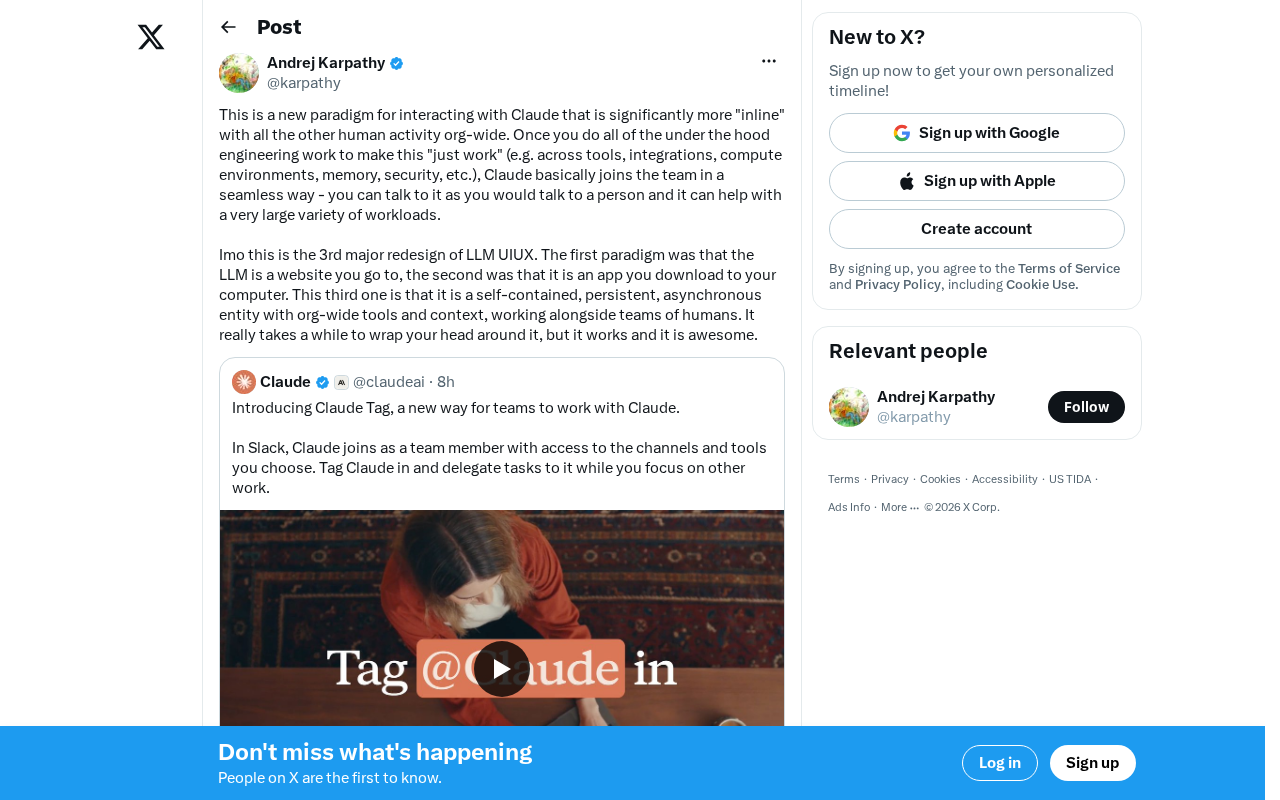
Three Paradigm Shifts in LLM Interaction: From Website to Desktop App to Team Member
Explore the three paradigm shifts in LLM interaction: from ChatGPT as a website, to desktop apps, to autonomous AI team members that collaborate asynchronously with humans.
Read more →

·2 min
Uber Shareholders Sue Board: Safety Compliance Failures Trigger Massive Litigation
A Detroit pension fund leads a lawsuit against Uber's board, alleging management excessively cut safety compliance spending, exposing the company to thousands of sexual assault lawsuits.
Read more →

·3 min
MiniMax Code Hands-On Review: How AI Development Team Mode Redefines Programming Collaboration
In-depth review of MiniMax Code (MCode) Agent Team collaboration through Starbucks financial visualization and Next.js website development cases.
Read more →

·2 min
What Is AI Loop? The Paradigm Shift from Agents to Loop-Based Architecture
Deep dive into AI Loop architecture: how continuous-running agent swarms differ from traditional AI Agents, with applications in software development, cybersecurity, and beyond.
Read more →

·2 min
GitHub Copilot SDK Deep Dive: Core Features and Practical Guide
Deep dive into GitHub Copilot SDK: Agent Loop, Hooks lifecycle control, Custom Agents orchestration, Skills modules, and local model integration for AI app development.
Read more →

·3 min
How to Write Prompts: Four Elements, Three Techniques, and Three Pitfalls Explained
Master prompt writing with the four-element framework (Role, Task, Requirements, Format), three techniques (few-shot, chain-of-thought, anti-hallucination), and avoid three common pitfalls for better AI results.
Read more →

·2 min
Harness: An Open-Source Framework That Generates Multi-Agent Teams from a Single Sentence
Harness is a 4.6K-star open-source multi-Agent framework that auto-generates AI teams from a single sentence, with six built-in collaboration architectures.
Read more →

·3 min
AI Now Writes Over 80% of Code: What Doubling Capability Every 4 Months Really Means
Anthropic reveals Claude now writes over 80% of its code, with AI capability doubling every four months. Three real cases show the speed of AI's rise and the shrinking window for human adaptation.
Read more →