#Trae third-party model
77 related articles

·2 min
Trae IDE Custom Model Integration Tutorial: Complete Guide to Configuring Third-Party APIs
Learn how to integrate custom models in Trae IDE, including step-by-step configuration for third-party APIs like OpenRouter and DeepSeek to overcome built-in model limitations.
Read more →
 Tutorials
·2 min
Trae Third-Party API Integration Tutorial: Configure GPT and Claude Models in Three Steps
Step-by-step tutorial on integrating third-party APIs in Trae via proxy platforms like DeepRouter to configure GPT-4 and Claude models in three simple steps.
Read more →
 Tutorials
·2 min
Trae Third-Party API Integration Tutorial: Complete Guide to Configuring GPT/Claude and Other Models
Step-by-step tutorial on configuring GPT, Claude, Gemini and other third-party LLMs in Trae IDE via API, covering URL formats, model IDs, and troubleshooting.
Read more →

·3 min
KEDA Scale-to-Zero in Practice: Wake Self-Hosted Apps on Demand and Save Resources
Learn how to use KEDA for Kubernetes scale-to-zero, waking self-hosted apps on demand via HTTP interceptors. Covers cold start optimization, Cron warming strategies, and full open-source configs.
Read more →

·3 min
Self-Hosted Notes & Task Management: A Minimalist Open-Source Approach with Memos + Vikunja
Looking for simple self-hosted notes and task management? This article recommends Vikunja and Memos as lightweight open-source alternatives to Nextcloud and Obsidian.
Read more →

·6 min
Securely Exposing Self-Hosted Services via VPS: Architecture & Practical Guide
Learn how to securely expose self-hosted services via VPS using WireGuard tunnels, Pangolin, and reverse proxies — enabling client-free access to Plex, Immich, and more while hiding your home IP.
Read more →

·5 min
Home Network Device Isolation: A Complete Guide to Safely Exposing Self-Hosted Services to the Internet
Learn how to safely expose self-hosted services to the internet using DMZ, VLAN isolation, and VM approaches while protecting your home network from attacks.
Read more →

·3 min
Hammer: An Offline-First Open-Source Novel Writing App with Docker Self-Hosted Sync
Hammer is an offline-first open-source novel writing app using Markdown plain text. Deploy a self-hosted sync server in minutes with Docker for cross-device sync and web publishing.
Read more →

·3 min
Hammer: An Offline-First Open-Source Novel Writing App with Docker Self-Hosted Sync
Hammer is an offline-first open-source novel writing app using Markdown plain text storage with multi-platform support. Deploy a self-hosted sync server in five minutes via Docker.
Read more →

·3 min
Antigravity CLI Weekly Limit Real-World Testing: A Practical Guide to Maximizing Quota for Ops Workflows
Deep analysis of Google Antigravity CLI weekly usage limits, Flash vs Pro quota weights, and practical tips for sysadmin/homelab users to maximize subscription quota.
Read more →

·3 min
Antigravity CLI Weekly Usage Limits in Practice: A Practical Guide to Maximizing Quota for Ops Workflows
Analyzing Google Antigravity CLI weekly usage limits, Flash vs Pro quota weights, and practical tips like trimming context and batching requests to help sysadmin and homelab users maximize subscription quotas.
Read more →

·2 min
Linkwarden 2.16 Released: The Permanent Archiving Powerhouse for Open-Source Bookmark Management
Linkwarden 2.16 released with major Web and mobile updates. This open-source collaborative bookmark manager supports permanent link snapshots and self-hosting, adding self-signed cert support, quick search, and modern UI.
Read more →

·3 min
Claude Code vs Codex: Hands-On Comparison and Installation Guide for AI Programming Tools
In-depth comparison of Claude Code and Codex AI programming tools covering accuracy, installation, and network setup tips to help developers choose the best solution.
Read more →

·3 min
7 Vibe Coding Agents Tested & Ranked: Which AI Coding Tool Should Beginners Choose?
Hands-on comparison of 7 Vibe Coding agents including Trae, Cursor, Claude Code, Codex, WorkBuddy & CoderWork, ranked by beginner-friendliness and performance.
Read more →

·3 min
7 Vibe Coding Agents Tested & Ranked: Which AI Coding Tool Should Beginners Choose?
Side-by-side review of 7 Vibe Coding agents including Trae, Cursor, Claude Code, Codex, WorkBuddy, and CoderWork, ranked by beginner-friendliness, performance, and ease of use.
Read more →

·2 min
Getting Started with Codex: A Practical Guide to OpenAI's AI Programming Assistant with Tips to Avoid Common Pitfalls
A detailed guide to OpenAI Codex's core features and setup, comparing it with Claude Code, plus practical tips for configuring DeepSeek and avoiding common pitfalls.
Read more →

·4 min
Foundry VTT Public Access Guide: The Right Way to Securely Expose Self-Hosted Services
Learn how to securely expose Foundry VTT to the public internet. Compare port forwarding, Cloudflare Tunnel, and reverse proxy solutions with practical advice on network isolation and layered defense.
Read more →
·3 min
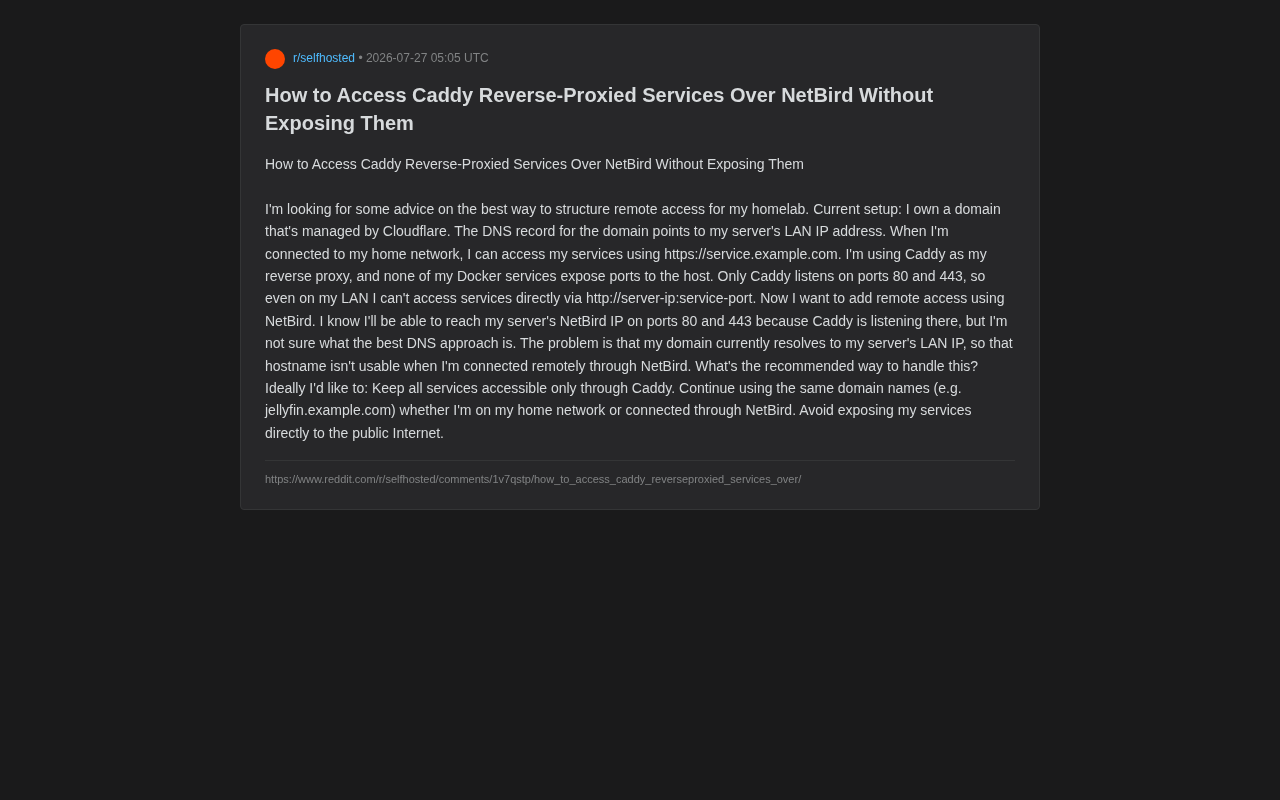
NetBird + Caddy: Remote Access Without Exposing Public Ports
Learn how to use NetBird WireGuard mesh networking with Caddy reverse proxy for homelab remote access without exposing public ports. Covers Split DNS, TLS certificates, and ACL controls.
Read more →

·3 min
Complete Guide to Self-Hosted Music Servers: A Cross-Platform Navidrome Alternative to Spotify
Compare Navidrome, Jellyfin, and other self-hosted music servers. Covers cross-platform clients, remote access setup, and metadata management to replace Spotify.
Read more →

·3 min
The AI Coding Landscape: Model Tiers, Tool Camps, and a Deep Dive into MCP/Skills/CLI
A systematic map of today's AI coding landscape: the evolution from ChatGPT to Claude Code, LLM capability tiers, tool camps like Cursor/Copilot, and the three key weapons of the Agent era — MCP, Skills, and CLI.
Read more →