#USB HID
85 related articles

·3 min
OWASP Agentic Security Top 10 Deep Dive: Understanding ASI01–ASI10 Risks and Mitigations
A comprehensive breakdown of the OWASP Agentic Security Top 10 framework, covering ASI01–ASI10 risks including goal hijacking, tool misuse, identity abuse, supply chain vulnerabilities, and cascading failures — with practical mitigations for AI agent systems.
Read more →

·7 min
Claude Code Practical Tutorial: A Complete Beginner's Guide to Automating Your Entire Workflow
No coding required! This guide breaks down the complete Claude workflow: custom Projects, batch SEO content, one-sentence tool building with Artifacts, and Claude Code terminal ops—with real traffic-growth cases.
Read more →

·4 min
AMD Ryzen AI Halo Real-World Test: Can a Non-Programmer Use Local AI to Write Code?
A non-programmer tests AMD Ryzen AI Halo by deploying local AI models to tackle a real dev task. After testing Ollama and Qwen3, the verdict: AI amplifies developers, it doesn't replace them.
Read more →
Code Review Graph: Using Intelligent C…
·3 min
Code Review Graph: Using Intelligent Code Graphs to Deliver Precise Context for AI
Code Review Graph is a local-first open-source code intelligence graph supporting MCP and CLI. It reduces AI context noise in large repos with persistent graph structures.
Read more →

·3 min
OpenAI Merges ChatGPT and Codex: The Birth of an AI OS and Four Core Strategies
OpenAI merges ChatGPT and Codex into a Super App, unveiling the early blueprint of an AI OS. A deep-dive into four core strategies: Loop workflows, tool stack economy, multi-threading, and Sites.
Read more →
·3 min
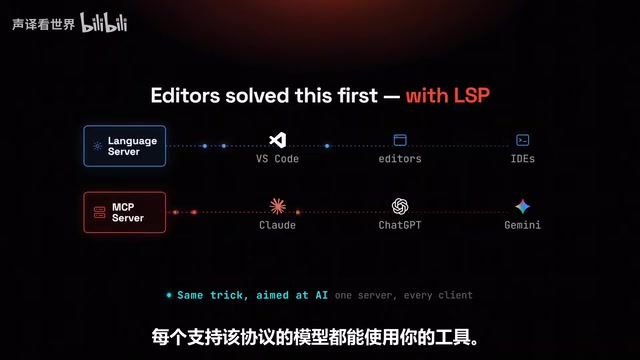
Build an MCP Server in 10 Minutes: Let AI Call Your Code Directly
MCP (Model Context Protocol) is the open standard for AI tool integration. Build your own MCP server with ~20 lines of Python. Learn tools, resources, prompts, and both local and remote deployment.
Read more →

·2 min
Spring AI in Action: A Complete Guide to LLM Integration for Java Developers
Spring AI is Java's answer to LangChain — offering unified multi-model APIs, structured output, RAG, Tool Calling, and MCP protocol support for enterprise LLM development.
Read more →

·2 min
GPT-5.6 Launch Triggers Industry Chain Reactions: The New Competition Landscape of Compute, Energy, and Open Source
GPT-5.6 raises frontier model expectations, Anthropic extends Fable 5; data center power bottlenecks emerge; open-source GLM5.2 rivals top closed models; AI review burden overlooked.
Read more →

·4 min
GPT-5.6 Deep Dive: AI Training AI Opens a New Paradigm in the Model Race
OpenAI's GPT-5.6 launches as three models: SO, TERA, and LUNA. The flagship SO autonomously completed LUNA's post-training, marking a new era of AI-trained AI. Deep dive into pricing, Programmatic Tool Calling, METR safety findings, and government oversight.
Read more →
GPT-5.6 Trio Launches: Luna, Terra, an…
·3 min
GPT-5.6 Trio Launches: Luna, Terra, and Sol Built for Long-Running Agentic Tasks
OpenAI officially launches the GPT-5.6 family: Luna, Terra, and Sol, with 1M token context and a focus on long-running agentic performance. A deep dive into three-tier pricing, Agents' Last Exam results, the SWE-Bench Pro controversy, and new API features like programmatic tool calling and native multi-agent support.
Read more →

·5 min
Open-Source MCP Server: Automatically Verifying the Authenticity of AI-Generated Paper Citations
AI "citation hallucination" threatens academic integrity—LLMs generate perfectly formatted but nonexistent references. This open-source MCP server verifies AI citations in real time against CrossRef, PubMed, and more, catching fakes at the source.
Read more →

·3 min
In-Depth Testing of GPT-5.6's Three Models: A Full Analysis of Soul/Terra/Luna Capabilities and Experience
GPT-5.6 launched three models at once—Soul, Terra, and Luna. Flagship Soul dazzled with a Vision Pro drum kit and reviving an old tablet, but the new Work app's frequent errors and export failures dragged down the experience.
Read more →

·4 min
Zhipu GLM-5.2 Released: China's First Open-Source Model to Cross the 'Primary Model' Threshold
Zhipu releases GLM-5.2 with 1M token context, matching GPT-5.x and Claude. Zcode 3.0 offers 3M free daily calls with one-click migration from Claude Code and Codex.
Read more →

·5 min
Hands-On with PageAgent: Add AI Agent Capabilities to Web Pages with a Single Line of Code
In-depth hands-on review of Alibaba's open-source web automation tool PageAgent: three integration methods, script execution analysis, and a full breakdown of current limitations. Add AI Agent capabilities to web pages with one line of JS.
Read more →

·3 min
Benchmarking LLMs on Smartphones: A Deep Dive into the MELTing Point Benchmark
The MELTing Point paper is the first to evaluate mobile LLM performance in real user scenarios, covering iPhone, Samsung, Pixel and more, testing TinyLlama, Mistral-7B and others—revealing GPU inference gains, 47°C heat warnings, and prefill-decode disaggregation.
Read more →

·5 min
GPT-5.6 In-Depth Field Test: A Real-World Log After Burning Through $200K
A developer stress-tested GPT-5.6 for six weeks across 67 projects, burning $180K-$240K in inference. Real cases of task persistence, Rust rewrites, autonomous browser control — plus honest frontend and 3D shortfalls.
Read more →

·6 min
The Eight-Step Method for Agent Development: A Practical Path from Pitfalls to Production
Many enterprises fail at AI Agents due to choosing the wrong tools and lacking methodology. This article outlines an eight-step Agent development method—from cognitive foundations, scenario selection, hand-writing ReAct, and structured output to Tool Use, RAG, evaluation sets, and production fallback.
Read more →

·6 min
Andrew Ng × Anthropic: A Hands-On Claude Code Tutorial and Core Methodology
Andrew Ng partners with Anthropic to launch a hands-on Claude Code course, revealing its simple architecture, local security edge, and core context methodology across three cases: RAG chatbot, Jupyter analysis, and Figma-to-frontend.
Read more →

·3 min
Spending $200K to Test GPT-5.6: Have AI Coding Assistants Reached a Tipping Point?
Developer Theo spent ~$200K over 6 weeks testing GPT-5.6 across 67 projects — from 20-hour autonomous coding runs to fixing boot partitions and Rust rewrites.
Read more →

·7 min
Base44 in Practice: How Claude Code Powered Rapid Scaling from 1 to 80 People
How Base44's product team scaled from a single founding engineer to an 80-person team with Claude Code. Covers AI-assisted onboarding, code review, user evaluation, and QA automation.
Read more →