#WireGuard tunnel
23 related articles

·6 min
Separate Domains vs. Subdomains for Self-Hosted Services? A Deep Dive into Security Isolation Strategies
Deep dive into domain security architecture for self-hosted services: Should services with different exposure levels use separate domains or subdomains? Analysis of subdomain enumeration risks, defense in depth, and practical isolation strategies.
Read more →

·6 min
Securely Exposing Self-Hosted Services via VPS: Architecture & Practical Guide
Learn how to securely expose self-hosted services via VPS using WireGuard tunnels, Pangolin, and reverse proxies — enabling client-free access to Plex, Immich, and more while hiding your home IP.
Read more →

·5 min
Home Network Device Isolation: A Complete Guide to Safely Exposing Self-Hosted Services to the Internet
Learn how to safely expose self-hosted services to the internet using DMZ, VLAN isolation, and VM approaches while protecting your home network from attacks.
Read more →

·3 min
Building Your Own Smart Home Climate Control System: A Complete Guide to the Home Assistant Open-Source Solution
Complete guide to building a self-hosted smart climate system with Home Assistant, ESPHome, and Zigbee sensors—covering dashboards, DIY Nest alternatives, and VPN remote access for fully local control.
Read more →

·2 min
Tutorial: Installing Tailscale on a Jailbroken Kindle to Create a Private Network Node
Learn how to deploy Tailscale on a jailbroken Kindle, turning an idle e-reader into a private network node. Covers cross-compilation, power optimization, and risk considerations.
Read more →
·2 min
Tutorial: Installing Tailscale on a Jailbroken Kindle to Create a Private Network Node
Learn how to deploy Tailscale on a jailbroken Kindle to turn an idle e-reader into a private network node. Covers cross-compilation, power optimization, and risk considerations.
Read more →

·4 min
Foundry VTT Public Access Guide: The Right Way to Securely Expose Self-Hosted Services
Learn how to securely expose Foundry VTT to the public internet. Compare port forwarding, Cloudflare Tunnel, and reverse proxy solutions with practical advice on network isolation and layered defense.
Read more →

·3 min
Docker Containers vs Virtual Machines for Home Servers: How to Choose the Best Architecture
Docker containers vs VMs for home servers: compare resource usage, management, security isolation, and TrueNAS considerations to find the optimal Home Lab architecture.
Read more →
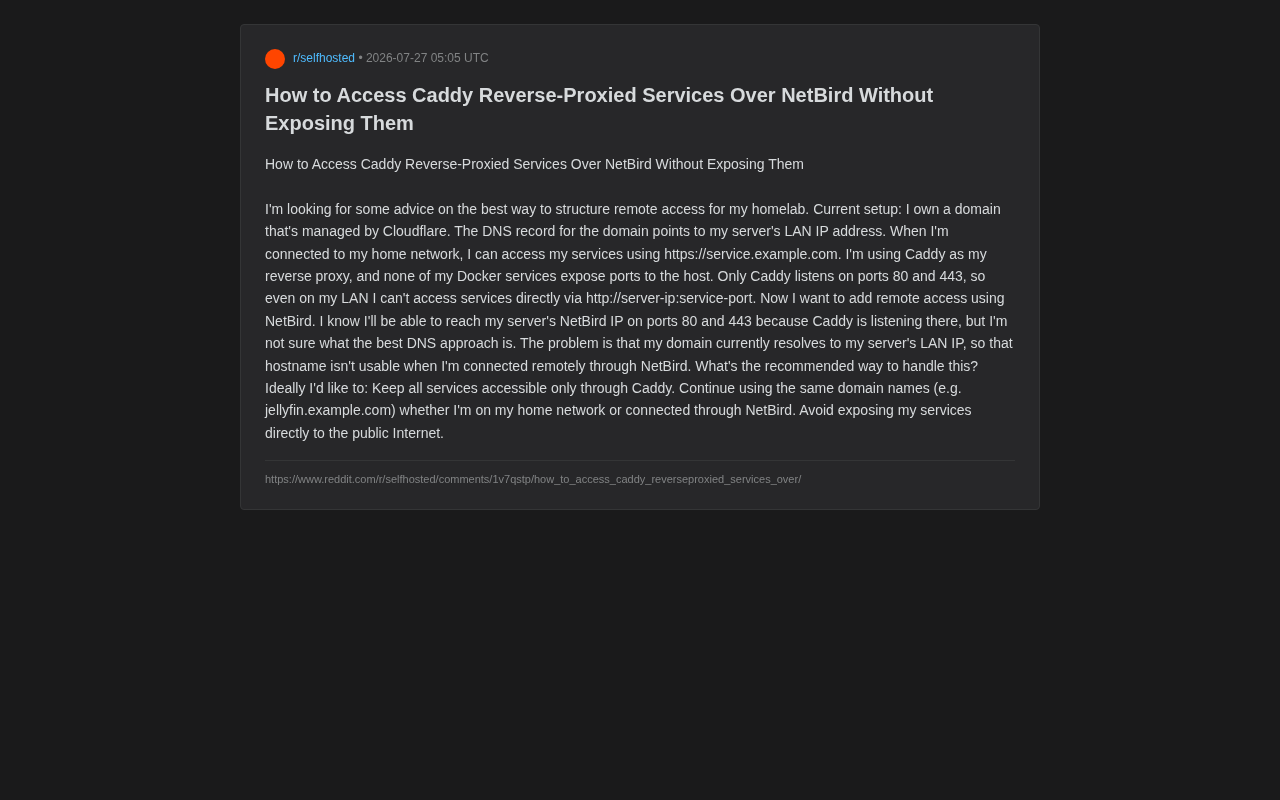
·3 min
NetBird + Caddy: Remote Access Without Exposing Public Ports
Learn how to use NetBird WireGuard mesh networking with Caddy reverse proxy for homelab remote access without exposing public ports. Covers Split DNS, TLS certificates, and ACL controls.
Read more →
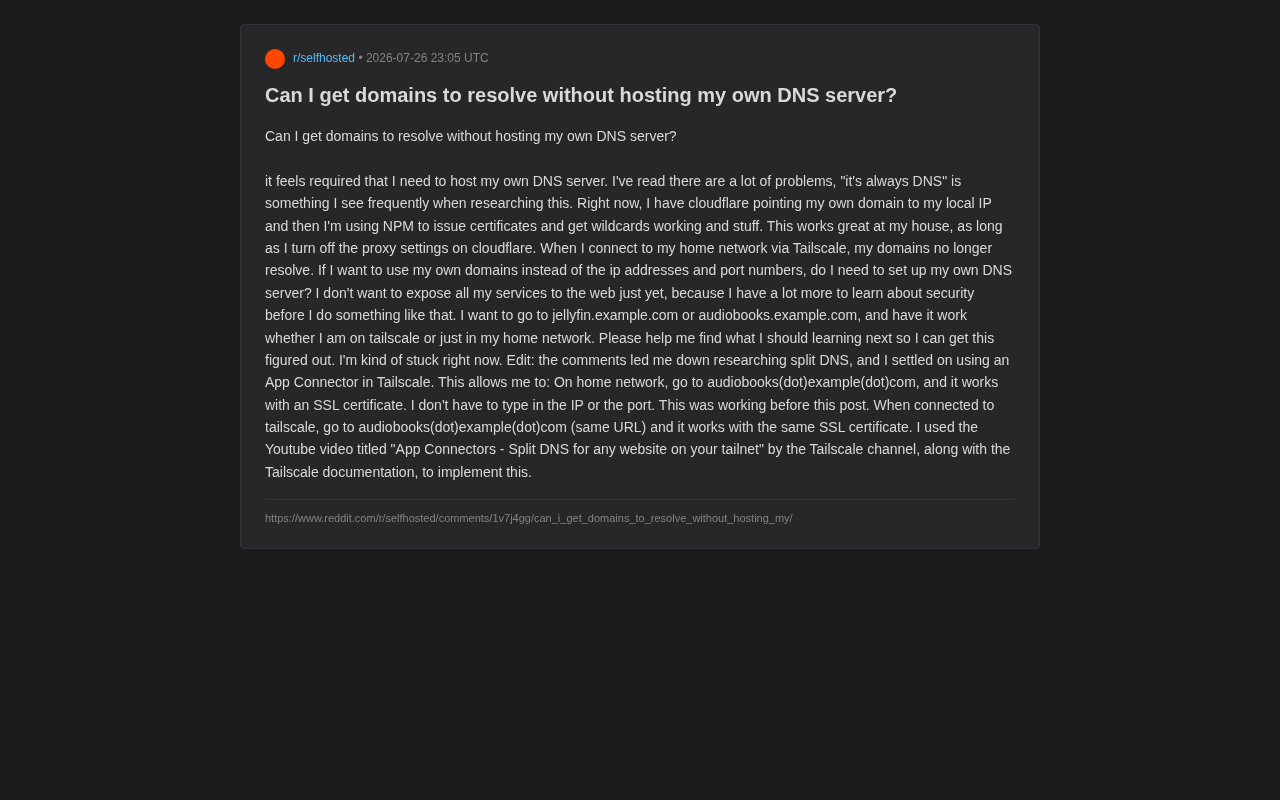
·4 min
Self-Hosted Service Domain Resolution in Practice: A Deep Dive into Split DNS and Tailscale Solutions
A deep dive into domain resolution challenges for self-hosted home servers, covering Split DNS concepts and how Tailscale App Connector enables unified domain access across internal and external networks.
Read more →

·4 min
Building Self-Hosted Tunnels Under Extreme Censorship: A Layered Architecture with VLESS Reality
Deep analysis of building layered tunnel architectures using VLESS+Reality to evade DPI and domestic relays with whitelisted IPs to bypass geographic blocking in extreme censorship environments.
Read more →
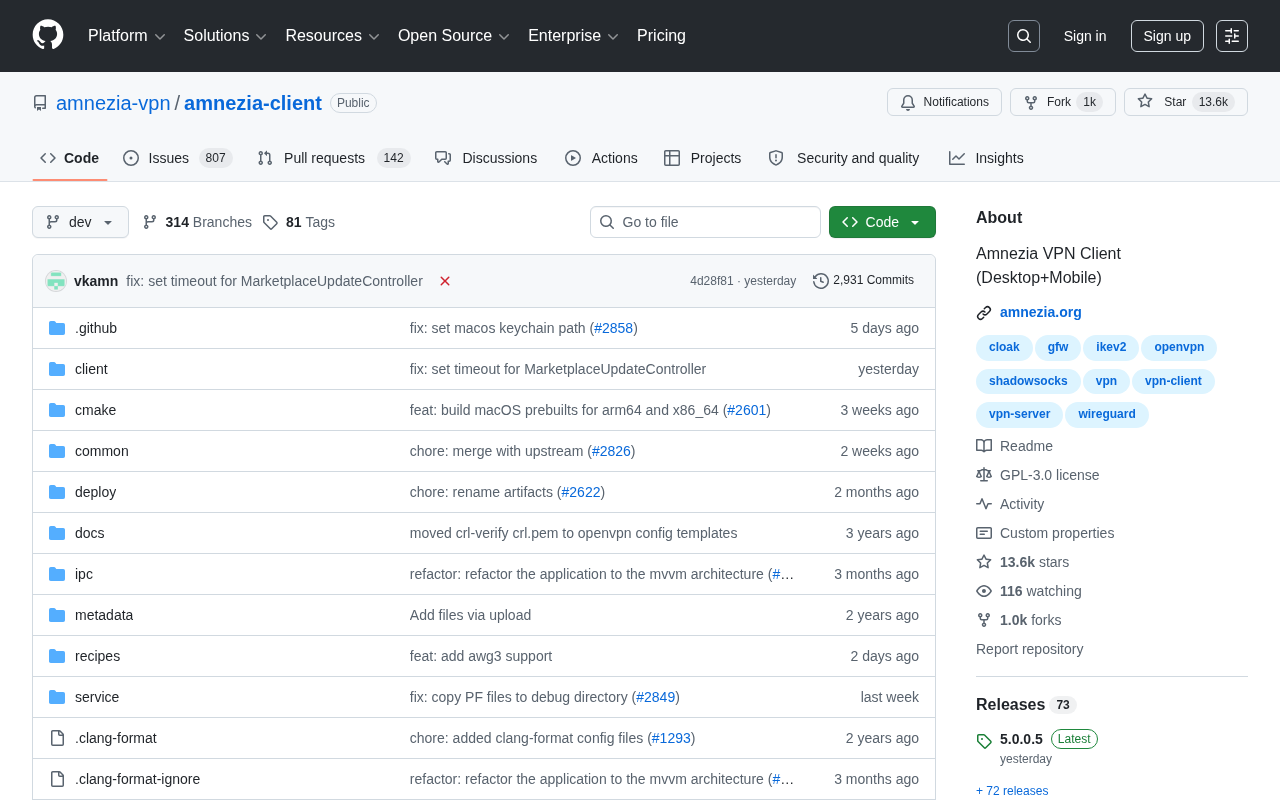
·6 min
AmneziaVPN Deep Dive: The Open-Source Powerhouse for Self-Hosted, Censorship-Resistant VPN
Deep dive into the AmneziaVPN open-source client: AmneziaWG anti-DPI obfuscation, self-hosted VPS deployment, multi-protocol support, and cross-platform privacy.
Read more →

·3 min
Complete Guide to Self-Hosted Music Servers: A Cross-Platform Navidrome Alternative to Spotify
Compare Navidrome, Jellyfin, and other self-hosted music servers. Covers cross-platform clients, remote access setup, and metadata management to replace Spotify.
Read more →

·6 min
Hands-On with Panel AI On-Premises Deployment: One-Click Enterprise Adoption and Unified Compute Cluster Scheduling
In-depth review of Panel AI v1.1.1: second-level installation, no-public-IP networking, batch compute cluster management. Learn how enterprise AI on-premises deployment barriers are dramatically lowered.
Read more →

·2 min
Goodbye Paid Subscriptions: A Complete Practical Guide to Self-Hosting
A complete guide to self-hosting: replace paid subscriptions with Nextcloud, Jellyfin, Vaultwarden and more. Covers Docker deployment, backup strategy, and secure remote access.
Read more →

·1 min
Tailscale SSH Root Privilege Escalation Vulnerability: Impact, Fixes, and Defense Guide
Tailscale SSH has a critical root privilege escalation vulnerability affecting all ACL-based permission users. Learn the impact, how to patch, and how to use OpenSSH for defense in depth.
Read more →

·3 min
UPnP Security Warning: A Real Case of NAS Auto-Exposing SSH Ports to the Public Internet
A real homelab case: a UGREEN NAS used UPnP to automatically expose SSH port 22 to the internet, triggering brute-force attacks. Full breakdown of the incident, UPnP risks, and NAS security tips.
Read more →

·3 min
Lanemu 0.14: An Open-Source Hamachi Alternative for Free, Unlimited P2P Virtual LANs
Lanemu is an open-source P2P VPN and a free Hamachi alternative with no device limits and auditable code. Ideal for LAN gaming, remote intranet access, and small-team networking.
Read more →

·4 min
Home Assistant: The Local-First Open Source Smart Home Platform That Puts Privacy and Freedom First
Home Assistant is the most mature open source smart home hub, prioritizing local control and privacy, supporting thousands of devices across ecosystems with 88,000+ GitHub stars.
Read more →

·4 min
9 Proven Methods to Make Hermes Agent Actually Work for You
9 battle-tested methods from hundreds of hours with Hermes Agent: model selection (Opus/ChatGPT/GLM), multi-agent failover, cross-device coordination via Tailscale, and reverse prompting workflows.
Read more →