#ZeRO optimizer
44 related articles

·3 min
Microsoft SQL Major Upgrade: AI Capabilities, Security Enhancements, and Fabric Integration — A Deep Dive
Microsoft SQL team's major updates: Azure SQL adds AI embeddings and dynamic data masking, Fabric SQL gets a Migration Assistant and Fabric Apps, SQL Server CU5 brings memory improvements, SSMS adds a SQL Formatter and Agent mode, and DP-800 certification is now open.
Read more →

·3 min
GitHub Daily · July 10: The Agent Skills Ecosystem Explodes — AI Coding Enters the 'Skills Library' Era
July 10 GitHub Daily: The Agent Skills ecosystem explodes as over half of trending projects revolve around AI coding Agent skill libraries, with MCP as the standard interface.
Read more →

·7 min
Complete Guide to Training Small Models on Kaggle's Free Compute: GPU Quotas and Practical Tips
In-depth guide to Kaggle's free-tier compute: P100/T4 GPU with 30 hours/week quota, 12-hour sessions, suitable models like CNN and BERT fine-tuning, plus tips like mixed precision and checkpointing to start deep learning at zero cost.
Read more →

·6 min
Introduction to Prompt Engineering: Principles, Methods, and Practical Case Studies
Prompt Engineering is the core skill for harnessing LLMs. This article covers principles and design methods through real cases like translation role-setting and DeepSeek image generation.
Read more →

·5 min
GPT-5.6 Explained: Sol, Terra & Luna — Tiered Positioning and Capability Comparison
OpenAI releases the GPT-5.6 series with flagship Sol, balanced Terra, and lightweight Luna. An in-depth look at each model's positioning, use cases, pricing, and the multi-agent Ultra architecture.
Read more →

·4 min
Career Switch to LLM Development: A Four-Level Skill Progression Roadmap
Want to switch careers into LLM development but don't know where to start? This guide breaks down a four-level skill roadmap — from basics and API calls to RAG, fine-tuning, Agent development, and multimodal — to help you build real AI career value.
Read more →

·5 min
A Programmer's Guide to Large Language Models: The Complete Path from Prompts to Agents
A tailored large-model learning path for ordinary programmers: from prompt engineering, API calls, and LangChain, to RAG, Agents, fine-tuning, and enterprise deployment—six steps to build AI application skills fast.
Read more →

·6 min
Not Everything Is Worth a Token: When to Use AI and When to Use Deterministic Code
Over-reliance on LLMs is an overlooked pitfall in AI development. Explore the hidden costs of Token economics, the boundaries between LLMs and deterministic code, and how hybrid architectures balance flexibility and reliability.
Read more →

·5 min
Nonuniform Tensor Parallelism: NVIDIA's New Fault-Tolerance Approach to Boost LLM Training Goodput
NVIDIA introduces Nonuniform Tensor Parallelism, letting GPUs bear different compute loads so training can continue without checkpoint rollback during hardware failures—boosting LLM training Goodput and fault tolerance at scale.
Read more →
Self-Maintaining Database Partitioning…
·3 min
Self-Maintaining Database Partitioning: Core Principles for Ditching Manual Babysitting
Tired of babysitting database partitions? Explore the 3 core pain points of manual partitioning and learn how to build a self-maintaining partition architecture with automation, smart key selection, and monitoring.
Read more →

·3 min
Light-Skills: Open-Source Research AI with 28 Skill Modules Covering the Full Workflow
Light-Skills is an MIT-licensed open-source research AI with 28 interconnected Skills, 9 knowledge bases, 317 knowledge cards, and 49 scripts covering the full research workflow — with a hard rule against fabricating citations or data.
Read more →

·7 min
Getting Started with LangGraph Multi-Agent Development: Architecture Analysis and Three Practical Case Studies
Learn LangGraph multi-agent development covering Supervisor and Collaboration architectures, with three hands-on projects: code assistant, prompt assistant, and WebRTC digital human.
Read more →

·3 min
How Much Math Do AI Practitioners Really Need? A Deep Dive into Three Role Types
How much math do AI/ML practitioners really need? This article breaks down three roles — Users, Developers, and Researchers — and analyzes the math requirements for each to help you plan your learning path.
Read more →
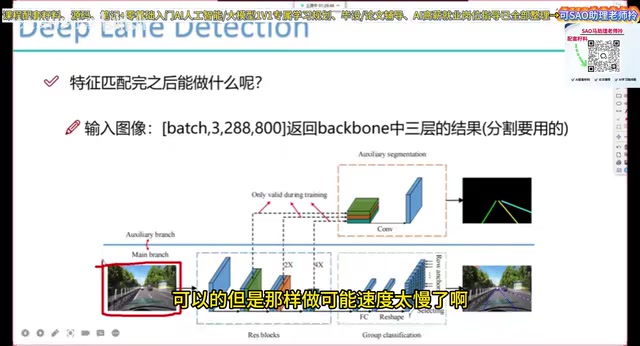
·4 min
Deep Learning Lane Detection: From Segmentation to Classification for 300+ FPS Real-Time Inference
Deep learning lane detection algorithm that simplifies dense segmentation into efficient grid classification, achieving 300+ FPS real-time inference with row selection, Focal Loss, and expectation-based localization.
Read more →

·3 min
DAQIRI Platform Explained: Deep Integration of High-Speed Data Acquisition and Real-Time AI Inference
Deep dive into how the DAQIRI platform embeds NVIDIA GPU-accelerated computing into high-speed data acquisition pipelines, enabling real-time AI inference for industrial inspection, scientific experiments, and autonomous driving.
Read more →

·3 min
The Complete Skill Map for AI Application Engineers: A Progressive Roadmap from Fundamentals to Production
A systematic breakdown of the complete skill structure for AI application engineers, covering Python & deep learning fundamentals, small model engineering, LLM fine-tuning, Agent development, and enterprise projects.
Read more →

·3 min
PyTorch Image Classification in Practice: Complete Pipeline from Data Preprocessing to Model Training
A PyTorch flower classification project covering the full image classification pipeline: data preprocessing, transforms augmentation, ResNet pretrained models, and Resize strategies with reusable template code.
Read more →

·2 min
A Complete Guide to LLM Infrastructure: Core Challenges from GPU Clusters to Inference Optimization
A deep dive into core challenges and key technologies for LLM infrastructure, covering GPU cluster management, inference optimization, distributed training, cost control, and observability.
Read more →

·4 min
Neural Networks from Scratch: A Deep Dive into the Fundamentals from Linear Regression to Gradient Descent
From linear regression and logistic regression to gradient descent, this guide derives the core mechanisms of neural networks step by step, covering Sigmoid, cross-entropy, activation functions, and backpropagation.
Read more →

·2 min
Advanced Claude Code: 5 Skill Techniques for Building Efficient AI Workflows
5 advanced Claude Code Skill techniques — Prompt Optimizer, Deep Interview, Real Plan, Code Simplifier, and Skill Creator — to build reusable AI workflows that reduce rework and boost precision.
Read more →